12 Hidden Legends: The Forgotten Icons History Class Never Told You About
He booked second-class passage on the Titanic for himself, his wife, and their two young daughters. When the ship sank, Joseph ensured his family made it onto a lifeboat before he went down with the vessel. His wife and daughters survived. Maybe the Titanic movie should have been about him.
6. Elizabeth Freeman

Image Credit: Anne Ridley Sedgwick – Photo courtesy of Massachusetts Historical Society – Public Domain/Wiki Commons.
Elizabeth Freeman, also known as “Mum Bett,” was one of the first enslaved people in Massachusetts to sue for and win her freedom. In 1781, after hearing the newly ratified Massachusetts Constitution read aloud, which declared all men are “born free and equal,” she sought legal counsel.
Her case, Brom and Bett v. Ashley, argued that the institution of slavery was incompatible with the state’s new constitution. The court ruled in her favor, setting a legal precedent that contributed to the abolition of slavery in Massachusetts. After gaining her freedom, she worked as a paid servant and healer.
7. Agnes Sampson

Image Credit: Unknown author – Public Domain/Wiki Commons.
Agnes Sampson was a Scottish midwife and healer who became a central figure in the North Berwick witch trials of the 1590s. When King James VI of Scotland experienced a perilous storm while returning from Denmark with his new bride, he became convinced that witches had conspired to kill him. Sampson was accused of being part of this conspiracy.
Under severe torture, she confessed to meeting with the devil and raising storms to sink the king’s ship. Her detailed confession implicated many others and fueled a widespread panic. She was ultimately executed in 1591, becoming one of the most famous victims of the European witch hunts.
8. Sargon II

Image Credit: Osama Shukir Muhammed Amin FRCP(Glasg) – Own work – CC BY-SA 4.0/Wiki Commons.
Sargon II was a powerful king of the Neo-Assyrian Empire who ruled from 722 to 705 BCE. He came to power after the mysterious disappearance of his predecessor and spent his reign expanding and consolidating the empire through military campaigns. He conquered the Kingdom of Israel, deporting thousands of its inhabitants in the event known as the “Assyrian captivity.”
He also built a magnificent new capital city, Dur-Sharrukin (“Fortress of Sargon”). Despite his significant military and architectural achievements, his legacy was often overshadowed by other Assyrian rulers like his son, Sennacherib.
9. Eliza Carpenter

Image Credit: Unknown author – Public Domain/Wiki Commons.
Eliza Carpenter was born into slavery in Virginia in 1851 and went on to become one of the few African American racehorse owners and jockeys in the American West. After gaining her freedom, she learned to train, ride, and race horses. She was a skilled rider, even winning a race at the age of 60.
Carpenter was also a savvy businesswoman, owning a stable of racehorses. She was known for her determination and independence in a field dominated by white men.
10. Bessie Coleman

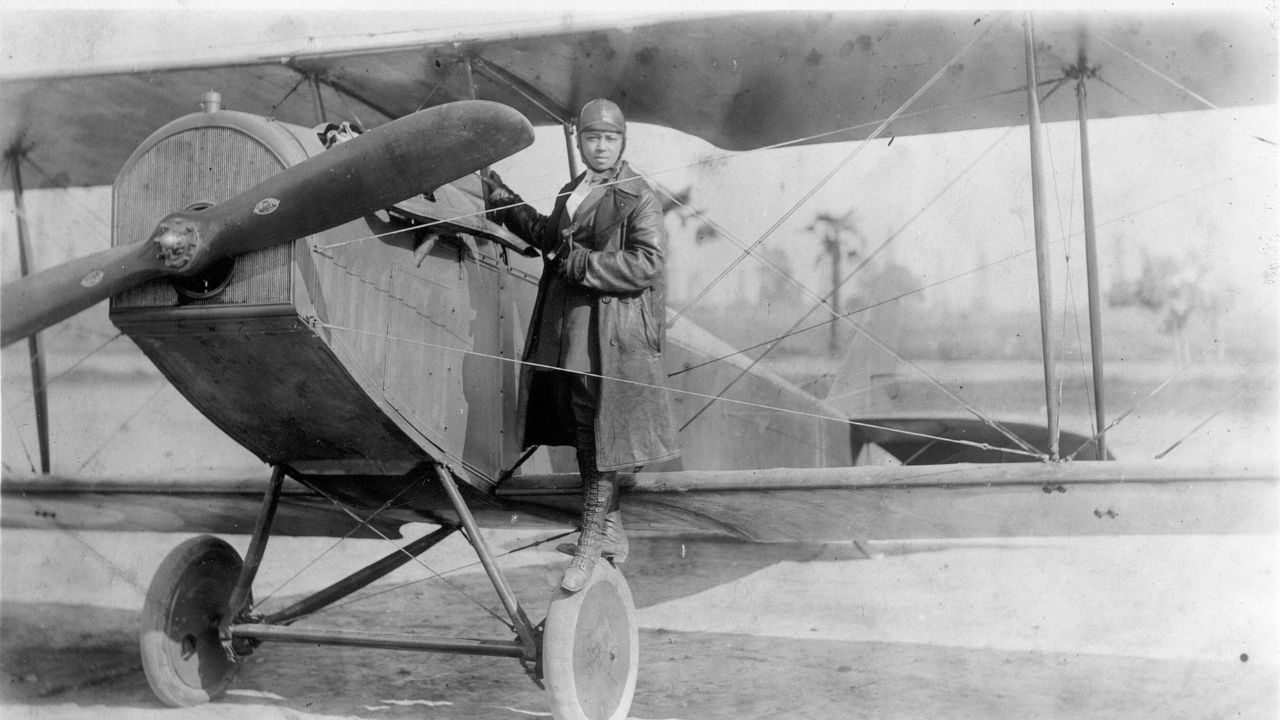
Image Credit: George Rinhart/Corbis via Getty Images – Public Domain/Wiki Commons.
Bessie Coleman was the first woman of African American and Native American descent to hold a pilot’s license. Faced with racial and gender discrimination that barred her from flight schools in the United States, she learned French and moved to France to pursue her dream.
In 1921, she earned her international pilot’s license. Returning to the U.S., she became a sensation, performing daring stunts in airshows across the country. She used her fame to encourage other African Americans to fly and refused to perform at venues that were segregated.
11. John Dee

Image Credit: Unidentified painter, Public Domain/Wiki Commons.
John Dee was a brilliant mathematician, astronomer, and advisor to Queen Elizabeth I. He was one of the most learned men of his age, possessing one of the largest libraries in England. His work in mathematics and navigation was vital to England’s voyages of discovery.
However, his reputation today is often colored by his later interest in the occult. Dee spent years attempting to communicate with angels through scryers, or crystal-gazers, hoping to unlock divine knowledge. This esoteric pursuit eventually led to his fall from favor and has since overshadowed his significant scientific contributions.
12. Elizabeth Fry

Image Credit: Joseph Simpson – A Gallery of Heroes and Heroines, 1915 – Public Domain/Wiki Commons.
Elizabeth Fry was a Quaker social reformer who led a major movement for prison reform in 19th-century Britain. After visiting Newgate Prison in London, she was horrified by the squalid conditions endured by female prisoners and their children. She began working to improve their lives, advocating for segregation of the sexes, female guards for female inmates, and education.
Her efforts led to the creation of the Association for the Improvement of the Female Prisoners in Newgate. This successfully pushed for legislation to improve prison conditions across the country and abroad.
RIVER OF GOODS Stained Glass Magna Carta LED Ceiling Fan - 52" L x 52" W - Tiffany Style - Flush Mount Ceiling Fan with Remote - Teal
(as of March 3, 2026 16:43 GMT +00:00 - More infoProduct prices and availability are accurate as of the date/time indicated and are subject to change. Any price and availability information displayed on [relevant Amazon Site(s), as applicable] at the time of purchase will apply to the purchase of this product.)
SkaterTrainers- Skateboard Tricks Fast No Experience Needed- Fun, Safe, and Easy- Ollies, Kickflips and More- All Ages- Accessories Make Great Stocking Stuffers Gifts for Teen Boys and Girls
$28.99 (as of March 3, 2026 16:43 GMT +00:00 - More infoProduct prices and availability are accurate as of the date/time indicated and are subject to change. Any price and availability information displayed on [relevant Amazon Site(s), as applicable] at the time of purchase will apply to the purchase of this product.)
1MORE Triple Driver in-Ear Earphones Hi-Res Headphones with High Resolution, Bass Driven Sound, MEMS Mic, in-Line Remote, High Fidelity for Smartphones/PC/Tablet - Silver
(as of March 3, 2026 16:43 GMT +00:00 - More infoProduct prices and availability are accurate as of the date/time indicated and are subject to change. Any price and availability information displayed on [relevant Amazon Site(s), as applicable] at the time of purchase will apply to the purchase of this product.)
Supa Ant 6x8ft. Welding Blanket Fireproof (Pack of 2) - Heavy Duty Weld Fire Blanket Tools - Welders Cover for Men Curtain with Gloves - Large Welding Gear for Welder Accessories
(as of March 3, 2026 16:43 GMT +00:00 - More infoProduct prices and availability are accurate as of the date/time indicated and are subject to change. Any price and availability information displayed on [relevant Amazon Site(s), as applicable] at the time of purchase will apply to the purchase of this product.)