39 Fascinating Buildings That Vanished Without a Trace—Discover What Time Took Away
39 Fascinating Buildings That Vanished Without a Trace—Discover What Time Took Away

However, a catastrophic fire on the night of November 30, 1936, gutted the main hall. While the iconic towers managed to survive the flames, they were doomed by the onset of World War II. In 1941, they were deliberately pulled down because the government realized they were serving as perfect navigation landmarks for incoming German bombers.


Library of Congress , Britannica Editors Report

ADVERTISEMENT

See Also on Bored Panda

Leaning historic tower amidst old buildings, an example of interesting buildings that got lost as the world changed.

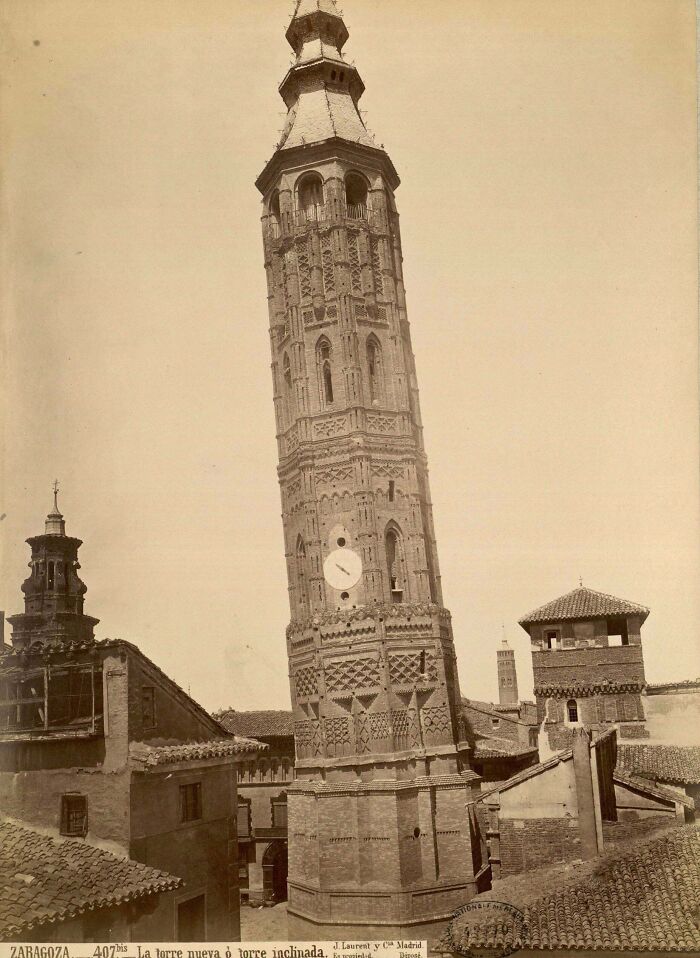
The Leaning Tower of Zaragoza was once considered the most beautiful Mudéjar tower in the land but was wiped off the map in 1892. Standing since 1504, the structure had already suffered the indignity of having its triple spire chopped off in 1878, but the city council eventually voted to demolish the rest, claiming its famous lean made it a safety hazard.

The decision sparked a massive outcry, particularly from the Gascón de Gotor brothers, who slammed the move as “patricide” and the “greatest artistic crime committed in Spain.” Their protests were in vain and workers spent a year dismantling the icon, selling off the bricks to build foundations for new local houses. Today, the only trace left is a memorial sculpture of a boy sitting on the pavement, gazing up at the empty sky where the tower used to be.


SkylineReddit252K19S , wikipedia Report

ADVERTISEMENT

See Also on Bored Panda

Historic interesting buildings over water with people swimming, showcasing unique architecture from a bygone era.

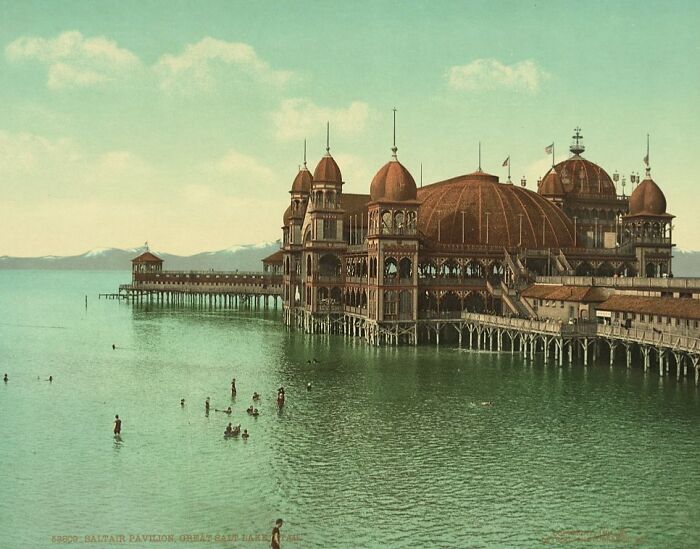
It was once the “Coney Island of the West,” a stunning example of Moorish Revival architecture that drew crowds as the most popular family destination west of New York. Designed by architect Richard K.A. Kletting, the Saltair Pavilion stood directly over the Great Salt Lake on a foundation of more than 2,000 posts and pilings. Some remnants of these are still visible today.

Although the church sold the booming resort in 1906, it remained a major attraction until disaster struck on April 22, 1925. On that day, a massive fire tore through the complex, reducing the first pavilion and several other buildings to ash and ending the first chapter of this legendary Utah landmark.

Detroit Photographic Co. , wikipedia Report

Historic building illuminated at night, showcasing intricate architecture and sculptures, representing lost interesting buildings.

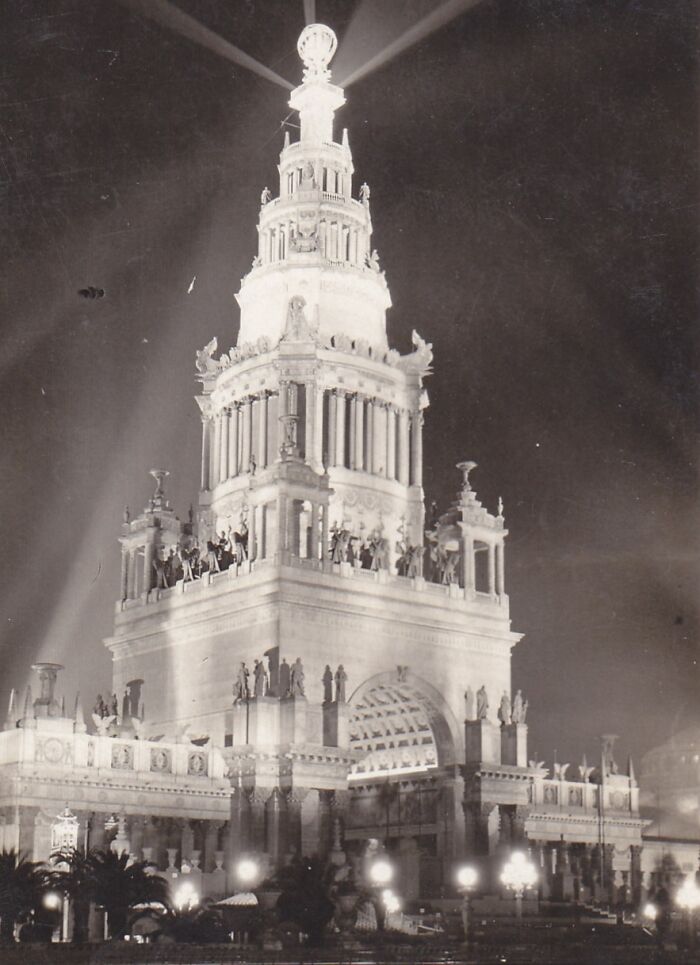
San Francisco hosted the 1915 Panama–Pacific International Exposition and the Tower of Jewels was a sight to behold, even if it wasn’t built to last. Despite its imposing appearance, the structure was temporary, crafted from “staff,” which is essentially a blend of plaster and burlap fiber slapped over a steel and wood frame.

When the fair ended, the tower was demolished, but the organizers saved the glittering “Novagems” that adorned the exterior. They tagged each gem with a brass medallion to prove it had hung on the tower, boxed them up, and sold them off as souvenirs for a single dollar apiece.

Moore’s Postcard Museum , wikipedia Report

ADVERTISEMENT

ADVERTISEMENT

See Also on Bored Panda

Two vintage views of interesting buildings with historic architecture that got lost as the world changed.

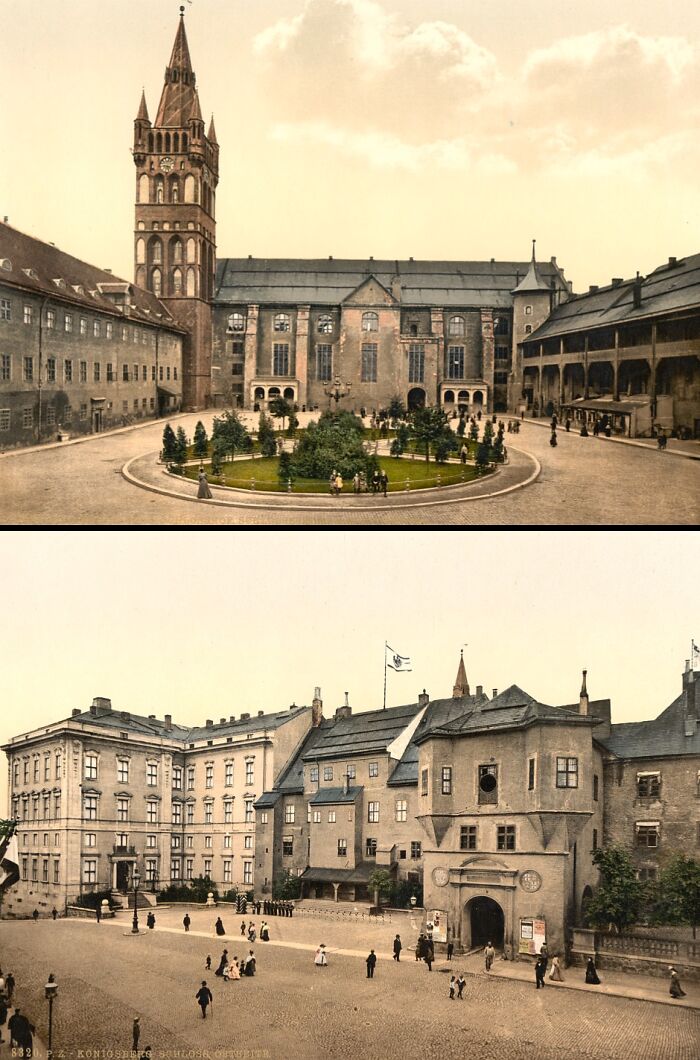
The site where the Konigsberg Castle and its gardens once stood has seen a staggering amount of destruction over the last century. Originally the heart of East Prussia, the castle took a beating during World War II, though its exterior walls actually managed to stay standing.

However, survival wasn’t in the cards once the region transformed into the Soviet Union’s Kaliningrad Oblast in 1946. The authorities spent years systematically demolishing what was left, wiping out the final section by 1968. In a twist of irony, the massive “House of Soviets” they built to replace it was never actually finished, and it simply sat as an abandoned concrete shell for decades until it was finally torn down just a couple of years ago in 2024.

Library of Congress , Library of Congress , wikipedia Report

ADVERTISEMENT

See Also on Bored Panda

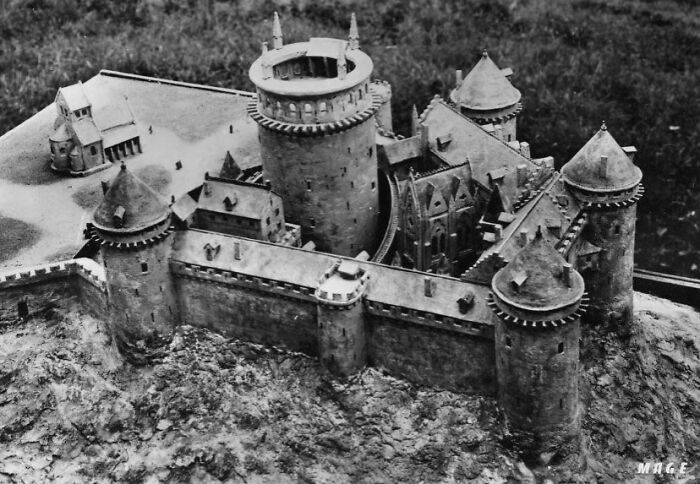
Black and white aerial view of an ancient castle model representing interesting buildings lost as the world changed.

Before World War I changed the landscape, the Château de Coucy was famous for boasting the largest keep in all of Europe. It was a massive tower standing 55 meters tall and 35 meters wide. That architectural marvel met a violent end, however. After German troops occupied the site in September 1914 the retreating army blew the whole thing sky-high in March 1917.

General Erich Ludendorff gave the order to level the keep and the four towers, an act that historians still debate as either military strategy or pure spite. The destruction caused such a massive public outcry that the site was officially declared a “memorial to barbarity” the very next month. While war reparations were eventually used to shore up the surrounding walls, the keep itself was left as a pile of rubble.

Specific-Chain-3801 , wikipedia Report

ADVERTISEMENT

See Also on Bored Panda

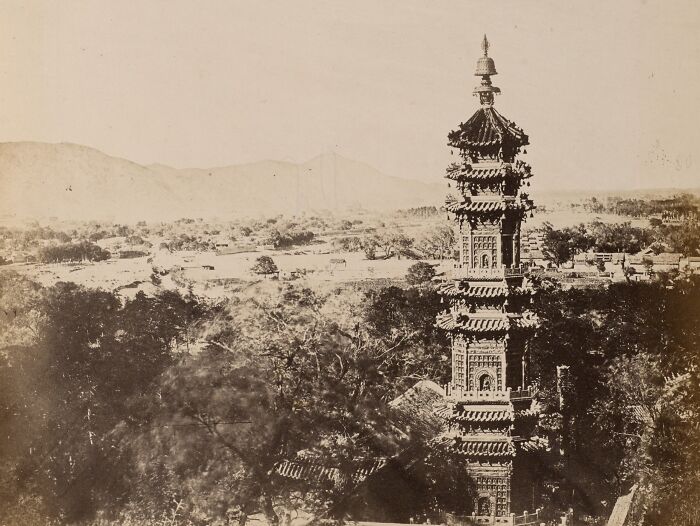
Ancient pagoda surrounded by trees and distant mountains, one of the interesting buildings lost as the world changed.

It took a record-breaking donation to resurrect the Porcelain Tower of Nanjing. In 2010, businessman Wang Jianlin dropped a cool one billion yuan (about $156 million) to fund the reconstruction, making it the largest single personal charitable gift in Chinese history.

The original structure, a 15th-century Ming Dynasty masterpiece located on the banks of the Qinhuai River, had been tragic collateral damage during the Taiping Rebellion, getting mostly destroyed back in 1856. Thanks to that massive influx of cash, a modern replica and surrounding park finally opened their doors to the public in December 2015.

Pages: 1 2 3 4 5 6

Post Comment

WIN $500 OF SHOPPING!

    This will close in 0 seconds

    RSS
    Follow by Email