ADVERTISEMENT

See Also on Bored Panda

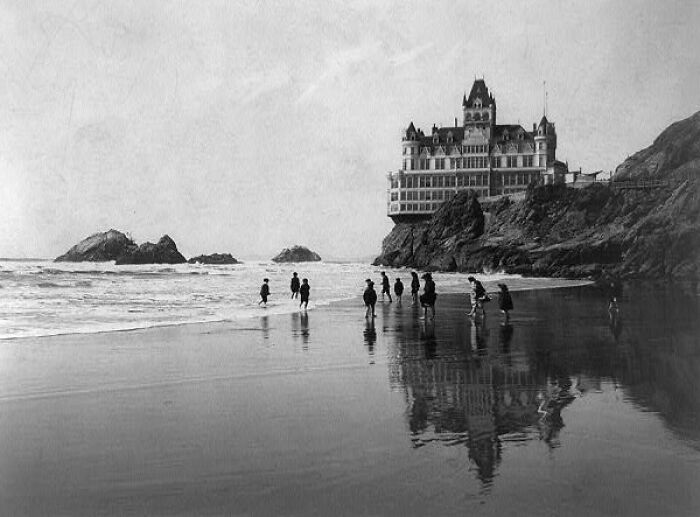
Historic building perched on a rocky shore with people walking along the beach, showcasing interesting lost architecture.

Perched on the bluffs just below Sutro Heights, the second iteration of San Francisco’s Cliff House was a sight to behold. Commissioned by Adolph Sutro in 1896, this seven-story Victorian chateau was so ornate that locals affectionately dubbed it the “Gingerbread Palace.”

It was a sturdy beast, too, managing to shrug off the devastation of the massive 1906 earthquake with hardly a scratch. However, its luck didn’t last long; just a year later, on the evening of September 7, 1907, a fire swept through the structure, reducing the architectural gem to ashes.


Henry Greenwood Peabody , wikipedia Report

ADVERTISEMENT

See Also on Bored Panda

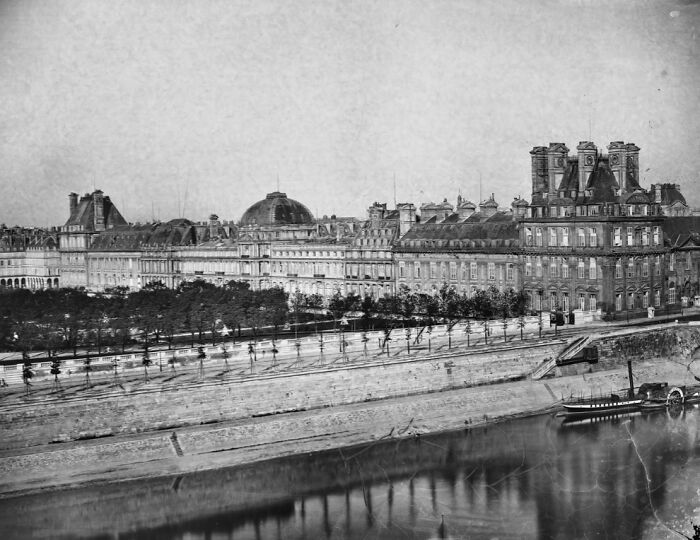
Historic riverside buildings showcasing architectural styles from a past era, representing interesting buildings lost to time.

It is hard to picture the Louvre today without that open view to the west, but for centuries, the massive Tuileries Palace blocked that sightline. Started in 1564 for Catherine de’ Medici, this sprawling residence served as the Parisian headquarters for French monarchs from Henri IV right up to Napoleon III, boasting a façade that stretched an incredible 266 meters.

The view from the Solférino Bridge changed forever after the Paris Commune torched the building in 1871. The ruins lingered for a bit, but they were ultimately razed in 1883, transforming the site into the open terrace that now links the Place du Carrousel to the famous gardens.

Gustave Le Gray , wikipedia Report

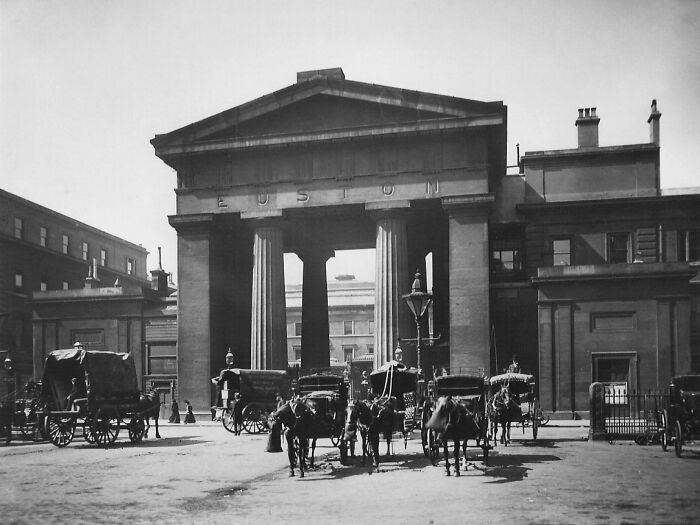
Historic building with horse-drawn carriages in front, showcasing interesting architecture lost as the world changed.

Londoners still mourn the loss of the Euston Arch, the impressive gateway that originally greeted travelers at Euston Station from 1837 until its controversial demolition in 1962. Facing Drummond Street, it was a victim of the 60s drive to modernize the railway hub, but it turns out the wreckage wasn’t lost forever.

Much of the original stone was actually located years later, having been unceremoniously dumped into the Prescott Channel to serve as fill material. With the station set to become the London terminus for the High Speed 2 line, there have been ongoing proposals to retrieve those blocks and reconstruct the arch, potentially righting a decades-old architectural wrong.

wikipedia , wikipedia Report

ADVERTISEMENT

ADVERTISEMENT

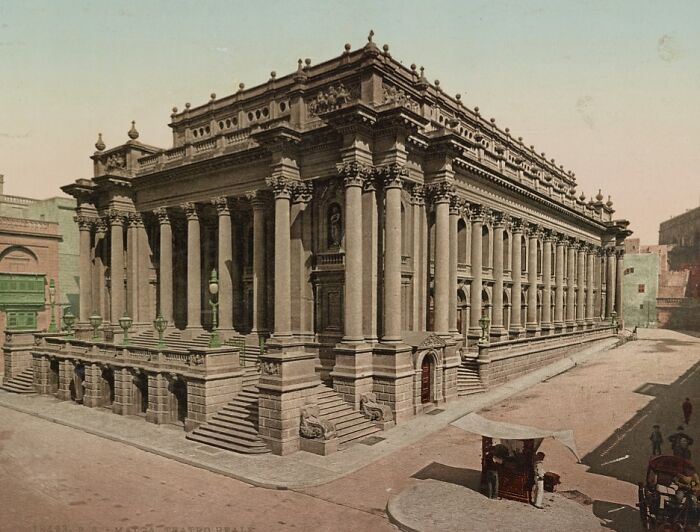
Historic large building with classical columns and detailed stonework, an example of interesting buildings lost as the world changed.

If you visit Valletta today, you will find the Pjazza Teatru Rjal, a unique open-air venue that finally brought life back to one of the city’s most scarred sites in 2013. For decades, the spot was a ghostly reminder of World War II, where aerial bombing in 1942 destroyed the magnificent Royal Opera House originally designed by Edward Middleton Barry in 1866.

The path to rebuilding was messy; at one point in 2006, the government tried to push through a plan to put a Parliament building there, but the public outcry was massive. Renzo Piano, the famous Italian architect, eventually steered them in a different direction. He convinced officials to move the Parliament project to Freedom Square and instead integrated the opera house ruins into a controversial but striking open-air theatre design. Even when writing in English, everyone respects the local title, referring to the space strictly by its Maltese name.

Photoglob Co. , wikipedia Report

ADVERTISEMENT

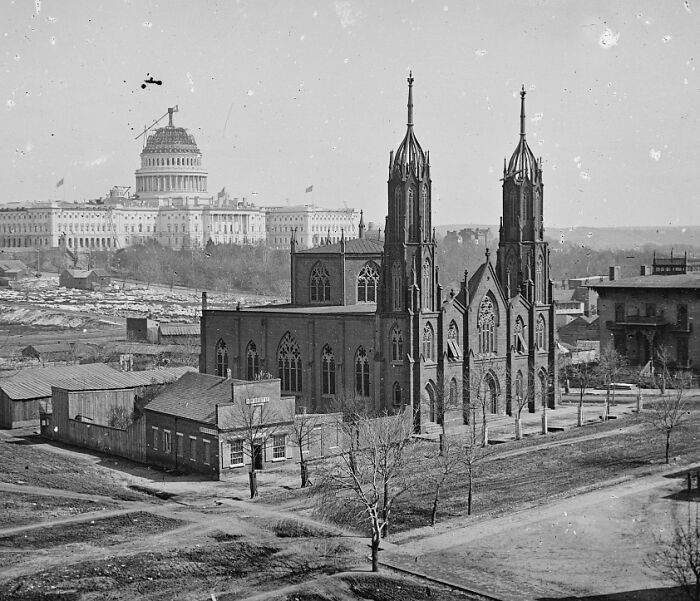
Gothic-style building with tall spires and surrounding structures, showcasing interesting buildings lost as the world changed.

It is a striking juxtaposition to see the Trinity Episcopal Church standing tall while the U.S. Capitol looms in the background, still under construction. Despite efforts to keep the parish alive with renovations and a new hall in the 1890s, the congregation just couldn’t outrun its mounting debts.

After World War I, the local diocese stepped in to convert the struggling church into a social services center, but even that purpose had an expiration date. By 1936, the property was sold off, stripped of anything valuable, and flattened to make way for a parking lot. The plot of land that is now occupied by the massive Frances Perkins Building, home to the Department of Labor.

George N. Barnard , wikipedia Report

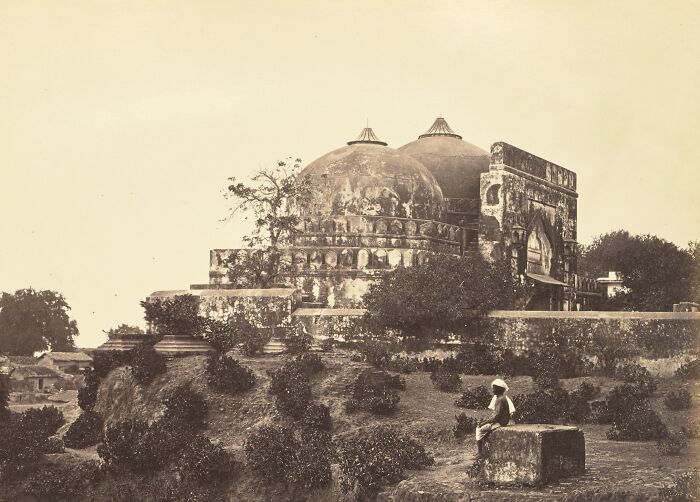
Faded historic building with domes surrounded by greenery and a person sitting on a stone block in the foreground.

Commissioned by Mir Baqi, a general serving under the first Mughal Emperor Babur, the Babri Masjid stood for centuries after its construction around 1528 or 1529. Inscriptions on the site confirmed its origins in the year 935 AH, marking it as a significant piece of history in Faizabad.

That history was violently interrupted in 1992, however, when a crowd of Hindu nationalists descended on the site and leveled the mosque. The demolition was a flashpoint moment, triggering a wave of severe communal unrest and rioting that surged across the entire Indian subcontinent.

Samuel Bourne , wikipedia Report

ADVERTISEMENT

ADVERTISEMENT

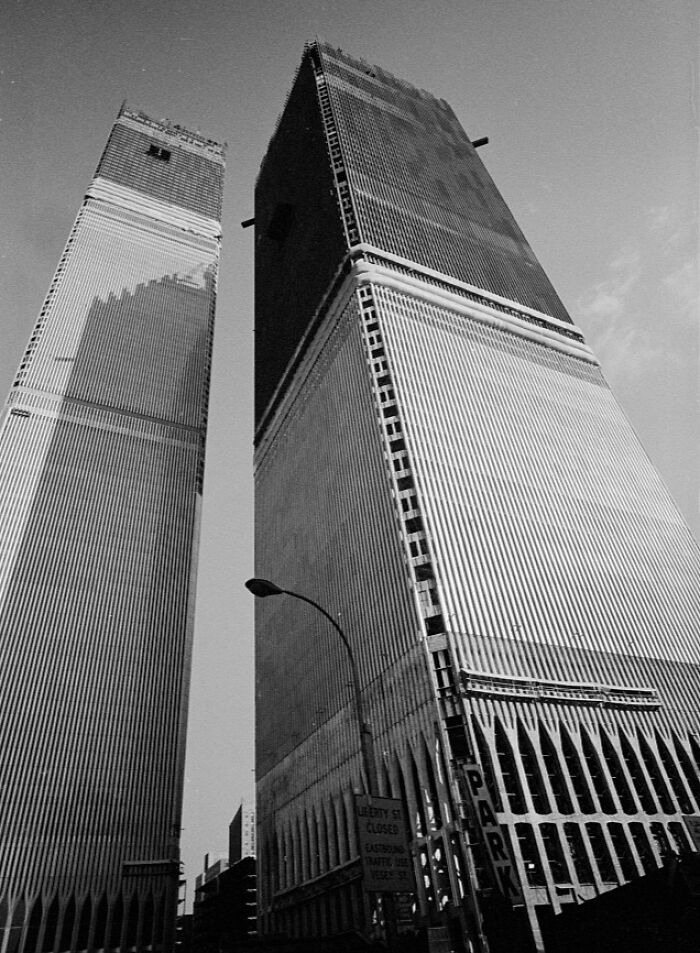
Black and white photo of twin towers, iconic interesting buildings that got lost as the world changed skyline view.

The skyline of New York City was permanently altered on the morning of September 11, 2001, when the Twin Towers were destroyed in a coordinated terrorist attack. In a sequence of events that shook the world, hijackers seized two commercial airliners and directed them into the skyscrapers.

The first impact occurred at 8:46 a.m., when Mohamed Atta piloted American Airlines Flight 11 into the northern face of the North Tower, tearing through floors 93 to 99. Just seventeen minutes later, at 9:03 a.m., Marwan al-Shehhi drove United Airlines Flight 175 into the South Tower, striking the southern side between the 77th and 85th floors.


Pages: 1 2 3 4 5 6

Post Comment

WIN $500 OF SHOPPING!

    This will close in 0 seconds

    RSS
    Follow by Email