39 Surprising Life Events That Only Make Sense When You Experience Them Yourself
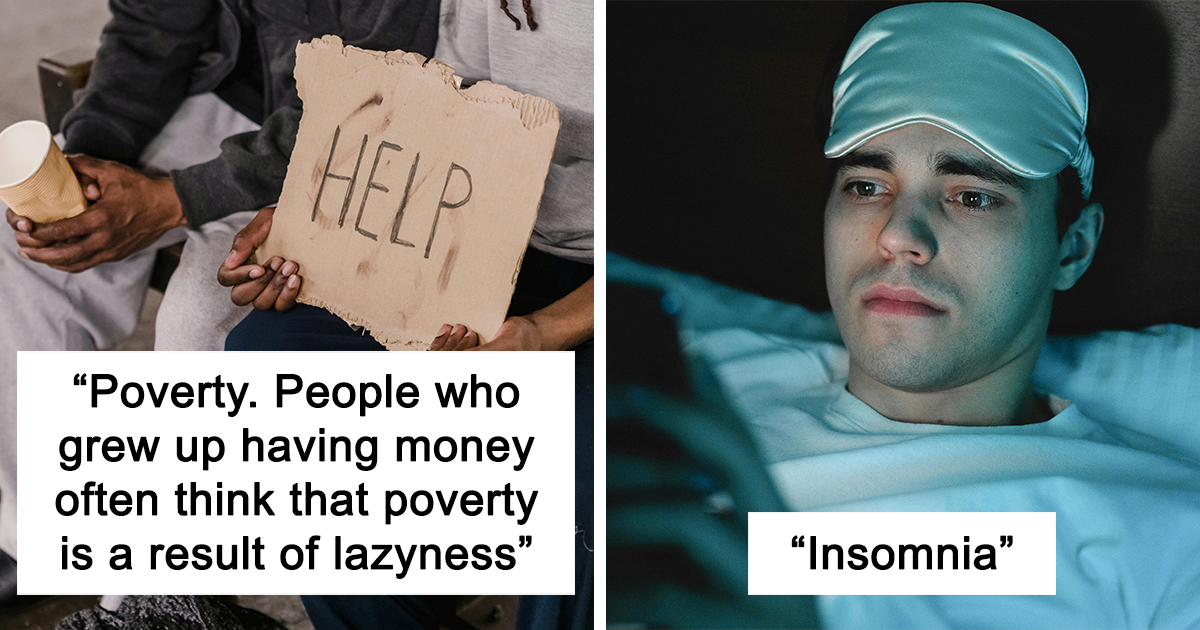
“By embracing some cognitive flexibility, and becoming the listener who asks good questions rather than opinionated or judgmental questions, we open the gate to adding to our empathy box. Therapists must practice this ability before ever entering a counseling session. We often do the work on ourselves well before therapy with others so that we are open and allow trust and safety to enhance the sessions for clients. But this is not exclusive to us, and anyone can begin to practice this kind of adaptive flexibility. It’s not easy, but with practice, empathy can begin to grow.”
 Sexual Assault. It’s a different whole beast that you have to experience it before you just spout off on what you think, and you have to really understand what’s going on and what to do to deal with the aftermath.
And the trauma and recovery of regaining your identity as a person and not as a victim and the fact that we still don’t think about it or work with it with any gender is appalling.
 OCD.
OCD.
I always roll my eyes when people simply pass off a casual thing as OCD.
“Oh I’m so OCD about this cabinet!”
You don’t have OCD. OCD is an actual disorder.
OCD is when your mind is overthinking like crazy. Every interaction with someone, no matter how big or small, gets blown completely out of proportion in your head; and you might have what I have in which I need to reflect and use this weird face ritual to clear the thought from my head, where any other noise in the room can throw me off and force me to restart the process.
If I touch something with my left hand, I have to touch it with my right hand. I find myself getting flashes of anger towards myself and other people when something isn’t happening the way I think it should be. Intrusive thoughts are in my head far, far too often.
It’s a h**l of a lot more than just wanting your rooms clean, or making sure your feet are walking in the squares on a tile floor.
I really hate that OCD is sort of trivialized by the majority of people.
 How easy it is for medical costs to completely ruin you (in the USA, obviously).
I was diagnosed with leukemia when I was 13. My initial stay in the hospital (so from diagnosis to the first time I was able to go back home) was 50 days. The bill for that alone was $1.5M.
I was very lucky. We were upper middle class. My dad had very good health insurance through his employer, so it did not ruin us. But it doesn’t take a genius to imagine what would happen if that hadn’t been the case.
Think about that next time you want to call anyone in favor of healthcare reform a socialist/marxist/etc. Imagine busting your a*s for decades, being responsible, and saving as much money as you can. Then you’re told you will have to go broke to save your child’s life. Now imagine that the sick child is not your only child. You have three others. Not only are you and your spouse going broke, but those children now have parents unable to support them so that they can live their lives to the fullest.
People’s ability to just ignore how f****d up that is will never cease to amaze me. I was 13 f*****g years old, and I was able to empathize with people who were not as lucky as me. It’s not that f*****g difficult. And if you think it’s acceptable that a family in the richest nation in the world could go broke just because a child gets sick, you’re a heartless, cynical a*****e.
Most of us are hardwired for kindness, but it’s not exactly clear how. WebMD explained that human beings have specialized ‘mirror neurons’ in their brains. They activate when we see and feel emotions. Researchers believe that it’s these neurons that create empathy. However, other scientists think that empathy is purely a construct of our intelligence.
 Miscarriage.
I birthed a grapefruit-sized water bubble into my underwear and when it popped, I saw the giant eyes and tiny fingers before I couldn’t take it anymore and had to flush it. Then I bled for a month.
Everyone I talked to said it was a very common thing.
“Oh so you had one?”
“No but I know someone who did”.
Its counterpart is cognitive empathy, wherein we can intellectually understand how someone is feeling. Unlike emotional empathy, cognitive empathy can take time to cultivate and is more of a skill. It centers around learning how to identify emotions and behaviors.
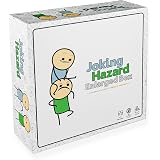
Joking Hazard Enlarged Box Empty Box for Card Storage
$12.00 (as of October 26, 2026 01:02 GMT +00:00 - More infoProduct prices and availability are accurate as of the date/time indicated and are subject to change. Any price and availability information displayed on [relevant Amazon Site(s), as applicable] at the time of purchase will apply to the purchase of this product.)
Supa Ant 6x8ft. Welding Blanket Fireproof (Pack of 2) - Heavy Duty Weld Fire Blanket Tools - Welders Cover for Men Curtain with Gloves - Large Welding Gear for Welder Accessories
(as of October 26, 2026 01:02 GMT +00:00 - More infoProduct prices and availability are accurate as of the date/time indicated and are subject to change. Any price and availability information displayed on [relevant Amazon Site(s), as applicable] at the time of purchase will apply to the purchase of this product.)
RIVER OF GOODS Coastal 52 Inch Wooden Bead LED Ceiling Fan, Brown
(as of October 26, 2026 01:02 GMT +00:00 - More infoProduct prices and availability are accurate as of the date/time indicated and are subject to change. Any price and availability information displayed on [relevant Amazon Site(s), as applicable] at the time of purchase will apply to the purchase of this product.)
White Leaf Baby Food Pouches, Toddler Snack, Mango + Carrot + Banana + Pear | 24 Pack, Organic No Added Sugar, Non-GMO, BPA-Free Regeneratively Farmed, Squeeze Puree Smoothie Pouch for Adults & Children
$69.95 (as of October 26, 2026 01:02 GMT +00:00 - More infoProduct prices and availability are accurate as of the date/time indicated and are subject to change. Any price and availability information displayed on [relevant Amazon Site(s), as applicable] at the time of purchase will apply to the purchase of this product.)