Unveiled: The Mysterious ‘Star Lizard’ Dinosaur Tribute That Connects Prehistoric Life to David Bowie’s Cosmic Legacy
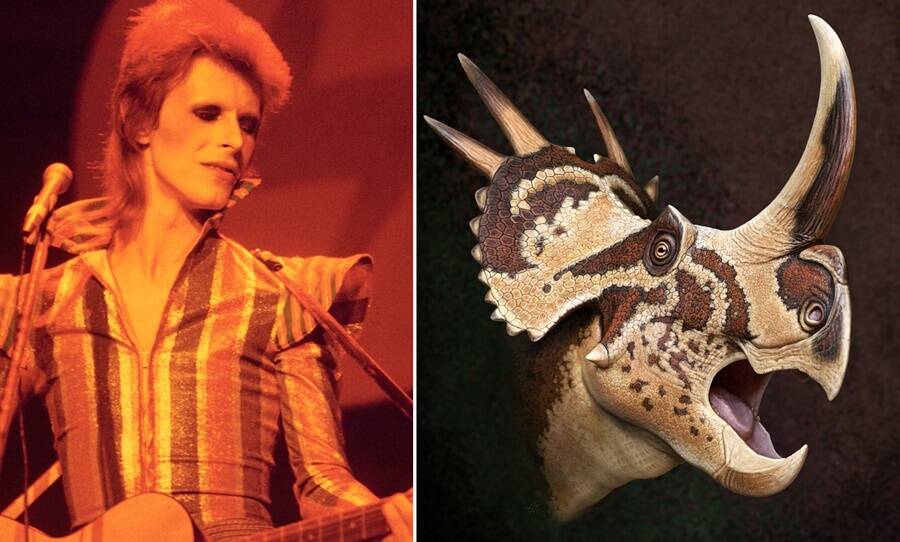
Ever wonder what happens when you mix a prehistoric fashionista with a rock legend? Well, meet the Stellasaurus—Montana’s very own “star lizard” who strutted through badlands some 75 million years ago, sporting a skull that looked like it belonged on a cosmic runway. This dinosaur wasn’t just any old plant-eater; its parrot-like beak, spiky frills, and a star-shaped crown made it the Beyoncé of the Cretaceous period. Named as an homage to David Bowie—the true Starman—this 20-foot charmer’s flamboyant headgear wasn’t just for show; it was the ultimate mating call, proving you don’t have to be a pop icon to rock a hairstyle that turns heads for millions of years. Digging deeper, the Stellasaurus also cracks open the dinosaur family tree, filling in the gaps with its evolutionary “ch-ch-changes” that paleontologists have dreamed about since the early ‘90s. Intrigued? You should be. LEARN MORE
The Stellasaurus or ‘star lizard’ roamed the badlands of Montana some 75 million years ago.
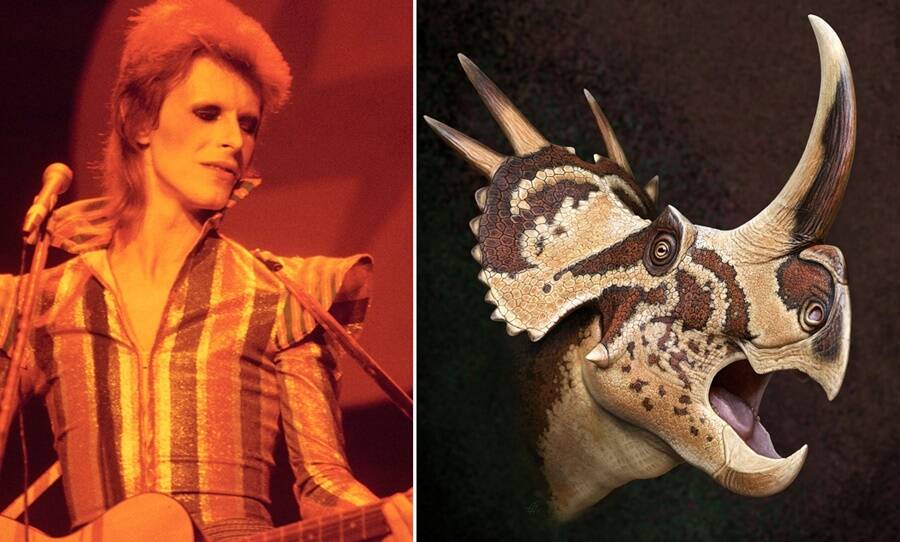
Getty/South West News ServiceThe Stellasaurus is a new species of dinosaur possessing ornate horns and a star-shaped skull.
It’s no secret scientists take personal liberties in naming their discoveries. For a newly discovered dinosaur that sported some flamboyant headgear, scientists chose the name Stellasaurus or “star lizard” in honor of the true Starman himself, David Bowie.
According to the Daily Mail, fossils unearthed in Montana belonged to a dinosaur that roamed the territory some 75 million years ago. The dinosaur possessed a parrot-like beak, a horn on its nose, bony frills, and a ‘star-like’ skull.
The dinosaur genus was given the name Stellasaurus ancellae. The first word is derived from a combination of the Latin word ‘stella’ meaning ‘star’ and ‘saurus’ which is Greek for ‘lizard.’ It will henceforth be the first member of the new genus of Stellasaurus.
A study on the new star lizard was published in Royal Society Open Science.
The Stellasaurus belongs to the ceratopsians, a group of plant-eating beaked dinosaurs which includes the similar-looking Triceratops. During the Cretaceous period, Stellasaurus stomped around the Earth alongside other ferocious dinosaurs like the Tyrannosaurus rex and raptors.
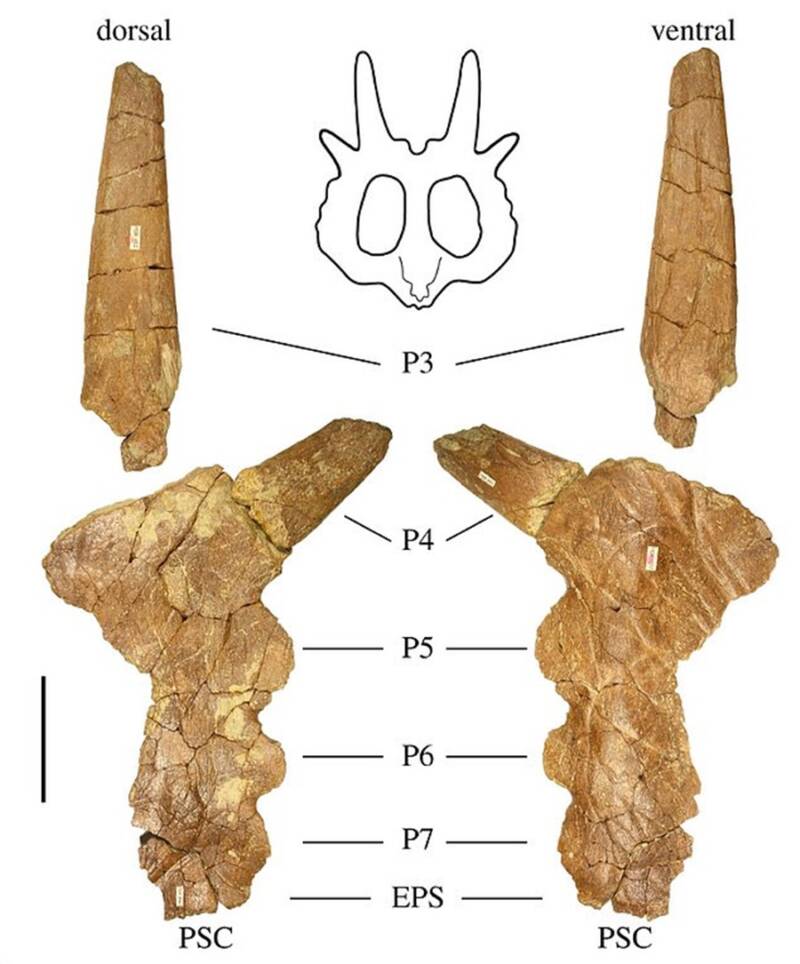
Wilson et alAn isolated partial skull of the ceratopsid with the main bone in the frill at the back of the head.
A 20-foot long body that weighed roughly two tons and unique horn features — an important tool for attracting potential mates — distinguished this newly discovered species.
“The skull ornamentation is astonishing – almost star-like,” said paleontologist Jack Wilson at Montana State University’s Department of Earth Sciences who is a self-professed fan of British rock.
The name of the new dinosaur is a reference to its star-like features and an homage to Bowie, whose song “Starman” was a 1972 hit.
Like Bowie’s glam fashions, this dinosaur’s skull was covered with intricate ornaments that were sure to attract attention. Its skull featured a long, upright horn above the nose, pointed horns above the eyes, and a frill at the back of the head with four spikes.
“Ceratopsids evolved many different forms of ornamentation on their heads including horns above the nose, eyes and large bony frills which projected from the back,” Wilson said.
Their horns and frills were unique and varied between different individuals, he explained, similar to peacocks that each have their own unique set of tail feathers to attract a mate.
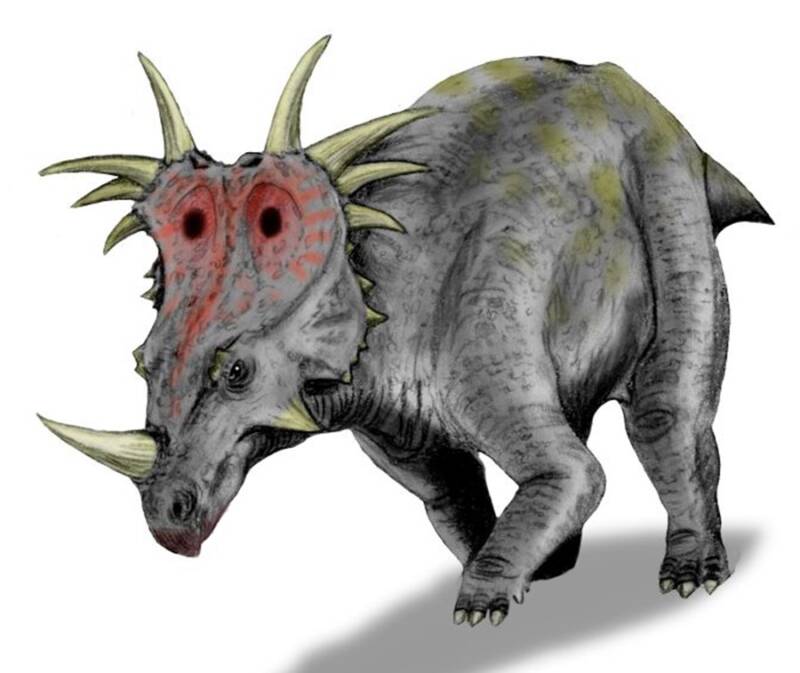
Wikimedia CommonsStyracosaurus which later evolved into the Stellasaurus.
The fossils of the Stellasaurus were first discovered in the town of Cut Bank, near the border between U.S. and Canada in 1986 by paleontologist Carrie Ancell. However, like many fossil artifacts that remain unexamined in museum archives, this ‘Bowie dino’ is only just being reexamined and was finally declared a new species.
The Stellasaurus also represents a missing link in the dinosaur family tree. It was preceded by a dinosaur called Styracosaurus albertensis, a heavily-spiked ceraptopsian, which eventually evolved into the Stellasaurus. After that, the Stellasaurus, in turn, evolved into the Einiosaurus.
“The ornamental horns and spiky frills on the skulls of these animals are what changed the most through evolution,” Wilson said. “The new species has skull ornamentation which is intermediate…This gives us evidence these species are members of a single, evolving lineage – this type of evolution is called anagenesis.”
This hypothesis of evolution was first proposed by the famous paleontologist Jack Horner in 1992. But his theory was not confirmed until the discovery of the Stellasaurus.
“The science of Stellasaurus is remarkable and tells the story of millions of years of unbroken evolutionary change within a single lineage,” Wilson said.
So you can add evolution to the list of things the Stellasaurus shares with its namesake — an unforgettable artist whose career went through many “ch-ch-changes.”
After learning about the newly-discovered Stellasaurus dinosaur named after rock icon David Bowie, read about the largest dinosaur footprint ever found. Then, learn about the Nodosaur dinosaur ‘mummy’ unveiled with its skin and guts intact.

RIVER OF GOODS Stained Glass Magna Carta LED Ceiling Fan - 52" L x 52" W - Tiffany Style - Flush Mount Ceiling Fan with Remote - Teal
(as of October 8, 2026 00:56 GMT +00:00 - More infoProduct prices and availability are accurate as of the date/time indicated and are subject to change. Any price and availability information displayed on [relevant Amazon Site(s), as applicable] at the time of purchase will apply to the purchase of this product.)
KiddyCare Diaper Caddy Organizer Cart for Nursery Baby Basket Gift for Boy/Girl | Diaper Caddy for Changing Table Basket Organizer with Dividers | Caddy for Baby Stuff Breast Pump Caddy - Regular
$8.95 (as of October 8, 2026 00:56 GMT +00:00 - More infoProduct prices and availability are accurate as of the date/time indicated and are subject to change. Any price and availability information displayed on [relevant Amazon Site(s), as applicable] at the time of purchase will apply to the purchase of this product.)
Joking Hazard by Cyanide & Happiness - 360+ Funny & Inappropriate Comic Cards, Hilarious Party Games | Includes Add-Your-Own-Words Cards
$24.95 (as of October 8, 2026 00:56 GMT +00:00 - More infoProduct prices and availability are accurate as of the date/time indicated and are subject to change. Any price and availability information displayed on [relevant Amazon Site(s), as applicable] at the time of purchase will apply to the purchase of this product.)
Rhythm Superfoods Kale Chips, Zesty Nacho, Organic and Non-GMO, 2.0 Oz (Pack of 4), Vegan/Gluten-Free Superfood Snacks
(as of October 8, 2026 00:56 GMT +00:00 - More infoProduct prices and availability are accurate as of the date/time indicated and are subject to change. Any price and availability information displayed on [relevant Amazon Site(s), as applicable] at the time of purchase will apply to the purchase of this product.)