The Surprising Truth Behind 1950s Pregnancy Tests Using Live Frogs—And Why They Worked Better Than You Think

Ever wondered if frogs could double as pregnancy tests? Sounds bonkers, right? But way before those familiar little sticks cluttered up pharmacy shelves, people were banking on some slimy amphibians to spill the beans about bun-in-the-oven news—and, surprisingly, it actually worked. Yup, these slick little croakers weren’t just garden hopscotchers or pesky fly catchers; they moonlighted as nature’s most unexpected pregnancy detectors. Picture this: female African clawed frogs getting a little poke of human urine, then, if they kicked off ovulating, bam—baby on board confirmed! It’s a wild, wacky slice of medical history that proves science can be downright quirky. Curious how injecting frogs became the go-to before modern tests? Dive into the bizarre amphibian-assisted world of pregnancy detection. LEARN MORE
There was a very strange tradition back in history where people used frogs to correctly identify if a patient was pregnant – and it worked in the weirdest way.
Science is amazing, and the way that the bodies of frogs work is equally as cool.
The slimy little creatures are more than just household pets and fly catchers – they’re nature’s pregnancy detectors, too.
According to Smithsonian Magazine, women conducted the ‘Hogben test’ before traditional pregnancy tests were created in the 1970s.
That’s right, 50 years ago and beyond, people were using urine and frogs to figure things out, but to clarify, they weren’t urinating on the frogs.
Instead, female African clawed frogs were being imported and injected with urine into their hind legs before being put back in their cages.
If the frog ovulated and bore eggs, the patient was pregnant.

Replace the stick with a frog and you’ll be transported to the 50s (Getty Stock Images)
If not, better luck next time.
So, how does this work? Well, apparently the chorionic gonadotropin pregnancy hormone in the human body kickstarts ovulation in frogs.
In 1938, Dr Edward R. Elkan wrote about the test in the British Medical Journal, dubbing it the ‘xenopus pregnancy test’. “The discovery of what is now known as the xenopus pregnancy test is based on experiments conducted by Hogben (1930, 1931), who observed that hypophysectomy produced ovarian retrogression, and the injection of anterior pituitary extracts ovulation, in the female South African clawed toad.”
The reason why it became such a great method was because previously they’d do the same to mice, but would then have to dissect them to check for changes in their ovaries.
However, ‘toads were reusable and could be conveniently kept in aquaria’.
He added: “Among the 295 tests which I have done so far and in which 2,112 frogs were used I have not seen one clear positive that did not indicate a pregnancy. There were a few negative results which when repeated after a fortnight became positive, but I do not think that these can be regarded as failures.”
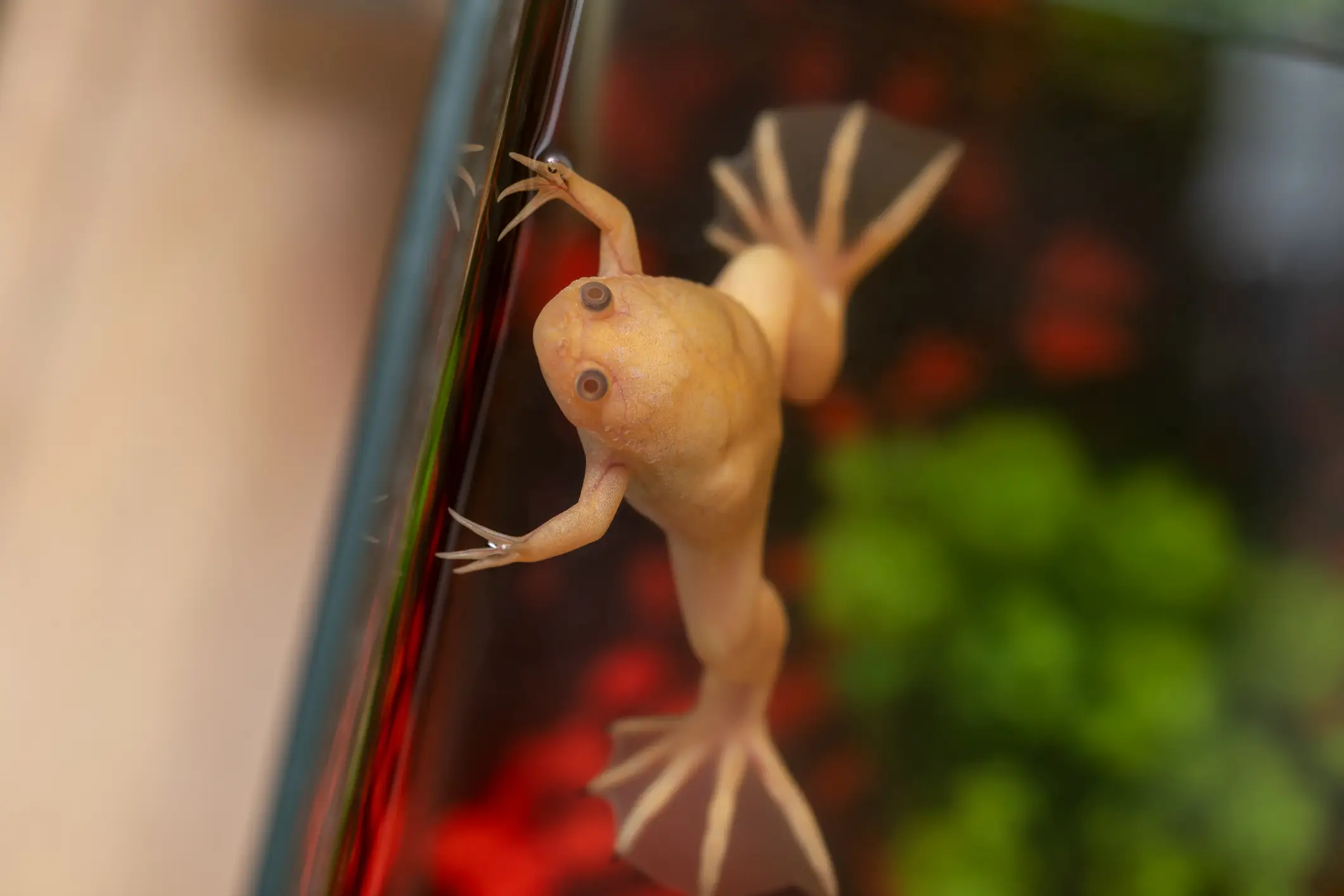
The frogs interact with female pregnancy hormones (Getty Stock Images)
But this isn’t the only strange pregnancy method that has been used before the invention of the stick.
Ancient Egyptians, for example, used to urinate on wheat and barley to test. If it sprouted, it meant they were pregnant. If not, they’ve probably ruined their dinner.
RIVER OF GOODS Coastal 52 Inch Wooden Bead LED Ceiling Fan, Cream
(as of September 21, 2026 00:45 GMT +00:00 - More infoProduct prices and availability are accurate as of the date/time indicated and are subject to change. Any price and availability information displayed on [relevant Amazon Site(s), as applicable] at the time of purchase will apply to the purchase of this product.)
RIVER OF GOODS Alabaster LED Mesh Caged Ceiling Fan - 52" L X 52" W - White/Oak Wood-Grain Blades
(as of September 21, 2026 00:45 GMT +00:00 - More infoProduct prices and availability are accurate as of the date/time indicated and are subject to change. Any price and availability information displayed on [relevant Amazon Site(s), as applicable] at the time of purchase will apply to the purchase of this product.)
Joking Hazard Enlarged Box Empty Box for Card Storage
$12.00 (as of September 21, 2026 00:45 GMT +00:00 - More infoProduct prices and availability are accurate as of the date/time indicated and are subject to change. Any price and availability information displayed on [relevant Amazon Site(s), as applicable] at the time of purchase will apply to the purchase of this product.)
Kinsa Smart,Fever, Digital Medical Baby, Kid and Adult Termometro - Accurate, Fast, FDA Cleared Thermometer for Oral, Armpit or Rectal Temperature Reading - QuickCare
$29.00 (as of September 21, 2026 00:45 GMT +00:00 - More infoProduct prices and availability are accurate as of the date/time indicated and are subject to change. Any price and availability information displayed on [relevant Amazon Site(s), as applicable] at the time of purchase will apply to the purchase of this product.)