Microsoft AI Chief Drops Grim 18-Month Countdown: Which Office Jobs Will Vanish Next?

So here’s a thought to chew on while you sip your office coffee: what if your next coworker isn’t human but a slick AI that never takes lunch breaks or calls in sick? Yep, the rise of AI isn’t just changing the way we work—it’s rewriting the very job descriptions for anyone tethered to a desk. ChatGPT has snuck into our daily workflows like that unexpected pop song that you kinda hate but can’t stop humming. But amidst all the helpfulness, there’s this nagging question—is AI the friendly colleague or the chaos agent ready to elbow us out of our gigs? Mustafa Suleyman, Microsoft’s AI boss, assures us that AI will serve humanity instead of outshining it. Still, with white-collar jobs allegedly on the chopping block within the next 12 to 18 months, it begs the question—how long before your keyboard becomes just a fancy paperweight? Buckle up, it’s going to be a bumpy ride—funny, scary, and full of ‘what just happened?’ moments. LEARN MORE
Everyone currently working in a ‘white-collar’ office job has been told to prepare for an uncertain future thanks to the rise of AI.
While ChatGPT is becoming a useful everyday tool for a lot of people, you can’t help but worry about how it will play out in the job market.
On many levels, the age-old idea of ‘being replaced by robots’ is very much becoming a reality, yet Mustafa Suleyman argues that AI is ‘designed to enhance human wellbeing and serve humanity, not exceed humanity’.
He told the Financial Times that Microsoft, which has a $135bn stake in ChatGPT maker OpenAI, wants AI tools to remain under human control.
At the same time, he said the advancements mean that ‘white-collar work, where you’re sitting down at a computer, either being a lawyer or an accountant or a project manager or a marketing person — most of those tasks will be fully automated by an AI within the next 12 to 18 months’.

Microsoft’s CEO of AI Mustafa Suleyman says ‘white-collar’ jobs will be fully automated in the next 12 to 18 months (Stefan Wermuth/Bloomberg via Getty Images)
Suleyman believes that AI agents will coordinate better with large businesses in the next three years and that the technology will learn by itself and improve over time. Frightening, I know.
“Creating a new model is going to be like creating a podcast or writing a blog,” he said.
“It is going to be possible to design an AI that suits your requirements for every institutional organisation and person on the planet.
“We have to reset that and make the assumption that we should only bring a system like that into the world, that we are sure we can control and operates in a subordinate way to us,” Suleyman added.

‘Most of those tasks will be fully automated’, says Suleyman (Getty Stock Images)
Meanwhile, Kristalina Georgieva, the managing director of the International Monetary Fund (IMF), warned at the World Economic Forum last month that AI will be like a ‘tsunami hitting the labour market’.
“We expect over the next years, in advanced economies, 60 per cent of jobs to be affected by AI, either enhanced or eliminated or transformed – 40 per cent globally,” she added.
“Tasks that are eliminated are usually what entry-level jobs do at present, so young people searching for jobs find it harder to get to a good placement.”
It comes after Microsoft’s list of 40 jobs and careers that are ‘most at risk’ from AI.
Towards the top of their list are writers (great), historians, customer service representatives and telemarketers.

AI can automates filing, reduces errors and improves document organisation (Getty Stock Images)
The top 40 most affected occupations by generative AI:
1) Interpreters and Translators
2) Historians
3) Passenger Attendants
4) Sales Representatives of Services
5) Writers and Authors
6) Customer Service Representatives
7) CNC Tool Programmers
8) Telephone Operators
9) Ticket Agents and Travel Clerks
10) Broadcast Announcers and Radio DJs
11) Brokerage Clerks
12) Farm and Home Management Educators
13) Telemarketers
14) Concierges
15) Political Scientists
16) News Analysts, Reporters, Journalists
17) Mathematicians
18) Technical Writers
19) Proofreaders and Copy Markers
20) Hosts and Hostesses
21) Editors
22) Business Teachers, Postsecondary
23) Public Relations Specialists
24) Demonstrators and Product Promoters
25) Advertising Sales Agents
26) New Accounts Clerks
27) Statistical Assistants
28) Counter and Rental Clerks
29) Data Scientists
30) Personal Financial Advisors
31) Archivists
32) Economics Teachers, Postsecondary
33) Web Developers
34) Management Analysts
35) Geographers
36) Models
37) Market Research Analysts
38) Public Safety Telecommunicators
39) Switchboard Operators
40) Library Science Teachers, Postsecondary
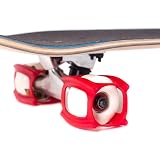
Skater Trainer Wheels - Beginners get Skateboard Tricks Fast, Safe and Fun | Viral accessory gift - Helps beginners stay excited about their new skateboard - Kids & parents love these
$28.99 (as of October 24, 2026 01:02 GMT +00:00 - More infoProduct prices and availability are accurate as of the date/time indicated and are subject to change. Any price and availability information displayed on [relevant Amazon Site(s), as applicable] at the time of purchase will apply to the purchase of this product.)
The Door Balancer Eliminates The Need for Door Props, Door Stops and Door Wedges
(as of October 24, 2026 01:02 GMT +00:00 - More infoProduct prices and availability are accurate as of the date/time indicated and are subject to change. Any price and availability information displayed on [relevant Amazon Site(s), as applicable] at the time of purchase will apply to the purchase of this product.)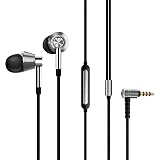
1MORE Triple Driver In-Ear Headphones - Silver - Wired - Adult - In Ear - 18 grams - 90 days limited warranty
(as of October 24, 2026 01:02 GMT +00:00 - More infoProduct prices and availability are accurate as of the date/time indicated and are subject to change. Any price and availability information displayed on [relevant Amazon Site(s), as applicable] at the time of purchase will apply to the purchase of this product.)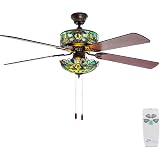
RIVER OF GOODS Stained Glass Magna Carta LED Ceiling Fan - 52" L x 52" W - Tiffany Style - Flush Mount Ceiling Fan with Remote - Teal
(as of October 24, 2026 01:02 GMT +00:00 - More infoProduct prices and availability are accurate as of the date/time indicated and are subject to change. Any price and availability information displayed on [relevant Amazon Site(s), as applicable] at the time of purchase will apply to the purchase of this product.)