Why Tigers’ Bright Orange Coats Are Invisible to Their Prey—The Surprising Science Behind the Camouflage
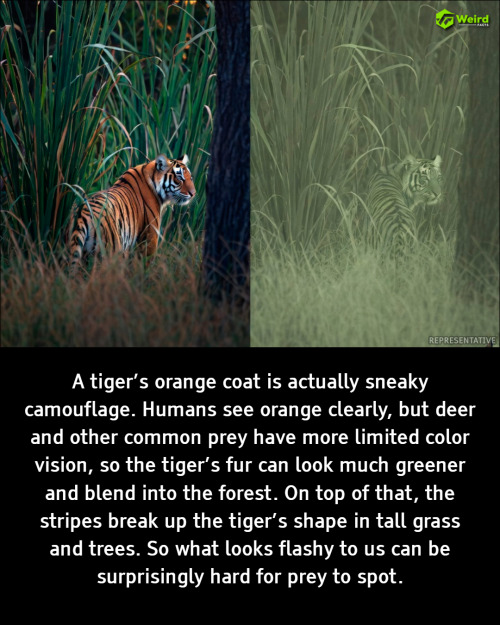
Ever wonder why tigers strut around flaunting that blazing orange coat like it’s high fashion, all while managing to stay the ultimate sneak predators of the jungle? Turns out, what looks like a flaming spotlight to us is more like a chameleon’s trick to their prey. Deer and other critters don’t really see the tiger’s coat as bright orange — it’s more like forest green camouflage to their eyes! And those bold stripes? They’re nature’s way of playing “break the outline” among tall grass and trees. It’s a wild reminder that sometimes, the world ain’t always what it looks like—especially when you’re the hunter blending in plain sight. Intrigued by this color conundrum? Dive deeper into the science behind the tiger’s stealthy style. LEARN MORE

A tiger’s orange coat is actually sneaky camouflage. Humans see orange clearly, but deer and other common prey have more limited color vision, so the tiger’s fur can look much greener and blend into the forest. On top of that, the stripes break up the tiger’s shape in tall grass and trees. So what looks flashy to us can be surprisingly hard for prey to spot.
sources: royalsocietypublishing , downtoearth, livescience, pubmed
Tigers look bright orange to humans, but that doesn’t mean the color is a disadvantage in the wild. Research explained in expert coverage notes that many of a tiger’s prey do not see color the way humans do. Deer and other similar prey have more limited color vision than people, so the tiger’s fur is not perceived as vivid orange. Instead, it can appear closer to green and blend into vegetation. The tiger’s dark stripes add another layer of concealment by breaking up its outline among trees and tall grasses. Together, the orange coat and black stripes function as camouflage that helps tigers stalk prey in forests and grasslands, even though the coloration stands out to human eyes.


Kinsa Smart,Fever, Digital Medical Baby, Kid and Adult Termometro - Accurate, Fast, FDA Cleared Thermometer for Oral, Armpit or Rectal Temperature Reading - QuickCare
$18.94 (as of October 19, 2026 01:01 GMT +00:00 - More infoProduct prices and availability are accurate as of the date/time indicated and are subject to change. Any price and availability information displayed on [relevant Amazon Site(s), as applicable] at the time of purchase will apply to the purchase of this product.)
Joking Hazard Enlarged Box Empty Box for Card Storage
$12.00 (as of October 19, 2026 01:01 GMT +00:00 - More infoProduct prices and availability are accurate as of the date/time indicated and are subject to change. Any price and availability information displayed on [relevant Amazon Site(s), as applicable] at the time of purchase will apply to the purchase of this product.)
RIVER OF GOODS LED Boho Ceiling Fan with Hand Woven Brown/Natural Rope - Macrame Knot Work and Hemp Rope Style Eclectic Cottage Decor - 52" L x 52" W - Rich Barnwood/Light Driftwood Fan Blades
(as of October 19, 2026 01:01 GMT +00:00 - More infoProduct prices and availability are accurate as of the date/time indicated and are subject to change. Any price and availability information displayed on [relevant Amazon Site(s), as applicable] at the time of purchase will apply to the purchase of this product.)
RIVER OF GOODS Alabaster LED Mesh Caged Ceiling Fan - 52" L X 52" W - White/Oak Wood-Grain Blades
(as of October 19, 2026 01:01 GMT +00:00 - More infoProduct prices and availability are accurate as of the date/time indicated and are subject to change. Any price and availability information displayed on [relevant Amazon Site(s), as applicable] at the time of purchase will apply to the purchase of this product.)