Ancient Mystery Uncovered: Lost 40,000-Year-Old Human Story Finally Emerges
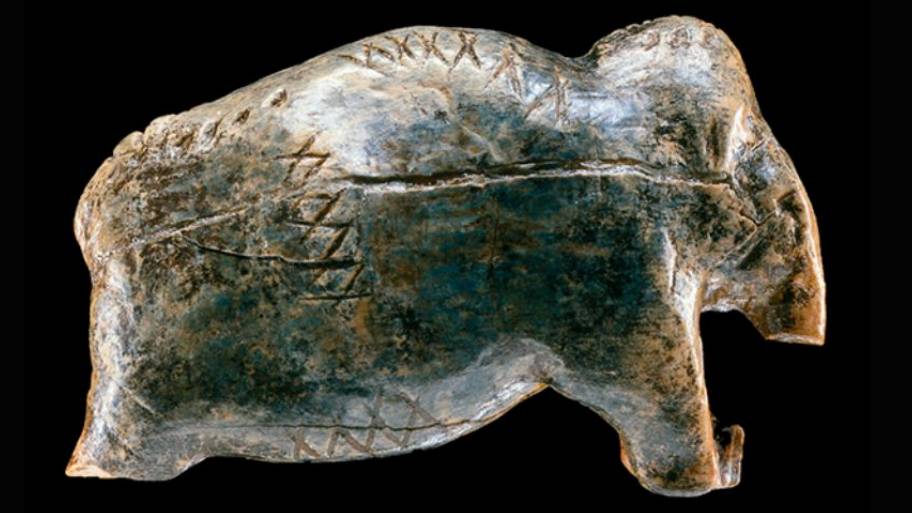
Ever wonder where the whole concept of writing began? Believe it or not, some mysterious carvings and markings etched on bones and ornaments—dating back a staggering 40,000 years—might just be the prehistoric ancestors of the scribbles and texts that flood your screen today. Now, I know what you’re thinking: how on Earth did our ancestors communicate without the fancy alphabets we have now? Well, it seems these ancient Aurignacians (those early modern humans roaming Europe long before we had emojis) had their own way of sending messages—although what these markings actually meant? That’s a puzzle we might never fully crack. The fascinating part? These markings show deliberate, patterned intent, hinting at an early form of information transfer way before the first official written languages popped up in Mesopotamia. So next time you’re scrolling through your feed, remember—writing didn’t just drop from the sky; it has roots that go back tens of thousands of years, leaving us with tantalizing clues—and lots of questions—to ponder. LEARN MORE
The discovery of artefacts from 40,000 years ago may shed some light on a largely missing chapter in human history which could teach us more about how our species developed one of its most fundamental skills, the written word.
Through a few lines we have assigned meaning to in relation to language I’m able to communicate this discovery to you, and it’s likely the source of most of your knowledge.
How do you know things? Probably because you read it somewhere, and writing had to start at some point with a study into 40,000-year-old items from linguist Christian Bentz of Saarland University and the Berlin State Museums archaeologist Ewa Dutkiewicz suggesting markings on the items could be an early form of written communication.
Written language is not universal to every people throughout history, but once we started we’ve never really stopped and many places created their own form of writing things down to pass along information.
These studied artefacts include carvings etched into bones and crafted ornaments, and the experts say the markings aren’t directly connected to spoken language as we’d understand modern words, but nonetheless may have been used to convey information.
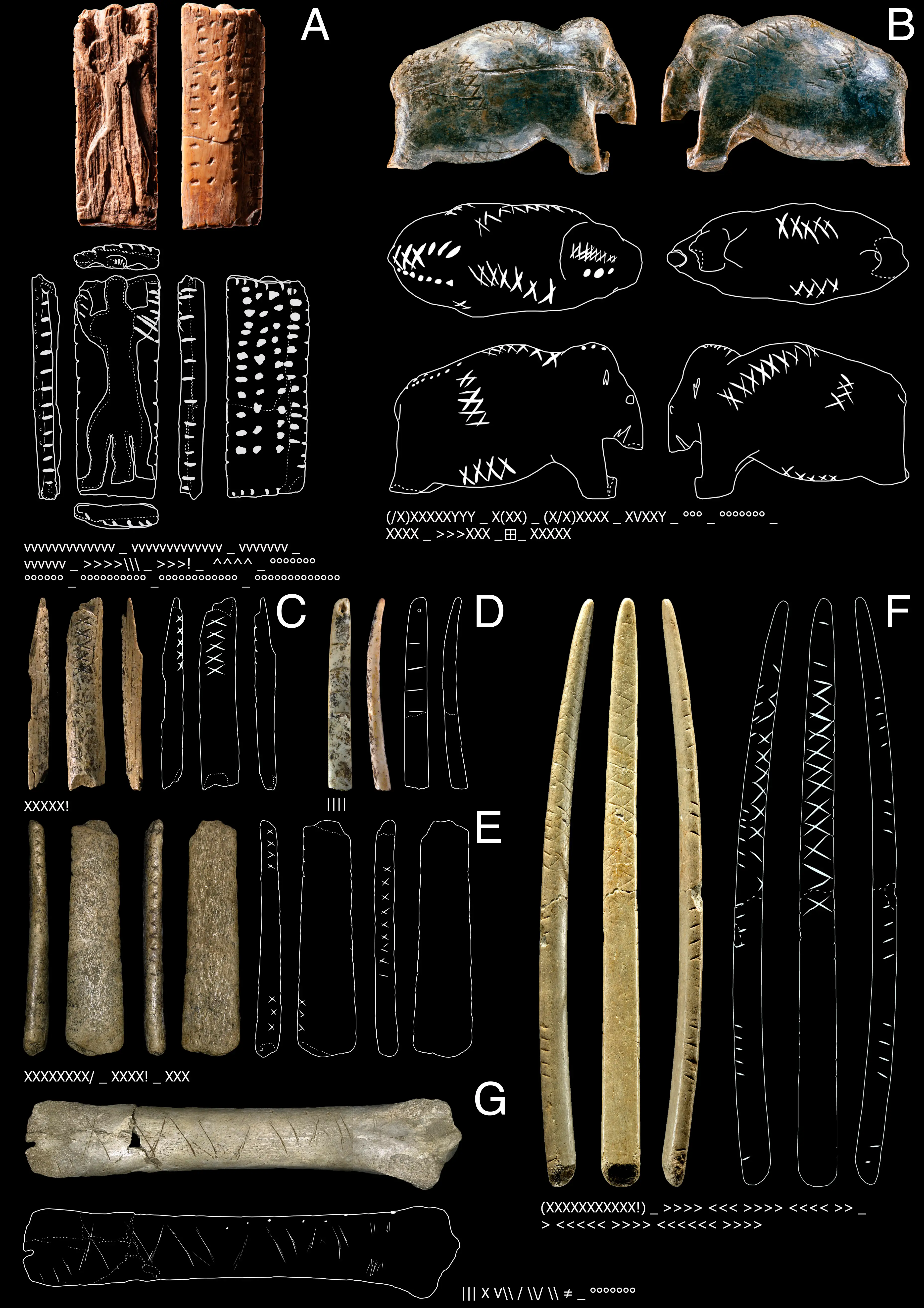
The markings carved around 40,000 years ago may have been meant to convey information, though we don’t know what (Bentz & Dutkiewicz, PNAS, 2026)
They compared this discovery from 40,000 years ago with something called ‘protocuneiform’, which is an early proto-writing system found in Mesopotamia as far back as the fourth millennium BC.
The researchers said: “These results cannot be taken to strictly prove that Aurignacian sign sequences encoded numero-ideographic information as in the case of protocuneiform.
“However, they prove that the first hunter-gatherers arriving in Europe already applied sign sequences of comparable complexity in a deliberate, systematic, and conventional manner – several ten thousand years before the advent of genuine writing.”
By studying the markings the researchers found that they seemed not to be random, instead showing observable patterns.
Ancient peoples who carved these markings did not inscribe direct parallels with the spoken word, as far as we know that started about 5,000 years ago.
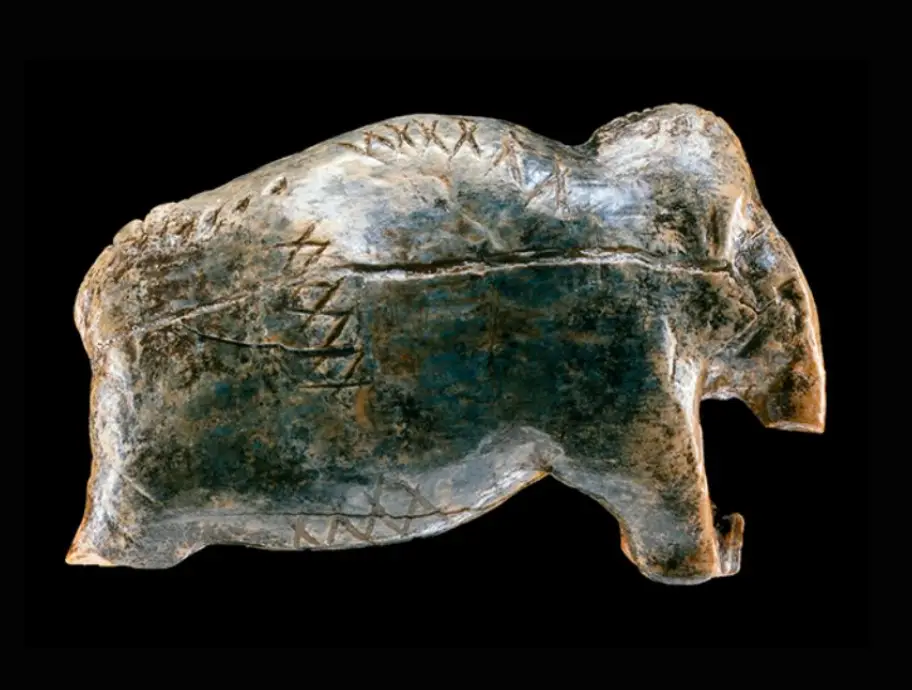
As far as we know humans wouldn’t get to written languages for several thousand more years, but researchers think these markings meant something (Bentz & Dutkiewicz, PNAS, 2026)
If you’re wondering who the Aurignacians were, they’re early modern humans living around Europe from around 43,000 years ago to 26,000 years ago.
Unfortunately we’ll almost certainly never know what the markings meant since they don’t correspond to language and we just don’t know enough about them to learn more.
The researchers said it was ‘hard’ or even ‘impossible’ to prove the symbols served the same purpose as protocuneiform, and they pointed out another key difference.
While that early ‘proto-writing’ system developed into the Sumerian language, the oldest recorded written language, over the course of 1,000 years, this much earlier system of carvings and markings did not.
Instead, the researchers noted that the Aurignacian markings stayed ‘stable in terms of information density’ for 10,000 years and then disappeared.
While the markings are a sign of human craftsmanship and intent we’ll probably never know what they were supposed to mean.
Joking Hazard by Cyanide & Happiness - 360+ Funny & Inappropriate Comic Cards, Hilarious Party Games | Includes Add-Your-Own-Words Cards
$24.95 (as of October 24, 2026 01:02 GMT +00:00 - More infoProduct prices and availability are accurate as of the date/time indicated and are subject to change. Any price and availability information displayed on [relevant Amazon Site(s), as applicable] at the time of purchase will apply to the purchase of this product.)
RIVER OF GOODS Stained Glass Magna Carta LED Ceiling Fan - 52" L x 52" W - Tiffany Style - Flush Mount Ceiling Fan with Remote - Teal
(as of October 24, 2026 01:02 GMT +00:00 - More infoProduct prices and availability are accurate as of the date/time indicated and are subject to change. Any price and availability information displayed on [relevant Amazon Site(s), as applicable] at the time of purchase will apply to the purchase of this product.)
KiddyCare Diaper Caddy Organizer Cart for Nursery Baby Basket Gift for Boy/Girl | Diaper Caddy for Changing Table Basket Organizer with Dividers | Caddy for Baby Stuff Breast Pump Caddy - Regular
$9.99 (as of October 24, 2026 01:02 GMT +00:00 - More infoProduct prices and availability are accurate as of the date/time indicated and are subject to change. Any price and availability information displayed on [relevant Amazon Site(s), as applicable] at the time of purchase will apply to the purchase of this product.)
PROMIXX FORM Protein Shaker Bottle - A Premium Shaker Bottle for Protein Shakes Infusions and Hydration - Durable Gym Shaker Bottle, Leakproof Lid, Odorless - 26oz (Graphite Gray)
$12.99 (as of October 24, 2026 01:02 GMT +00:00 - More infoProduct prices and availability are accurate as of the date/time indicated and are subject to change. Any price and availability information displayed on [relevant Amazon Site(s), as applicable] at the time of purchase will apply to the purchase of this product.)