Ancient Mystery Unearthed: 500,000-Year-Old Hammer Made from Elephant Bone Challenges Europe’s Prehistoric History
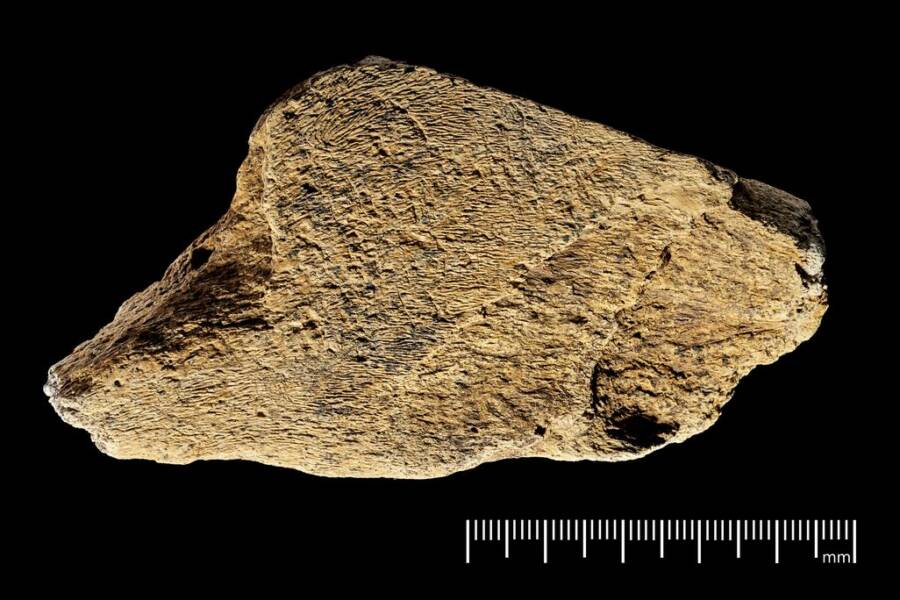
Ever wonder what prehistoric DIY looked like? Picture this: nearly half a million years ago, someone in the sleepy village of Boxgrove was busy sharpening tools—not with some fancy gadget, but using a chunk of elephant bone shaped into a neat little triangular hammer. At just four inches long, this isn’t your everyday prehistoric relic. It’s a rare glimpse into the resourcefulness and savvy craftsmanship of our ancient ancestors, who clearly knew their way around a good “knapping” session—aka the art of sharpening stone tools by striking them just right. What’s even crazier? Elephants and mammoths were practically ghost sightings in prehistoric England, so snagging that bone hammer was probably a pretty big deal. This tiny tool’s story is packed with brainy ingenuity and a hint of mystery about how it even got there. Fancy diving deeper into this ancient tale? LEARN MORE
Unearthed in the village of Boxgrove, this triangular hammer measuring four inches long and two inches wide was used to sharpen other tools in a process known as knapping.
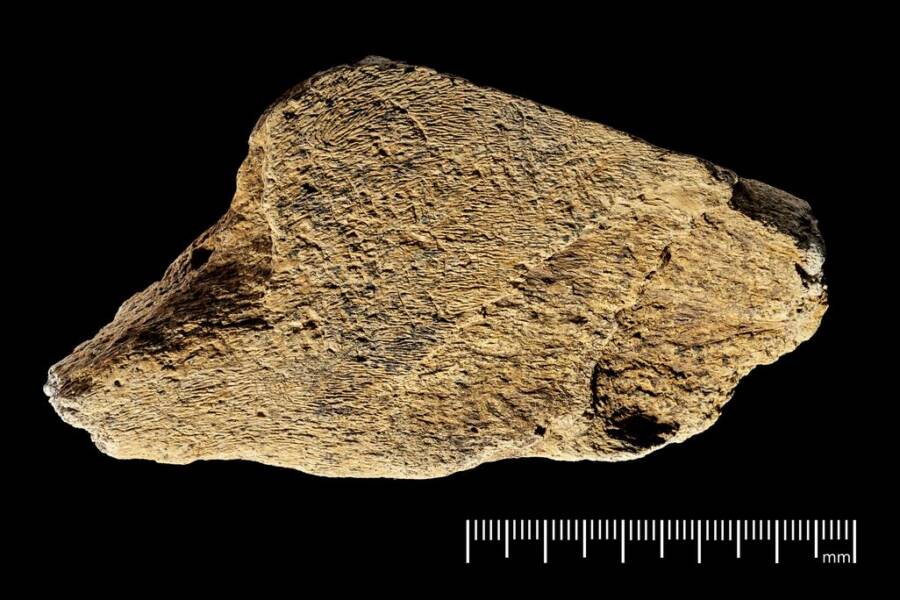
Trustees of the Natural History MuseumThis elephant bone tool dates back almost half a million years, making it far older than any other similar artifact ever found in Europe.
More than 30 years ago, archaeologists found a chunk of elephant bone while excavating a prehistoric site in southern England. This was somewhat unusual, as elephants and mammoths were rare in prehistoric England.
But it wasn’t until recently that researchers examined the bone more closely. Then, they realized that not only was it actually a tool, but it was almost a whopping half-million years old.
Indeed, researchers believe that this bone hammer dates back about 480,000 years, and that it was likely once used to sharpen other tools. It’s an incredibly rare artifact, and a fascinating window into the resourcefulness of prehistoric peoples in this region.
Studying The 500,000-Year-Old Elephant Bone Tool Found In England
According to a statement from the Natural History Museum in London, the bone (likely elephant, though it could also be mammoth) was found in the early 1990s at an archaeological site in West Sussex, England. The discovery of such a bone was unusual — though elephants and mammoths were plentiful in prehistoric Europe, they were rarely found in England — but it was put aside. Now, however, researchers have taken a second look.
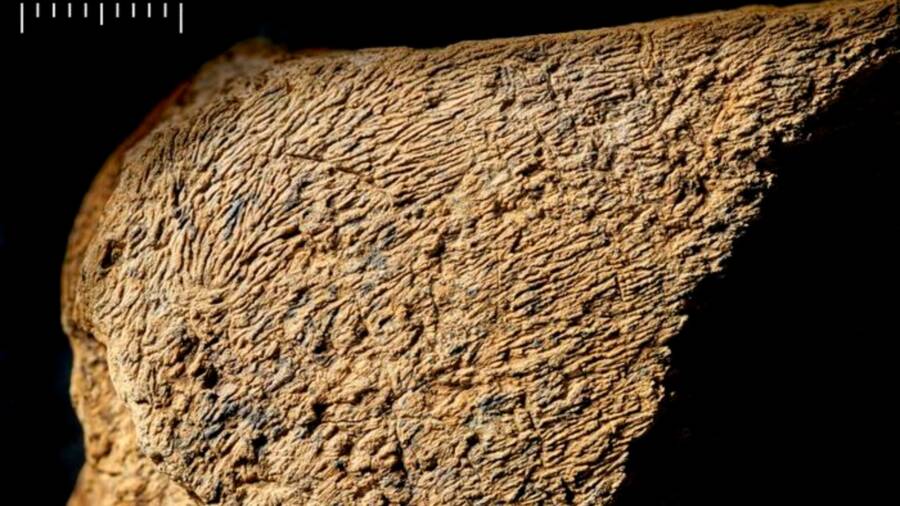
NHM Photo UnitUpon closer inspection, marks can be seen on the bone that suggest it was used to sharpen other tools.
Upon closer examination of the bone, which is about four inches long and one inch thick, researchers realized that it had once served an important purpose. After using 3D scanning and electron microscopes, they realized that the bone was covered with notches and impact marks, suggesting that it had been used as a hammer.
“This remarkable discovery showcases the ingenuity and resourcefulness [of prehistoric people],” said Simon Parfitt of University College London’s Institute of Archaeology and a Scientific Associate at the Natural History Museum, as well as the lead author of a new study about the elephant bone that’s been published in Science Advances.
“They possessed, not only a deep knowledge of the local materials around them, but also a sophisticated understanding of how to craft highly refined stone tools. Elephant bone would have been a rare but highly useful resource, and it’s likely this was a tool of considerable value.”
So how exactly did prehistoric people use the elephant bone tool?
The Historical Context Behind The Elephant Bone Hammer Found In Boxgrove
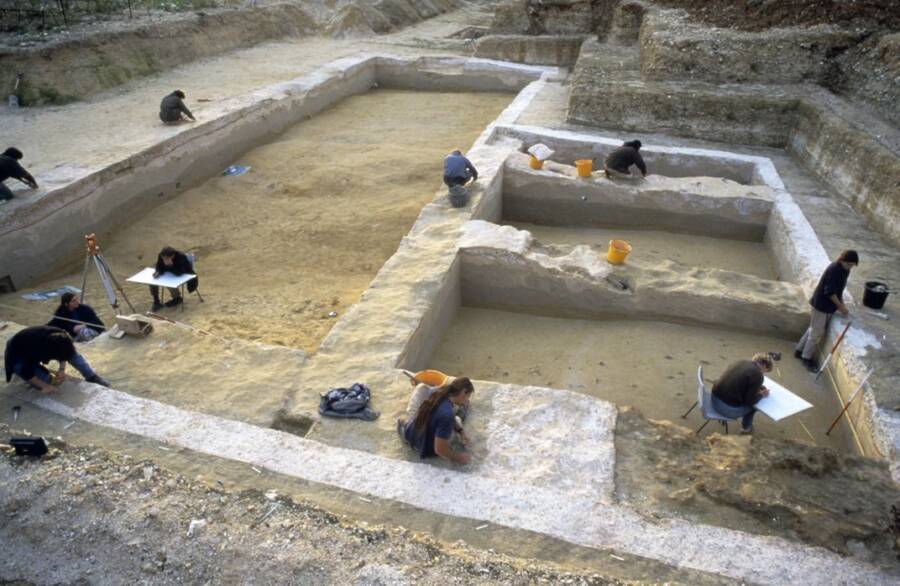
Boxgrove Project, UCLThe Boxgrove archaeological site in West Sussex, where the elephant bone tool was originally found in 1990.
While examining the bone, researchers documented small pieces of flint embedded in its notches. Prehistoric people were known to use bone to sharpen stone tools like handaxes, and researchers suspect that the elephant bone hammer was used for the same purpose. It was probably a “retoucher” that prehistoric people used for “knapping” stone tools — that is, striking them in order to sharpen them.
Given that elephant bone is especially strong, this would have been a valuable tool to have. But it’s somewhat of a mystery where and how prehistoric people in England — whether Neanderthals, Homo heidelbergensis, or other — would have acquired it.
Elephants and mammoths were common sights in continental Europe in prehistoric times, but they were rarely seen in England. What’s more, the elephant bone tool from West Sussex is almost 500,000 years old — and only a small number of the elephant bone tools found in Europe are older than 43,000 years old. Researchers have never found elephant bone tools in Europe older than 450,000 years, and these were found farther south.
As such, the elephant bone tool found in Boxgrove offers several different insights about the prehistoric people who once wielded it. Not only were they sophisticated enough to use it as a tool, but they were also resourceful enough to get their hands on it in the first place.

RIVER OF GOODS Coastal 52 Inch Wooden Bead LED Ceiling Fan, Brown
(as of October 18, 2026 01:00 GMT +00:00 - More infoProduct prices and availability are accurate as of the date/time indicated and are subject to change. Any price and availability information displayed on [relevant Amazon Site(s), as applicable] at the time of purchase will apply to the purchase of this product.)
Joking Hazard by Cyanide & Happiness - 360+ Funny & Inappropriate Comic Cards, Hilarious Party Games | Includes Add-Your-Own-Words Cards
$18.79 (as of October 18, 2026 01:00 GMT +00:00 - More infoProduct prices and availability are accurate as of the date/time indicated and are subject to change. Any price and availability information displayed on [relevant Amazon Site(s), as applicable] at the time of purchase will apply to the purchase of this product.)
The Door Balancer Eliminates The Need for Door Props, Door Stops and Door Wedges
(as of October 18, 2026 01:00 GMT +00:00 - More infoProduct prices and availability are accurate as of the date/time indicated and are subject to change. Any price and availability information displayed on [relevant Amazon Site(s), as applicable] at the time of purchase will apply to the purchase of this product.)
RIVER OF GOODS Stained Glass Magna Carta LED Ceiling Fan - 52" L x 52" W - Tiffany Style - Flush Mount Ceiling Fan with Remote - Teal
(as of October 18, 2026 01:00 GMT +00:00 - More infoProduct prices and availability are accurate as of the date/time indicated and are subject to change. Any price and availability information displayed on [relevant Amazon Site(s), as applicable] at the time of purchase will apply to the purchase of this product.)