Uncover the Shocking Truth Behind 51 Historical Myths You’ve Been Believing All Along—Despite Easy Access to Facts!
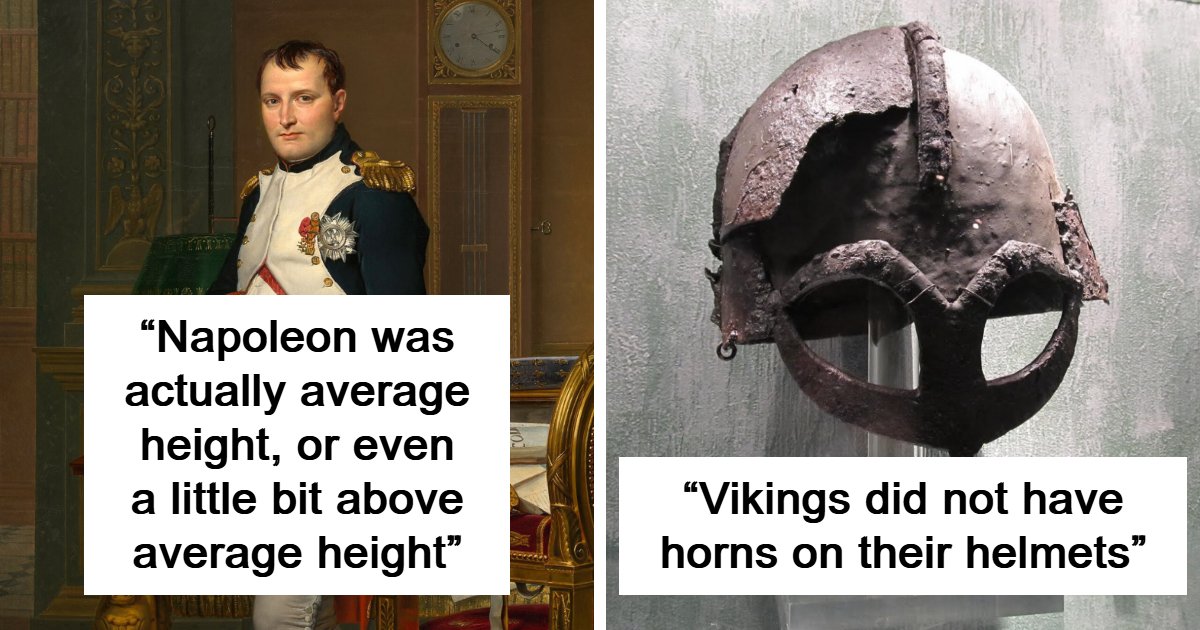
Think Napoleon was the pint-sized powerhouse of Europe? Well, hold on to your hats, because the “short Napoleon” myth might just be history’s sneakiest fib. Turns out, the little general was actually about average height, or maybe even a smidge taller than most of his contemporaries—surprise! It all boils down to an old French measurement that was mistranslated over the centuries. So how did we end up picturing Napoleon as the undisputed king of short folks? Dive into this quirky unraveling of historical misconceptions that will make you question everything you thought you knew about history’s biggest names and moments. Ready to separate fact from fiction? Let’s kick off with Napoleon’s not-so-short story!
 The myth: Napoleon was really short.
The truth: He was actually average height, or even a little bit above average height.
How did it come about?: The archaic French measurement used stated he was around 5’3, when in actuality that translates to about 5’7 in today’s measurements, which was average for the time.
 Marie Antoinette almost definitely did not say “Let them eat cake.”
Cellusu:
Her actual quote, for the record:
“It is quite certain that in seeing the people who treat us so well despite their own misfortune, we are more obliged than ever to work hard for their happiness. The King seems to understand this truth.”
You can see how the two get mixed up…
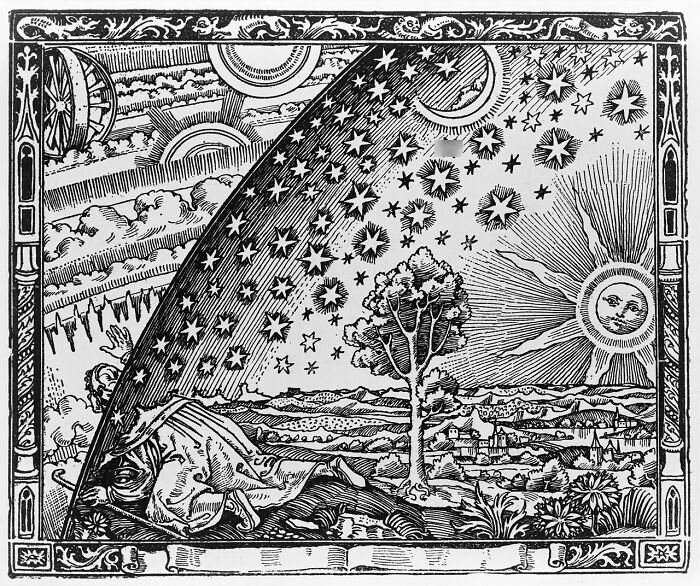 Educated Europeans didn’t think the world was flat in the 1400s.
anon:
To elaborate not only did they believe it was a sphere, but most believed the earth to be about 24,000 miles in circumference based on several calculations throughout the ages.
What Columbus argued was that the earth was closer to 12,000 miles in circumference. The reason for this significance was that many people believed there to be nothing but water from Western Europe east Asia and no one could make the journey. Since Columbus believed the world to be smaller he argued that it was possible to reach the coast of India by taking a westward course.
Of course he reached america, but by his calculations he believed he had reached India which is why he was so convinced that the place was India and not s new world.
Everyone is human, and we all make mistakes, whether intentionally (disinformation and manipulation) or by accident (misinformation, misinterpretations, and unconscious biases).
In a nutshell, what you’re looking for are ways to gauge the degree of potential accuracy of a source or claim, not look for ‘perfectly’ reliable sources.
 Albert Einstein actually did very well in school as a boy and excelled in Math.
Wambobaer:
The misconception has to do with the way exams are graded in Switzerland, where Einstein went to high school. In Germany the highest grade is 1, the lowest 6. In Switzerland on the other hand the grading system ranges from 1 (worst) to 6 (best).
Therefore people seeing Einstein’s high school diploma could easily mistaken his mostly excellent grades (let’s ignore French) for really bad ones.
I think the myth survived for so long because of what Einstein stands for today. The idea of the personification of intelligence being a bad student might give some people the ecouragement to keep going. Others may just find the irony behind this story so fantastic, they simply don’t want to question it.
 Got to be Vikings having horns on their helmets.
NoceboHadal:
In the British museum they have a horned helmet that they found in the river Thames, at the time they figured it was viking age. Now though it’s believed to be ancient British. It’s all metal and it’s pretty big.
 That few people lived past their 30s in the middle ages or some other ancient era.
This misconception arises because of an automatic and incorrect assumption people make when they hear the statistic ‘the average life expectancy was 35 in the middle ages’.
In reality there have always been lots of people who live to 70+ years old in all societies. The difference was that in the middle ages there were many childhood diseases that caused a much higher childhood mortality rate which skews the numbers much lower. If you survived childhood there was a very good chance you would make it into your 60s+.
1MORE Triple Driver in-Ear Earphones Hi-Res Headphones with High Resolution, Bass Driven Sound, MEMS Mic, in-Line Remote, High Fidelity for Smartphones/PC/Tablet - Silver
$69.99 (as of October 25, 2026 01:02 GMT +00:00 - More infoProduct prices and availability are accurate as of the date/time indicated and are subject to change. Any price and availability information displayed on [relevant Amazon Site(s), as applicable] at the time of purchase will apply to the purchase of this product.)
Fire Blanket - 1500F CE Certified Emergency Fire Blanket for Home & Kitchen | 500GSM Fabric & 0.5mm Thick - 100% Fiberglass Fire Extinguisher for Car,Warehouse Office - 2pc (47x47 inches) by Supa Ant
$53.45 (as of October 25, 2026 01:02 GMT +00:00 - More infoProduct prices and availability are accurate as of the date/time indicated and are subject to change. Any price and availability information displayed on [relevant Amazon Site(s), as applicable] at the time of purchase will apply to the purchase of this product.)
Joking Hazard by Cyanide & Happiness - 360+ Funny & Inappropriate Comic Cards, Hilarious Party Games | Includes Add-Your-Own-Words Cards
$24.95 (as of October 25, 2026 01:02 GMT +00:00 - More infoProduct prices and availability are accurate as of the date/time indicated and are subject to change. Any price and availability information displayed on [relevant Amazon Site(s), as applicable] at the time of purchase will apply to the purchase of this product.)
Fire Cloak - 1500F CE Certified Emergency Fire Blanket for Home & Kitchen | 500GSM Fabric & 0.5mm Thick - Silicon Coated 100% Fiberglass Essentials in House, Warehouse Office - 55"L x 70"W by Supa Ant
$83.99 (as of October 25, 2026 01:02 GMT +00:00 - More infoProduct prices and availability are accurate as of the date/time indicated and are subject to change. Any price and availability information displayed on [relevant Amazon Site(s), as applicable] at the time of purchase will apply to the purchase of this product.)
PROMIXX FORM Protein Shaker Bottle - A Premium Shaker Bottle for Protein Shakes Infusions and Hydration - Durable Gym Shaker Bottle, Leakproof Lid, Odorless - 26oz (Graphite Gray)
$12.99 (as of October 25, 2026 01:02 GMT +00:00 - More infoProduct prices and availability are accurate as of the date/time indicated and are subject to change. Any price and availability information displayed on [relevant Amazon Site(s), as applicable] at the time of purchase will apply to the purchase of this product.)Related Posts