The Unexpected War Crisis That Revolutionized Women’s Health Forever
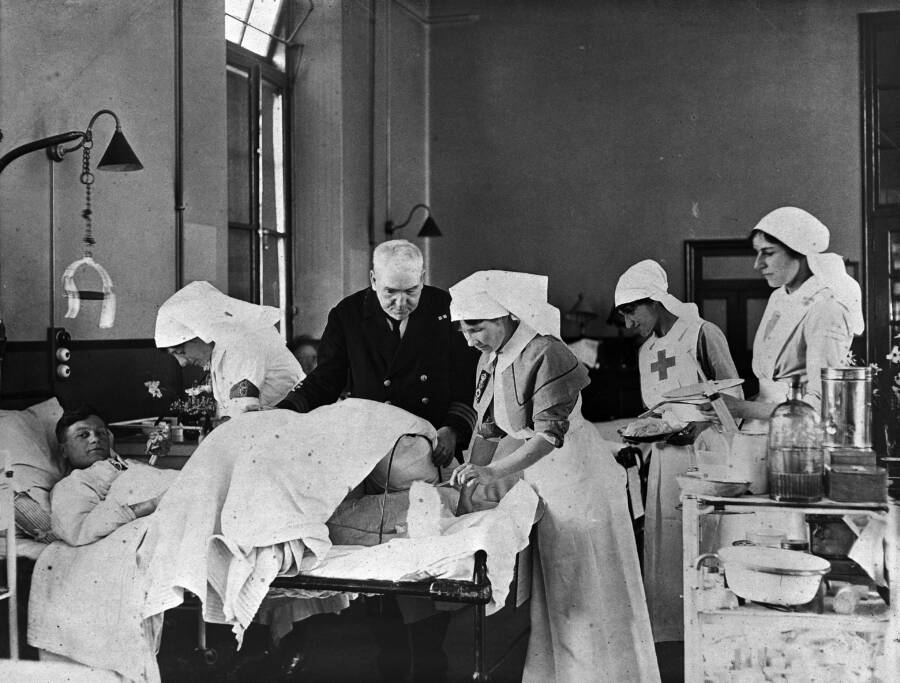
Who would’ve thought that a desperate wartime bandage shortage could birth one of the most game-changing inventions for women everywhere? Picture this: Kimberly-Clark, a paper company scrambling during World War I, invents a cotton alternative called Cellucotton to dress battle wounds. Now, here’s the kicker—frontline nurses, faced with the all-too-human challenge of their monthly cycle, start using this super absorbent bandage material as makeshift menstrual pads. Talk about turning battlefield innovation into personal hygiene gold! It’s both genius and a little hilarious to imagine soldiers’ lifesaving bandages moonlighting as early maxi pads. This unlikely twist not only changed the course of menstrual care but also sparked a marketing saga that shaped women’s health products for decades. Ready to dive into this wartime wonder and how it led to the birth of the Kotex brand? Let’s unwrap this story, layer by absorbent layer. LEARN MORE
During World War I, the Kimberly-Clark paper company began making bandages from a newly-developed cotton alternative known as Cellucotton — and frontline nurses started using the highly absorbent product during their periods.
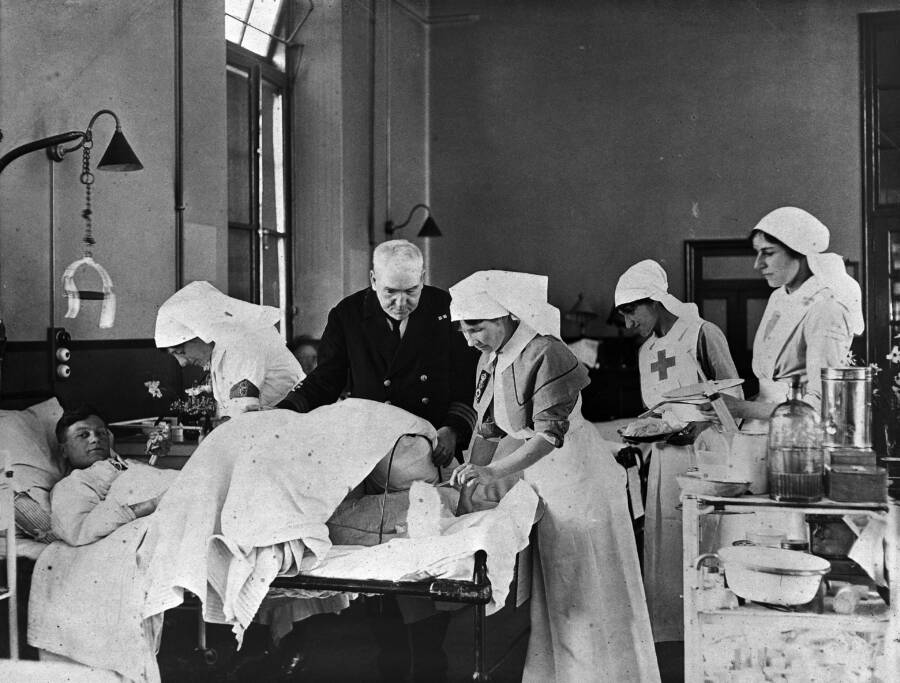
Wellcome ImagesKotex maxi pads were invented after nurses started using newly-developed Cellucotton bandages as menstrual products during World War I.
War has been the genesis of many unexpected inventions. Everyday objects ranging from trench coats to stainless steel can be traced back to a major conflict — and even the internet itself emerged from U.S. defense-funded research into computer communications.
One such invention — first created during a World War I bandage shortage — is the maxi pad. Now found in pharmacies and corner stores around the world, this menstrual product once had a very different use.
The History Of The Menstrual Pad
As recently recounted in a TikTok video from user Emma (@thehistoricalharlot), by the late 19th century, there were several menstrual support garments on the market. Johnson & Johnson introduced Lister’s Towels, an early sanitary pad, in the late 1800s, but it failed to catch on.
“It flopped on the market because women were embarrassed to buy it,” Emma summarizes. “They did not want the public to know that they were on their cycle.”
As World War I broke out, there suddenly became a massive and immediate need for bandages. At the time, medical dressings were primarily made out of cotton. As the government searched for a cheaper alternative, Wisconsin paper company Kimberly-Clark came up with a solution.
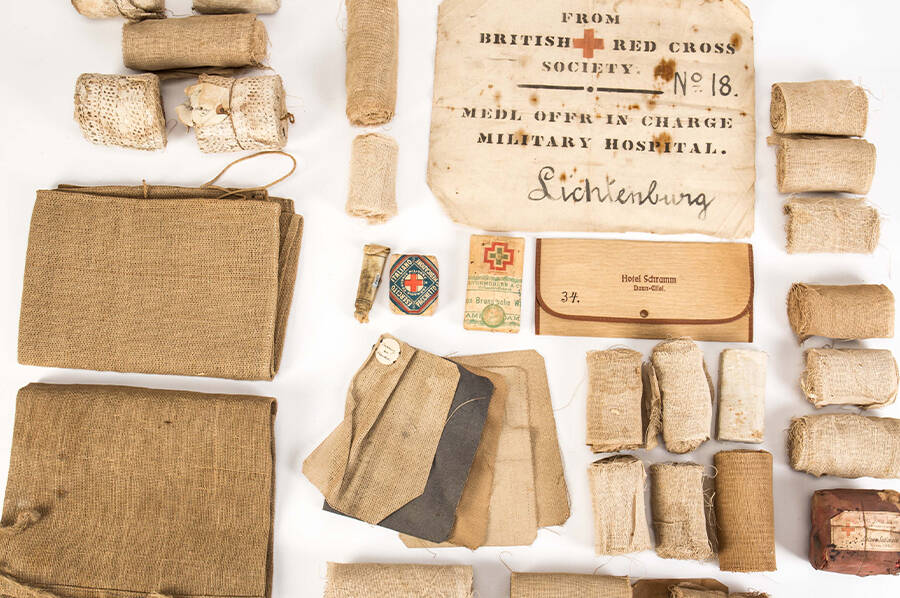
Auckland MuseumVarious types of bandages used during World War I.
Just before the war, company executive James C. Kimberly and research director Ernst Mahler began studying European paper-making. Mahler saw the possibilities of how creped cellulose wadding, a material made from wood pulp, could be utilized. Subsequently, he adapted the process for American wood, calling the resulting absorbent material “Cellucotton.”
Cellucotton performed exceptionally well on the battlefield. It was five times more absorbent than cotton and could be produced at half the cost. Soon, Kimberly-Clark’s Cellucotton was being shipped across the world to dress the wounds of soldiers injured on the front lines.
As military nurses used Cellucotton to dress wounds, they saw for themselves how absorbent it was — and began using the material during their periods. Prior to this, women had been utilizing folded fabric, rags, and homemade reusable cotton pads during menstruation. Cellucotton proved to be a better alternative. It was practical. It performed well. And it could be easily disposed of after use.
A Marketing Pivot After World War I
When the war ended — and the need for bandages dwindled — Kimberly-Clark suddenly lacked a market for Cellucotton. Unsure how to sell their surplus, they turned to former Sears employee Walter Luecke, tasking him with finding a civilian use for the military product.
His pitch would prove controversial. After learning about how nurses used Cellucotton during wartime, Luecke’s idea was to market the material as a menstrual pad. Executives bristled, and even after they came around to the idea, manufacturers reportedly refused to make the product on the grounds that it was too personal to advertise.
Eventually, Kimberly-Clark decided to develop and produce the product itself under its Cellucotton Products operation. The name would be “Kotex,” derived from “cotton-like texture.”
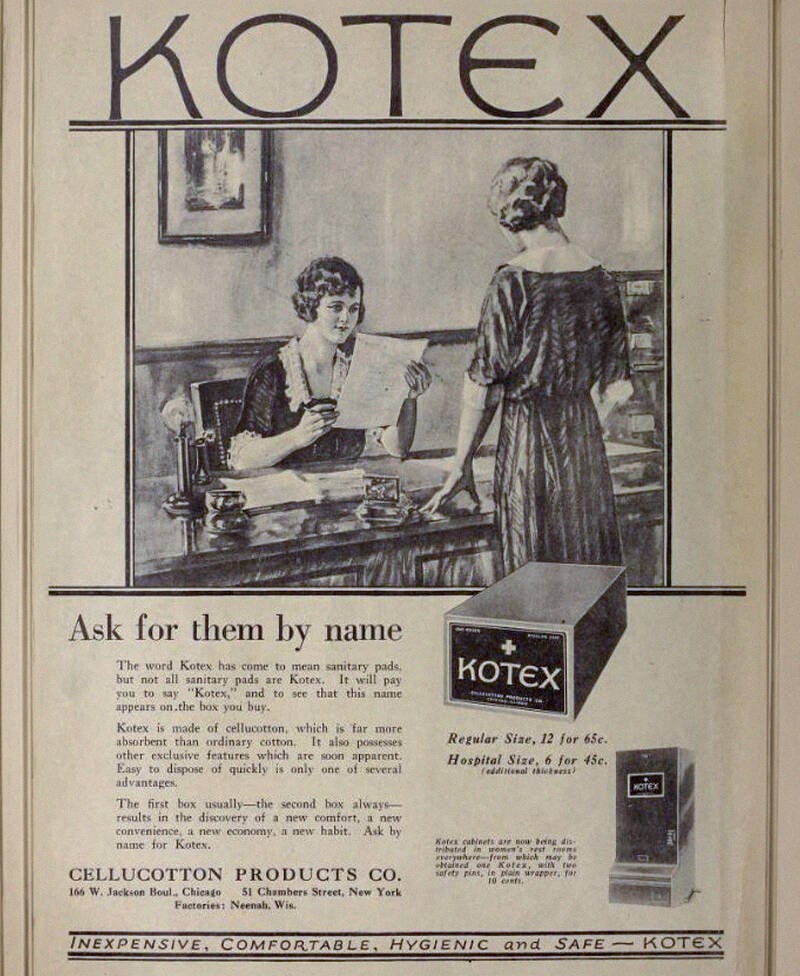
Public Domain
A 1923 Kotex advertisement printed in Shadowland magazine.
The company faced significant problems trying to market Kotex. Their advertisements were continually rejected, and when the Ladies’ Home Journal finally accepted the ads, they did not explicitly mention menstruation. Not only that, but many shops were staffed by male clerks tasked with fetching requested items; some women did not want to announce to the male store clerks that they wanted to buy a menstrual pad.
Over time, both shops and the women who frequented them found ways to sell and purchase the pads without riling up the masses. Women would ask for the product by its brand name, Kotex. Conversely, some stores would simply leave the pads out with their own payment container, allowing women to pick up and pay for the items without talking to a sales clerk.
RIVER OF GOODS Coastal 52 Inch Wooden Bead LED Ceiling Fan, Brown
(as of October 4, 2026 00:55 GMT +00:00 - More infoProduct prices and availability are accurate as of the date/time indicated and are subject to change. Any price and availability information displayed on [relevant Amazon Site(s), as applicable] at the time of purchase will apply to the purchase of this product.)
KiddyCare Diaper Caddy Organizer Cart for Nursery Baby Basket Gift for Boy/Girl | Diaper Caddy for Changing Table Basket Organizer with Dividers | Caddy for Baby Stuff Breast Pump Caddy - Regular
$8.95 (as of October 4, 2026 00:55 GMT +00:00 - More infoProduct prices and availability are accurate as of the date/time indicated and are subject to change. Any price and availability information displayed on [relevant Amazon Site(s), as applicable] at the time of purchase will apply to the purchase of this product.)
White Leaf Baby Food Pouches, Toddler Snack, Mango + Carrot + Banana + Pear | 24 Pack, Organic No Added Sugar, Non-GMO, BPA-Free Regeneratively Farmed, Squeeze Puree Smoothie Pouch for Adults & Children
$69.95 (as of October 4, 2026 00:55 GMT +00:00 - More infoProduct prices and availability are accurate as of the date/time indicated and are subject to change. Any price and availability information displayed on [relevant Amazon Site(s), as applicable] at the time of purchase will apply to the purchase of this product.)
The Door Balancer Eliminates The Need for Door Props, Door Stops and Door Wedges
(as of October 4, 2026 00:55 GMT +00:00 - More infoProduct prices and availability are accurate as of the date/time indicated and are subject to change. Any price and availability information displayed on [relevant Amazon Site(s), as applicable] at the time of purchase will apply to the purchase of this product.)