Inside the Dark World of a British Man’s Forbidden Butterfly Obsession
Ever wonder what happens when a former bodybuilder decides that instead of pumping iron, he’s gonna pump up his butterfly collection? Well, in 2016, police found themselves knee-deep in the fluttering world of Phillip Cullen — an unusual kind of hunter whose trophies weren’t lions or bears, but dozens of rare, protected butterflies meticulously mounted on trays. Sounds like the start of a quirky nature documentary, right? But nope, this was a bizarre crime saga unfolding in the quiet English countryside, featuring a butterfly so rare it went extinct once — only to make a comeback. So, what’s the story behind Cullen’s odd obsession with these fragile insects, and why did the law finally catch up with him? Grab your nets (or don’t), and let’s dive into this kaleidoscope of intrigue, ant-ants, and winged wonders that went from conservation to courtroom drama faster than you can say “polymorphism.”
When police officers raided Phillip Cullen’s home in 2016, they found dozens of protected butterflies mounted on trays.
gailhampshire/Wikimedia Commons
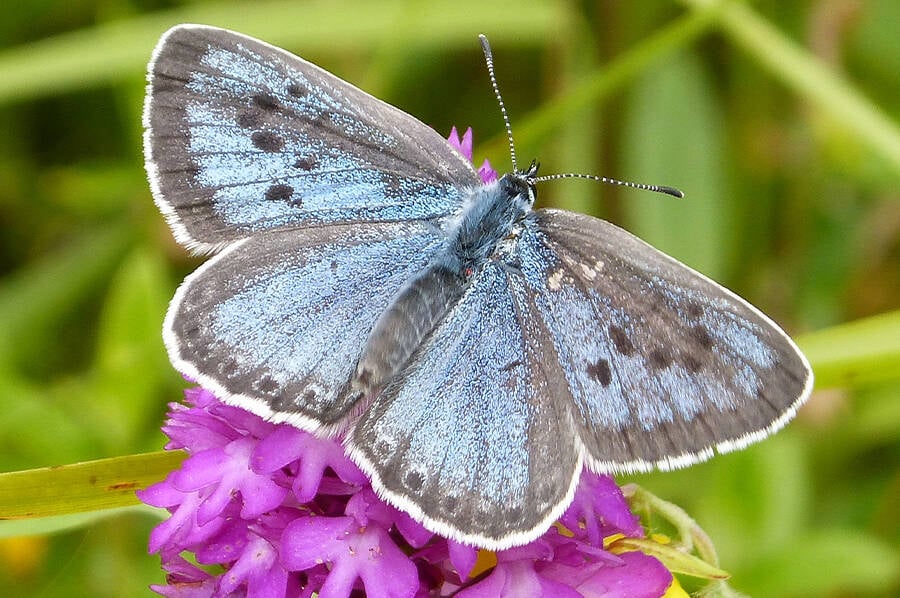
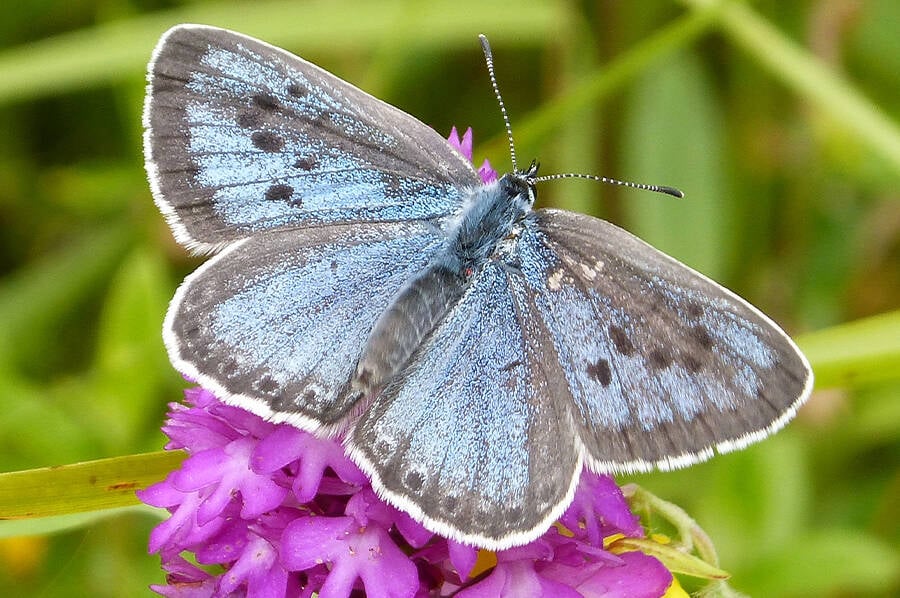
The large blue butterfly (Phengaris arion) population is still recovering after briefly going extinct in Great Britain in 1979.
In March 2017, former bodybuilder Phillip Cullen was convicted of six offenses relating to a bizarre crime: illegal butterfly capture.
According to prosecutors, Cullen had been entering protected areas, net in hand, with the mission of catching and killing rare butterflies. When police officers raided Cullen’s house, they seized dozens of mounted specimens — including endangered species. But why was Cullen collecting these butterflies in the first place?
The Endangered Large Blue Butterfly
On June 18, 2015, butterfly conservationist Neil Hulme observed Phillip Cullen climbing a locked gate at Daneway Banks, a nature reserve near Cirencester, England. According to a 2017 report by The Guardian, Hulme testified that Cullen entered the site with a small child’s net and set off on a hunt.
His target? The large blue — a butterfly so rare that it was briefly extinct in Great Britain. As Hulme secretly watched, Cullen gave chase to these endangered butterflies, being careful to stow his net away any time he came across other visitors.
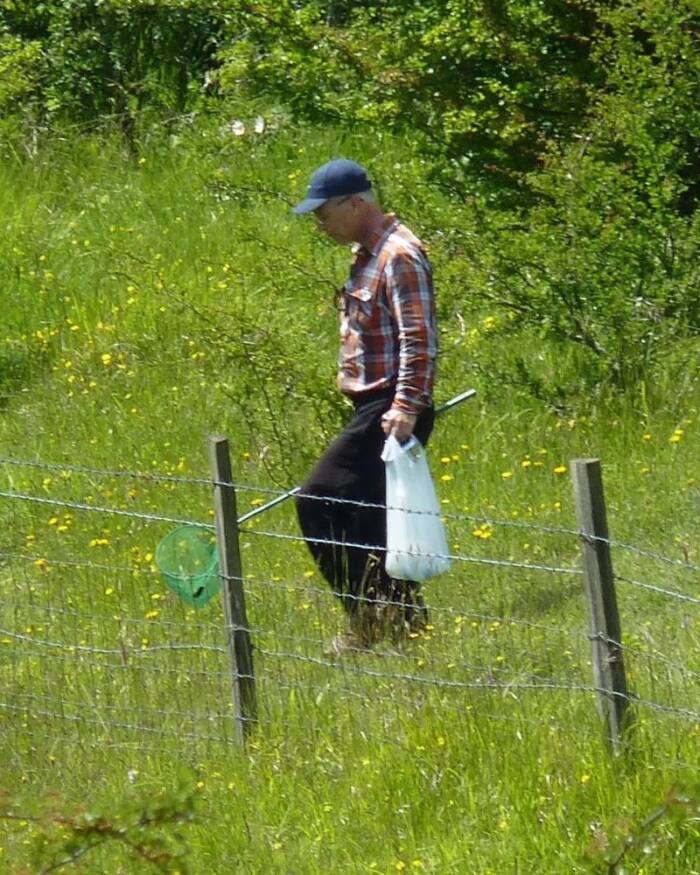
Neil Hulme/Butterfly ConservationNeil Hulme spotted Phillip Cullen walking through Daneway Banks with a small butterfly net in 2015.
Daneway Banks was the perfect place to find this species. As populations of the large blue dwindled throughout the 20th century, scientists struggled to determine a cause. What’s more, the species seemed immune to captive breeding. Collectors would gather their eggs, feed the young caterpillars thyme, and then watch as they perished in just a few weeks. By 1979, the large blue was extinct in Britain.
After years of research, scientists determined the problem — and saved the species. In order to reach adulthood, large blue butterflies require help from a specific species of red ant. During their maturation, the caterpillars drop to the ground and emulate the scent and behavior of ant larvae so ants will drag them into their nests. The caterpillars then spring into action and begin eating the ants’ grubs. After several months, the caterpillars pupate and then emerge from the ant nests as large blue butterflies.
With this life cycle in mind, experts created designated wildlife areas with the ideal conditions for breeding large blue butterflies in an attempt to reintroduce the species to Britain. With permission, they collected large blue eggs from Sweden, raised larvae, and carefully placed them in reserves with the hope that the creatures would naturally begin to repopulate. Slowly but surely, the large blue butterflies started growing in number — but in June 2015, Cullen set out to capture the endangered creatures.
The Investigation Into Phillip Cullen’s Crimes
When Neil Hulme — who is part of the charity Butterfly Conservation — saw Phillip Cullen at Daneway Banks, he approached and asked him what he was doing. Cullen insisted that he was looking for parasitic wasps and green-winged orchids. But the very next day, he was spotted chasing large blues once more. This time, his presence was noted at Collard Hill in Somerset, another known reserve for the species.
According to volunteer ranger Rosie Clegg, Cullen was seen behaving suspiciously near a population of large blues. But again, he claimed that he was catching parasitic wasps. However, these two incidents were enough to tip off investigators. With the help of the National Wildlife Crime Unit, police officers gathered enough evidence to raid Cullen’s home in February 2016.
Inside, officials found trays upon trays of dead, mounted butterflies. Many of these creatures were rare or endangered species. According to the National Wildlife Crime Unit, experts ultimately identified 89 specimens that were protected under British or European wildlife legislation.
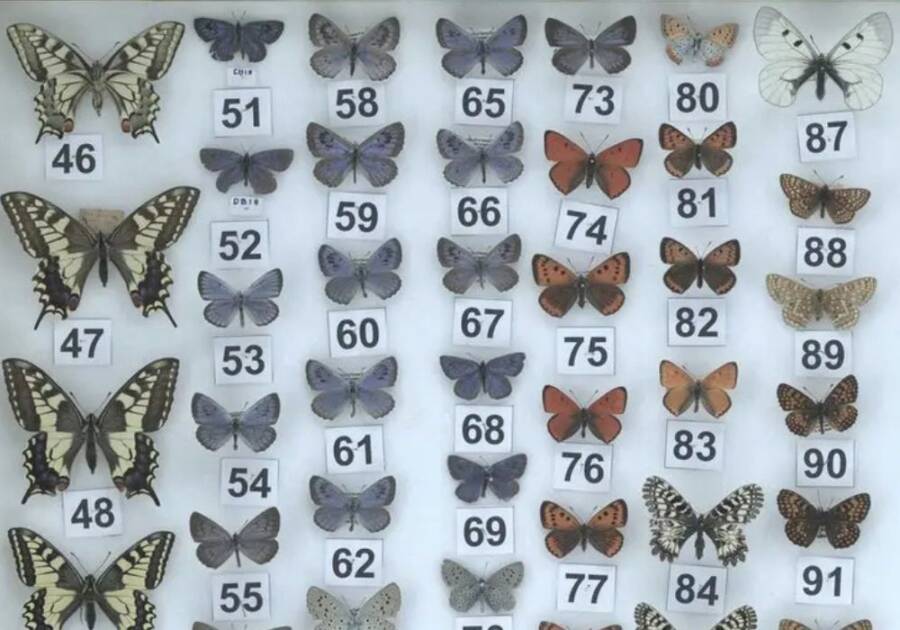
National Wildlife Crime UnitSome of the mounted butterflies police officers found in Phillip Cullen’s home. The two large blues are numbered 51 and 52.
If there was any doubt that Cullen was the man catching and killing the butterflies, two mounted large blues were the smoking gun. Cullen had labeled them DB18 and CH18 — apparent references to the aforementioned Daneway Banks and Collard Hill, as well as the approximate date he’d caught them.

1MORE Triple Driver In-Ear Headphones - Silver - Wired - Adult - In Ear - 18 grams - 90 days limited warranty
(as of October 7, 2026 00:56 GMT +00:00 - More infoProduct prices and availability are accurate as of the date/time indicated and are subject to change. Any price and availability information displayed on [relevant Amazon Site(s), as applicable] at the time of purchase will apply to the purchase of this product.)
The Door Balancer Eliminates The Need for Door Props, Door Stops and Door Wedges
(as of October 7, 2026 00:56 GMT +00:00 - More infoProduct prices and availability are accurate as of the date/time indicated and are subject to change. Any price and availability information displayed on [relevant Amazon Site(s), as applicable] at the time of purchase will apply to the purchase of this product.)
RIVER OF GOODS Coastal 52 Inch Wooden Bead LED Ceiling Fan, Cream
(as of October 7, 2026 00:56 GMT +00:00 - More infoProduct prices and availability are accurate as of the date/time indicated and are subject to change. Any price and availability information displayed on [relevant Amazon Site(s), as applicable] at the time of purchase will apply to the purchase of this product.)
KiddyCare Diaper Caddy Organizer Cart for Nursery Baby Basket Gift for Boy/Girl | Diaper Caddy for Changing Table Basket Organizer with Dividers | Caddy for Baby Stuff Breast Pump Caddy - Regular
$8.95 (as of October 7, 2026 00:56 GMT +00:00 - More infoProduct prices and availability are accurate as of the date/time indicated and are subject to change. Any price and availability information displayed on [relevant Amazon Site(s), as applicable] at the time of purchase will apply to the purchase of this product.)