Ancient Roman Firefighters’ Barracks Unearthed After 1,900 Years—What Secrets Lie Within?
Imagine stumbling upon a charming 1,900-year-old Roman building near the Colosseum, decked out with stunning frescoes and mosaics—and then realizing it wasn’t just some fancy pad for aristocrats but possibly the ancient headquarters of Rome’s original firefighters and night watchmen, the Vigiles. Yep, those guys weren’t just tossing buckets of water; they were the OG firefighters and cops rolled into one, keeping the Eternal City safe well before the days of modern fire trucks. And get this—their barracks flaunted aquatic-themed mosaics featuring dolphins and crustaceans, which, believe it or not, is what tipped off archaeologists that this wasn’t your average Roman crib. Could this be the home base of the V Cohort of the Vigiles, the cohort Emperor Augustus himself organized after a fiery disaster? As we peel back the layers of history locked within these shells of stone and tile, we might just gain a new appreciation for firefighting 1,800 years ago—or wonder how they’d handle today’s blaze of tweets and scams! Dive in and let’s uncover what keeps Rome’s ancient fire brigade’s story burning bright.
This could have been the home of the V Cohort of the Vigiles, the firefighters and policemen of ancient Rome who were first organized under Emperor Augustus in 6 C.E.
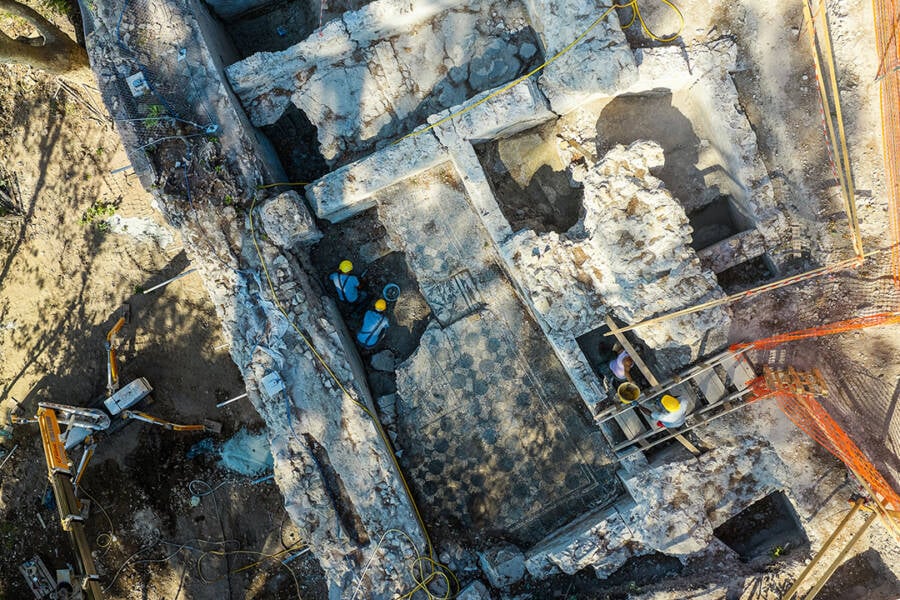
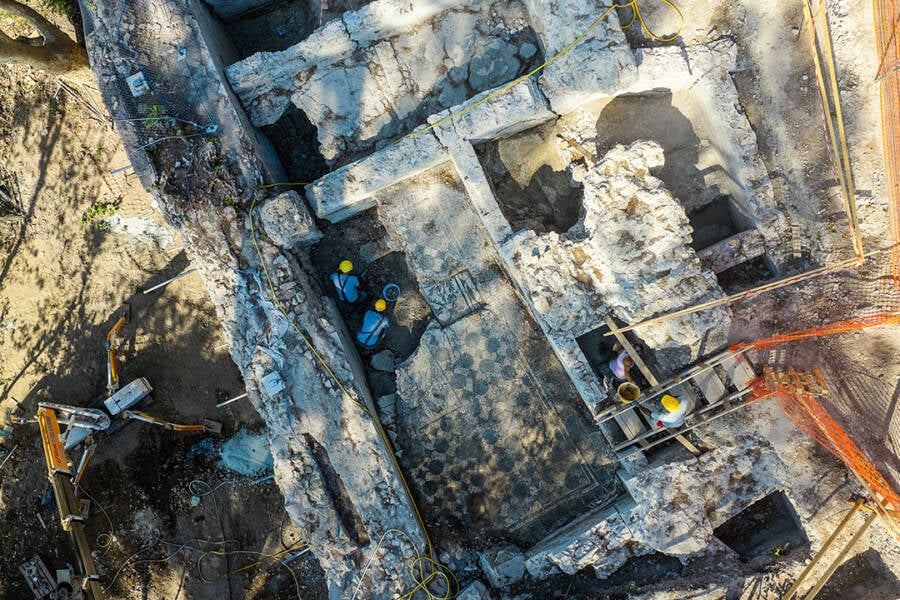
Fabio Caricchia/Ministry of CultureArchaeologists discovered an eight-room building near the Colosseum that might have been an ancient firefighter barracks.
Archaeologists working on Caelian Hill near the Colosseum in Rome have unearthed an ancient eight-room building decorated with vivid frescoes and mosaics.
Upon first glance, archaeologists believed that this stunning 1,900-year-old structure may have been an elite residence, its mosaic featuring marine life soon proved to be a clue that this might actually have been a barracks for ancient Roman firefighters.
The Discovery Of A Possible Ancient Firefighter Barracks In Rome
Fabio Caricchia/Ministry of CultureThe team determined that the structure was initially built in the second century C.E., then renovated the following century.
Archaeologists were able to fully excavate five of the eight rooms, while three others were only partially uncovered. The team believes that this building was initially constructed in the second century C.E., and then renovated during the third.
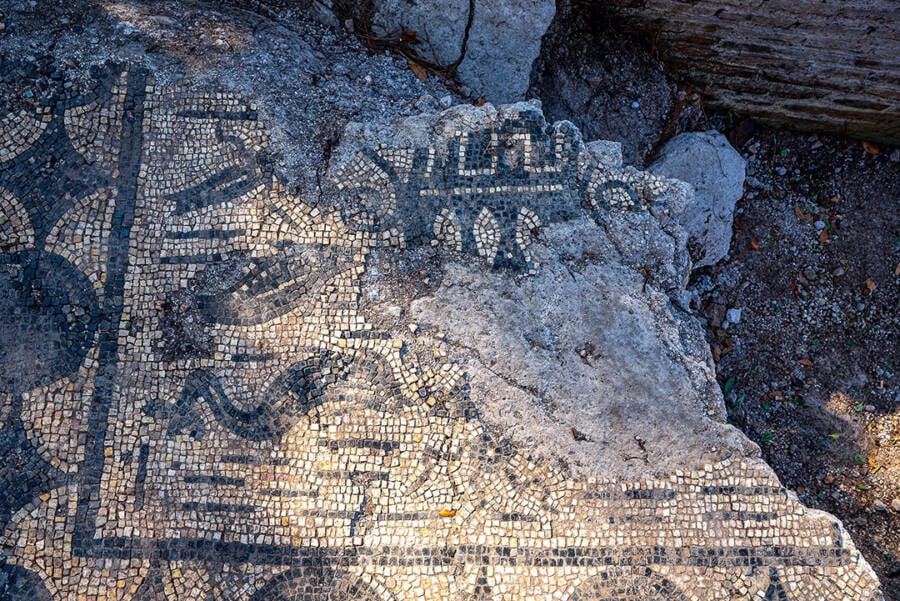
The team found the building to be intricately decorated, with frescoed ceilings, multiple opus sectile patterns — or larger, inlaid mosaic decorations — and a mosaic floor from the Antonine period.
The most significant discovery was a large mosaic depicting a dolphin, a fish, a lobster, and a crab surrounding a krater, or large ancient vessel.
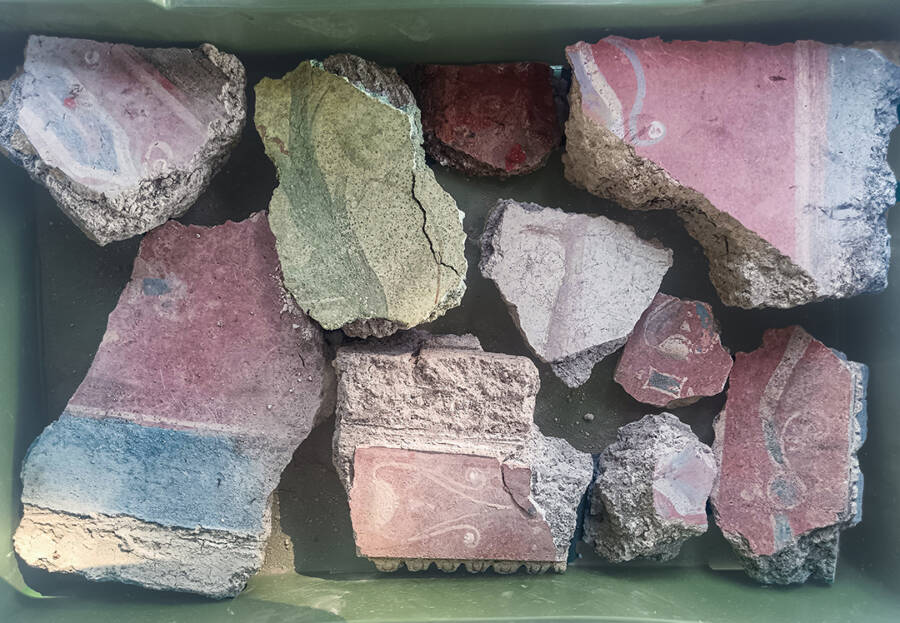
Fabio Caricchia/Ministry of CultureThe building contained eight rooms, some with frescoed ceilings and mosaic floors.
“Rome continues to amaze us, returning testimonies capable of expanding our knowledge of the ancient city,” Daniela Porro, Special Superintendent of Rome, said in a statement about the discovery.
Some evidence from the excavation indicates that the building could have been the barracks of the V Cohort of the Vigiles, the professional firefighters of ancient Rome.
Of all things, the aquatic motifs found on the mosaic flooring were what initially suggested that this building may not have been domestic.
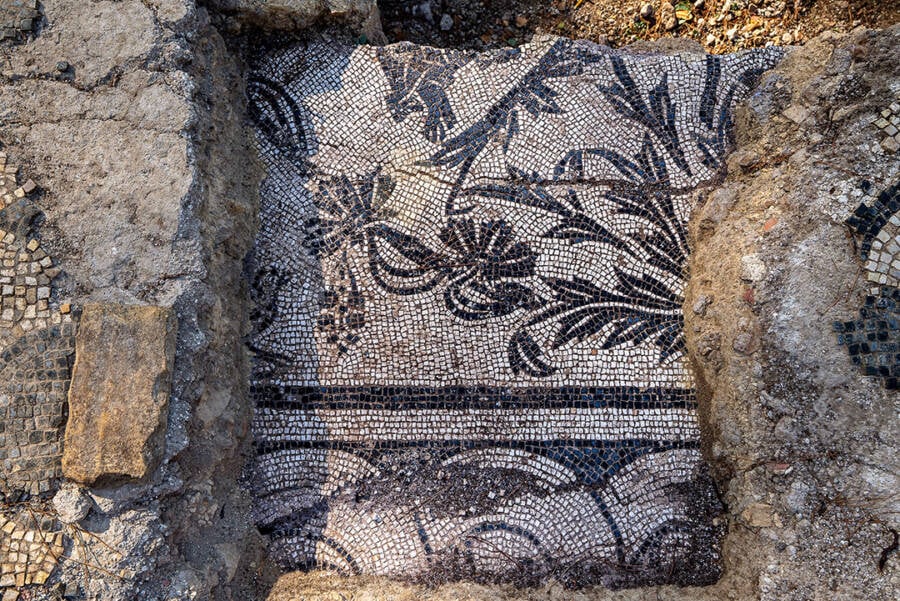
Fabio Caricchia/Ministry of CultureThe building had a large mosaic that featured marine life — which was a clue to archaeologists about the building’s function.
“The mosaic’s design closely resembles one previously discovered in a firefighters’ barracks in Ostia, the ancient port of Rome, about 30 km (19 miles) from the capital,” Rome’s archaeological office said, according to Reuters.
First studied and excavated in the late 1800s, Ostia’s Caserma dei Vigili firefighter barracks have since helped historians understand the role of ancient Rome’s fire brigades, or vigiles.
How This Excavation Might Shed Light On What Firefighting Was Like 1,800 Years Ago
Emperor Augustus organized the first fire brigades in the city of Rome in 21 B.C.E., which was initially composed of about 600 enslaved people, working under the authority of elected officials who were supervising the safety and efficiency of the city’s infrastructure.
But following a bad fire in 6 C.E., Augustus established more of an orderly regiment of professional vigiles that amounted to seven squads of 1,000 firefighters each.
These squads were equipped with buckets, hooks, axes, ladders, and ropes, assembling bucket brigades to fight fires and pumping from public fountains for their water supply. They would also douse flames with blankets soaked in water or vinegar.

Public DomainAn 18th-century painting depicting the Great Fire of Rome in 64 C.E.
Beyond just fighting fires, the vigiles were tasked with maintaining peace and order at night, keeping watch from their guard stations.
Although being a vigile was once seen as a low-status career, the position became more reputable over time, especially once it came with a salary, called a stipendium. It also eventually offered a path to Roman citizenship, and a type of pension, where, after several years of service, the brigade was given free grain by their emperor.

KiddyCare Diaper Caddy Organizer Cart for Nursery Baby Basket Gift for Boy/Girl | Diaper Caddy for Changing Table Basket Organizer with Dividers | Caddy for Baby Stuff Breast Pump Caddy - Regular
$8.95 (as of October 4, 2026 00:55 GMT +00:00 - More infoProduct prices and availability are accurate as of the date/time indicated and are subject to change. Any price and availability information displayed on [relevant Amazon Site(s), as applicable] at the time of purchase will apply to the purchase of this product.)
RIVER OF GOODS Stained Glass Bird Accent Lamp - 8" W x 13.5" H - Tiffany Style Table Lamps for Home, Office Desk, Bedroom, Nightstand - Blue Jay Decor
(as of October 4, 2026 00:55 GMT +00:00 - More infoProduct prices and availability are accurate as of the date/time indicated and are subject to change. Any price and availability information displayed on [relevant Amazon Site(s), as applicable] at the time of purchase will apply to the purchase of this product.)
Rhythm Superfoods Kale Chips, Zesty Nacho, Organic and Non-GMO, 2.0 Oz (Pack of 4), Vegan/Gluten-Free Superfood Snacks
(as of October 4, 2026 00:55 GMT +00:00 - More infoProduct prices and availability are accurate as of the date/time indicated and are subject to change. Any price and availability information displayed on [relevant Amazon Site(s), as applicable] at the time of purchase will apply to the purchase of this product.)
The Door Balancer Eliminates The Need for Door Props, Door Stops and Door Wedges
(as of October 4, 2026 00:55 GMT +00:00 - More infoProduct prices and availability are accurate as of the date/time indicated and are subject to change. Any price and availability information displayed on [relevant Amazon Site(s), as applicable] at the time of purchase will apply to the purchase of this product.)