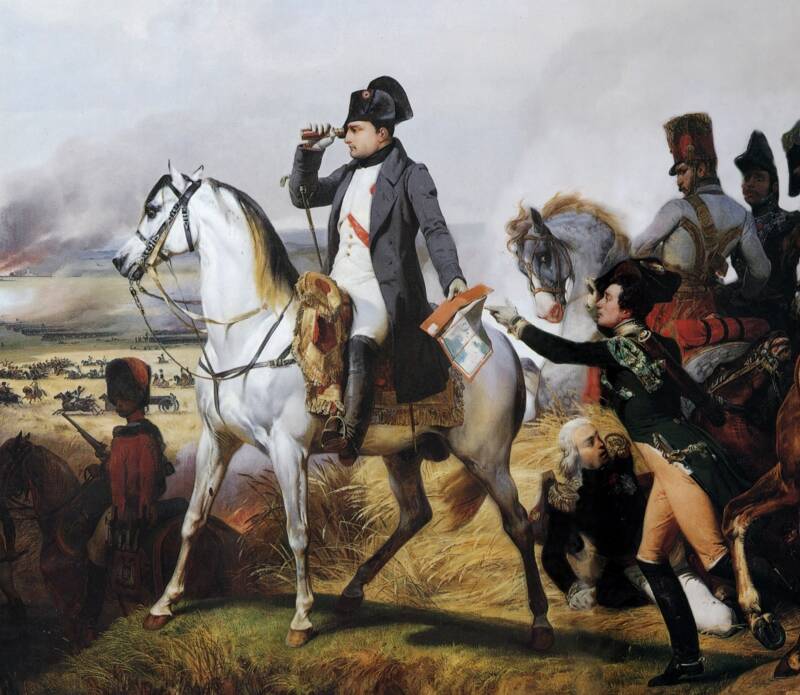
Medieval Skeleton Shattered by Mysterious Siege Weapon: The Chilling Truth Behind Edward I’s ‘Warwolf’ Unveiled
Imagine getting pegged by a 300-foot-tall trebuchet’s projectile — talk about an instant “Game Over” moment in medieval warfare! Back in 1304, during King Edward I’s formidable siege of Stirling Castle, one unlucky Scotsman met this brutal fate as the infamous Warwolf trebuchet unleashed its terrifying power. His skeleton, shattered into more than 160 pieces, offers a harrowing glimpse of history’s deadliest catapult attack — and yes, it’s the very first archaeological evidence of someone being literally crushed by a siege engine. Makes you wonder: was this the worst “getting hit by a truck” story ever? Dive into this bone-crushing tale of war, might, and a man who didn’t stand a chance against medieval artillery.
The man was killed by a massive catapult at Stirling Castle, likely during King Edward I’s historic siege of 1304, part of the Wars of Scottish Independence.
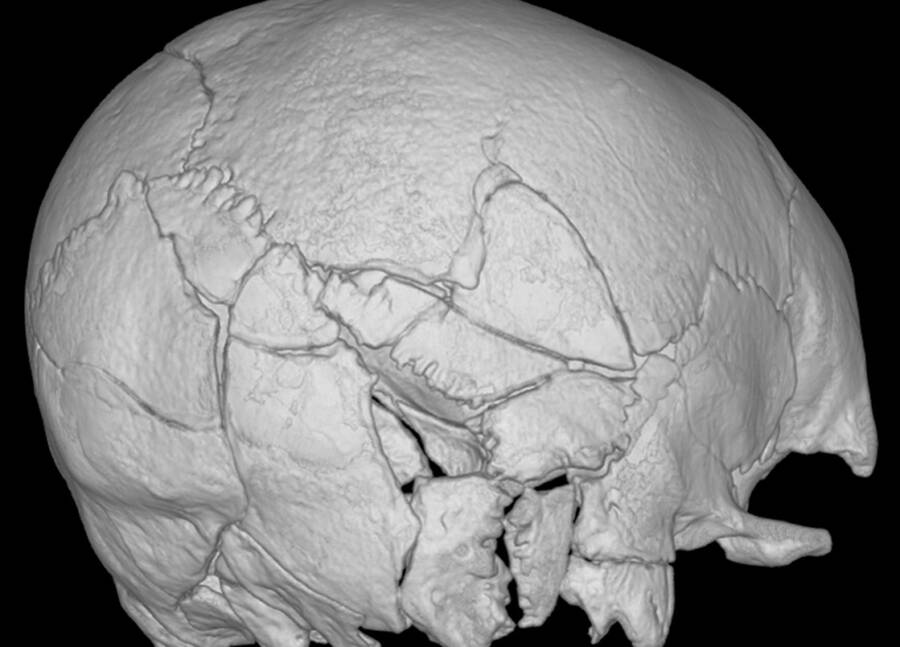
Jo Buckberry/University of BradfordThe man’s skull showed 61 fractures thanks to the deadly power of the trebuchet that killed him.
By 1304, as the Wars of Scottish Independence dragged on, just one Scottish castle still stood strong against the forces of England: Stirling Castle. Determined to bend the Scots to his will, King Edward I of England besieged the castle, and brought with him a powerful new weapon known as a trebuchet. A deadly variety of catapult, his “Warwolf” trebuchet was deployed against the castle — and archaeologists believe that they’ve just found the brutally crushed remains of one of its victims.
The man, whose skeleton is riddled with more than 160 fractures, seemingly died an instantaneous death after the trebuchet delivered a direct hit. His remains appear to be the first-known evidence of a trebuchet death in the archaeological record — a gruesome reminder of the sheer terror of medieval warfare.
The Discovery Of History’s First-Known Victim Of A Trebuchet
The discovery of the trebuchet victim found at Stirling Castle was announced by University of Bradford bioarchaeologist Jo Buckberry during a recent meeting of the Paleopathology Association.
As Buckberry noted, she and her team studied nine individuals excavated at Stirling Castle. Searching for signs of injuries sustained during the Wars of Scottish Independence (1296-1328 and 1332-1357), they expected to find sharp force trauma caused by thrusting weapons like swords and projectiles like arrows. But one skeleton, Skeleton 150, had different kinds of injuries altogether.

Finlay McWalter/Wikimedia CommonsStirling Castle, the site of the man’s death, perhaps during the siege of 1304.
The skeleton, coming from a man who was between the ages of 22 and 34 when he died, was “notable for having over 160 peri-mortem fractures across his skeleton,” Buckberry explained,” from the top of his cranium to his knees.”
In other words, this man had not died from sharp force trauma, but blunt force trauma. Buckberry wrote that Skeleton 150’s death was seemingly caused by “a single, high-velocity impact,” which she and her team believe came from a trebuchet, a powerful catapult-like weapon.
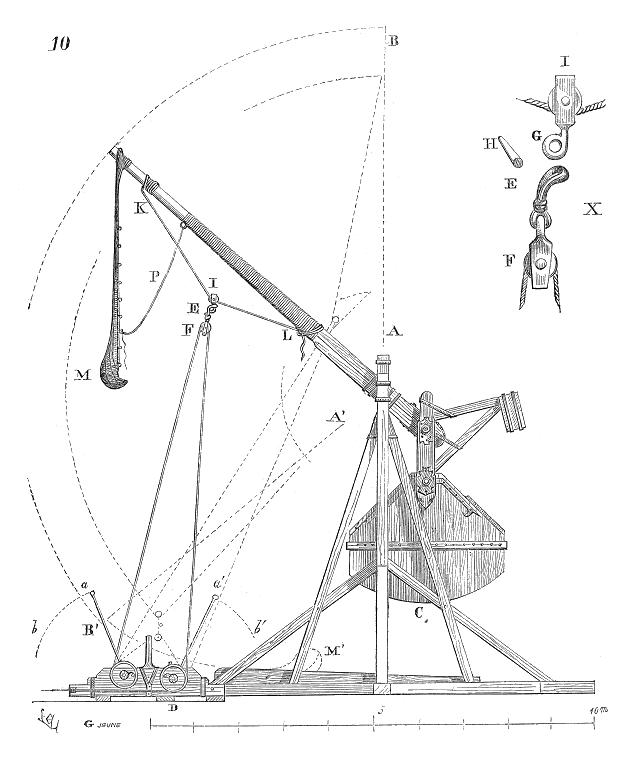
Public DomainA schematic of a trebuchet from the 19th century.
The death of Skeleton 150, Buckberry continued, was likely “the first evidence of trebuchet trauma in the archaeological record.”
The Deployment Of The Warwolf Trebuchet During The Wars Of Scottish Independence
This man who seemingly died by trebuchet in 1304 was not killed by just any trebuchet: he was perhaps killed by the Warwolf, a powerful weapon used by King Edward I during the siege of Stirling Castle.

Bob MarshallA depiction of the Warwolf trebuchet at Stirling Castle in 1304.
By the time the trebuchet was assembled outside the gates of Stirling Castle, the Wars of Scottish Independence were going badly for the Scots. The Scottish hero William Wallace was on the run (and would be captured, then gruesomely executed, the next year) and most Scottish nobles had surrendered. Only Stirling Castle continued to resist the English.
But though the Scots of Stirling Castle were able to hold out against the English for three months, the tides turned against them that July. It was then that Edward’s monstrous Warwolf trebuchet was completed — after being ominously assembled piece by piece right in front of the Scots’ very eyes.
Believed to be the largest trebuchet ever made, the Warwolf stood almost 300 feet tall and was capable of launching a 260-pound projectile more than 600 feet. According to some accounts, the Warwolf was so terrible to behold that the Scots surrendered immediately upon seeing it. However, King Edward still wanted to test out his new weapon, so he fired the trebuchet anyway, launching a stone that tore through the castle’s walls like “an arrow flying through cloth.”
Now, the analysis of Skeleton 150 suggests that the Warwolf not only destroyed the walls and gatehouse of Stirling Castle — it also did the same to one particularly unlucky Scottish warrior, crushing him to death.
Some 700 years later, the discovery of his body, riddled with more than 160 fractures, offers a glimpse of the shocking violence of his demise, and the terrible wrath of King Edward I. Armed with his trebuchet, he rained down terror on Stirling Castle and forced the remaining Scots to surrender.

Rhythm Superfoods Kale Chips, Zesty Nacho, Organic and Non-GMO, 2.0 Oz (Pack of 4), Vegan/Gluten-Free Superfood Snacks
(as of October 4, 2026 00:55 GMT +00:00 - More infoProduct prices and availability are accurate as of the date/time indicated and are subject to change. Any price and availability information displayed on [relevant Amazon Site(s), as applicable] at the time of purchase will apply to the purchase of this product.)
White Leaf Baby Food Pouches, Toddler Snack, Mango + Carrot + Banana + Pear | 24 Pack, Organic No Added Sugar, Non-GMO, BPA-Free Regeneratively Farmed, Squeeze Puree Smoothie Pouch for Adults & Children
$69.95 (as of October 4, 2026 00:55 GMT +00:00 - More infoProduct prices and availability are accurate as of the date/time indicated and are subject to change. Any price and availability information displayed on [relevant Amazon Site(s), as applicable] at the time of purchase will apply to the purchase of this product.)
RIVER OF GOODS Coastal 52 Inch Wooden Bead LED Ceiling Fan, Cream
(as of October 4, 2026 00:55 GMT +00:00 - More infoProduct prices and availability are accurate as of the date/time indicated and are subject to change. Any price and availability information displayed on [relevant Amazon Site(s), as applicable] at the time of purchase will apply to the purchase of this product.)
1MORE Triple Driver In-Ear Headphones - Silver - Wired - Adult - In Ear - 18 grams - 90 days limited warranty
(as of October 4, 2026 00:55 GMT +00:00 - More infoProduct prices and availability are accurate as of the date/time indicated and are subject to change. Any price and availability information displayed on [relevant Amazon Site(s), as applicable] at the time of purchase will apply to the purchase of this product.)