Uncovering England’s Hidden Giant: The Ancient Volcano That Could Change Everything

Imagine discovering a supervolcano lurking beneath the East Coast of England—capable of an eruption with the force of a million atomic bombs and thousands of times the power of Mount Etna. Sounds like the plot of a dramatic disaster movie, right? Well, it turns out that beneath The Wash lies a volcanic giant, about 40 miles across, whose last monstrous eruption sent volcanic ash scattering across Poland, Belarus, and even all the way to Scandinavia. But before you start worrying about Peterborough turning into the UK’s own Pompeii, breathe easy: this beast has been extinct for 454 million years, long before the first dinosaurs ever stomped around. Thanks to a fresh spin on 80-year-old rock samples and some cutting-edge tech, scientists have unearthed a breathtaking chapter of England’s fiery past, changing how we see the very ground beneath our feet. Intrigued about what this means for us today?
Scientists have found a super volcano in England which erupted with a force of a million atomic bombs, and with thousands of times the power of Mount Etna.
The volcano is located in the depths of the earth beneath the east coast of England, and experts believe it is what caused an enormous layer of volcanic ash which is found across Poland, Belarus, spreading across the world all the way through to Sweden and Norway.
The centre of the volcano is located beneath The Wash, and measured at least 40 miles across.
But if you’re concerned about Peterborough and Norwich becoming Pompeii and Herculaneum of the east of England, then don’t worry, as the super volcano is long extinct, and it’s just as well as experts have suggested that an eruption of this scale now could spell extinction for humans.
It is believed that it had its last cataclysmic eruption around 454 million years ago, meaning there has been more time between this eruption and the first dinosaurs than there is between us and the last dinosaurs.
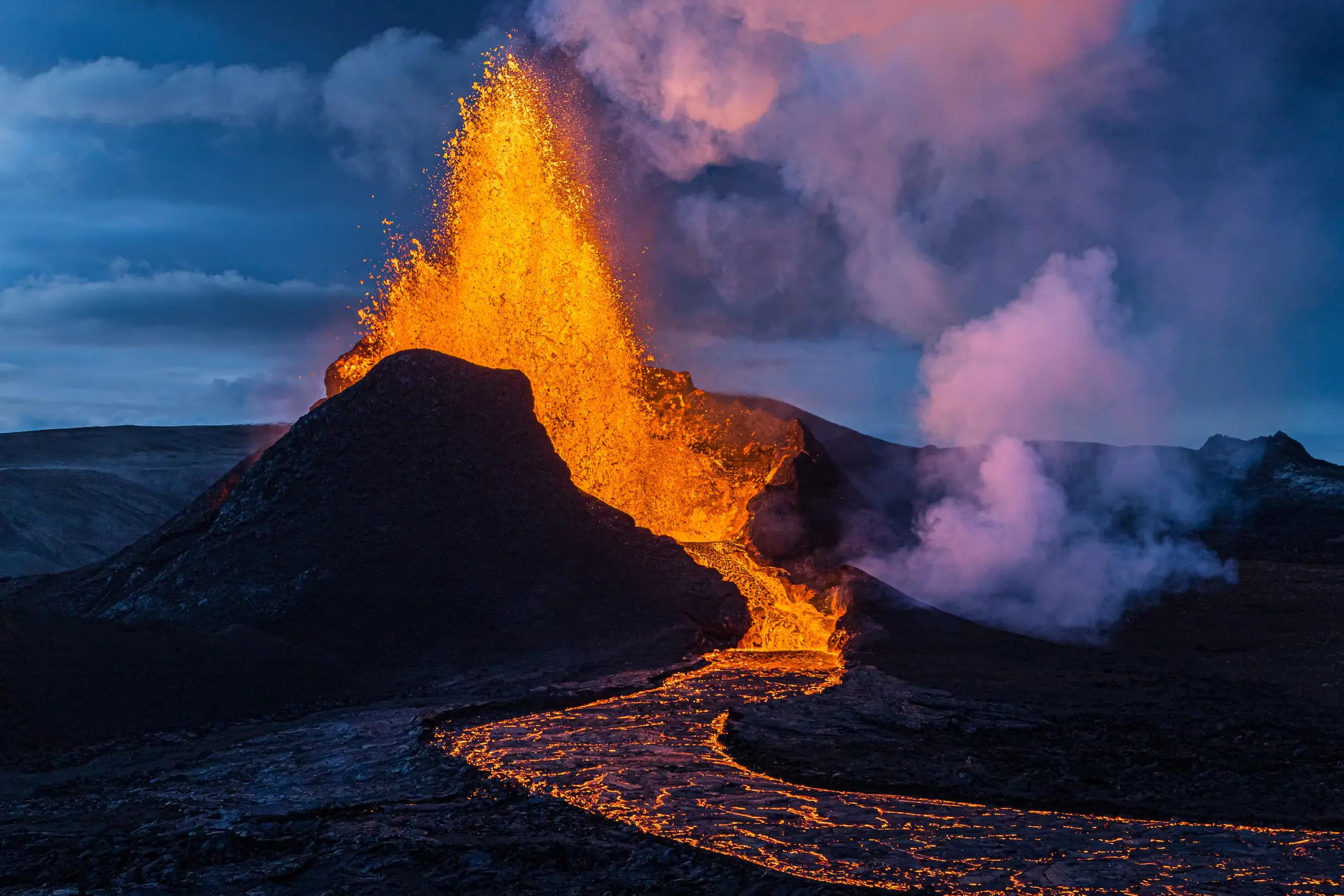
A volcano erupting in Iceland (Getty Stock)
“Unlike faults, which can be seismically reactivated, a volcano can’t,” explained Dr Tim Pharaoh of the British Geological Survey (BGS). “Once it’s gone extinct, that’s it. Nobody needs to worry about the supervolcano erupting again.”
That’s news that will surely come as a relief to anyone not wishing to add to the growing list of existential threats facing humanity, from AI to climate breakdown.
Scientists were able to find the super volcano thans to fresh analysis of rock samples which were taken some 80 years ago from North Creake in Norfolk and Claxby in Lincolnshire.
Dr Pharaoh called the research a ‘fantastic result’ which changes ‘our understanding of England’s deep geological past’, and explained that new technology has allowed the new analysis and insights.
“It’s only now that we’ve got these precise ages we can make these bold statements and assertions,” he told the BBC.
“It’s extremely satisfying to come up with this very precise result.”
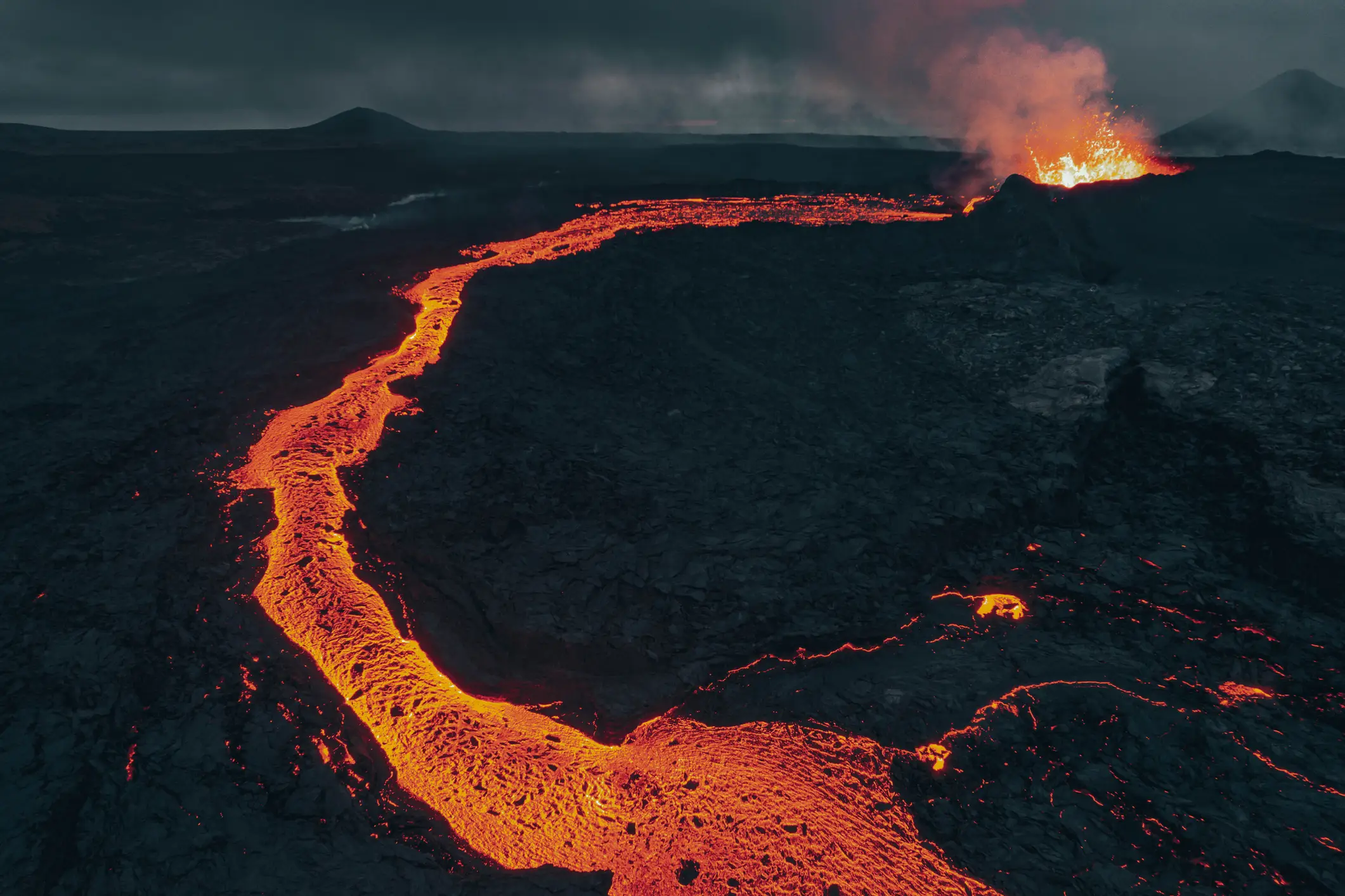
The eruption was truly enormous (Getty Stock)
Prof Jenni Barclay is a volcanologist at the University of Bristol volcanologist, and said: “This work is an important step forward in piecing together the geological history of the UK, and understanding that subsurface is important for lots of reasons linked to our sustainable use of resources, like water and minerals.”
Researchers started to look at the samples they already had during covid, with lockdown barring them from collecting new ones, and tried using new techniques.
This included examining crystals which were the width of a human hair, and which are formed in molten magma before the eruption of a volcano.
They were able to figure out that samples from Norfolk and Lincolnshire had been formed at the same time, and had been the result of the same volcano.
Not only that, but the material matched other samples which had been analysed by researchers at the University of Oslo, something implied that the ash was blown to the area which is now Scandinavia.
This gave an idea of the sheer scale of the volcano, and means that the eruption was one of the largest to ever occur.

Joking Hazard by Cyanide & Happiness - 360+ Funny & Inappropriate Comic Cards, Hilarious Party Games | Includes Add-Your-Own-Words Cards
$18.79 (as of October 18, 2026 01:00 GMT +00:00 - More infoProduct prices and availability are accurate as of the date/time indicated and are subject to change. Any price and availability information displayed on [relevant Amazon Site(s), as applicable] at the time of purchase will apply to the purchase of this product.)
Kinsa Smart,Fever, Digital Medical Baby, Kid and Adult Termometro - Accurate, Fast, FDA Cleared Thermometer for Oral, Armpit or Rectal Temperature Reading - QuickCare
$18.94 (as of October 18, 2026 01:00 GMT +00:00 - More infoProduct prices and availability are accurate as of the date/time indicated and are subject to change. Any price and availability information displayed on [relevant Amazon Site(s), as applicable] at the time of purchase will apply to the purchase of this product.)
1MORE Triple Driver In-Ear Headphones - Silver - Wired - Adult - In Ear - 18 grams - 90 days limited warranty
(as of October 18, 2026 01:00 GMT +00:00 - More infoProduct prices and availability are accurate as of the date/time indicated and are subject to change. Any price and availability information displayed on [relevant Amazon Site(s), as applicable] at the time of purchase will apply to the purchase of this product.)
Supa Ant Canning Supplies Starter Kit (Food Grade) - Canning Kits Set for Beginners - 3 Pcs. Including Wide Mouth Jar Funnel, Magnetic Lid Lifter, Stainless Steel Jar Lifter (Assembled in USA) Blue
$9.99 (as of October 18, 2026 01:00 GMT +00:00 - More infoProduct prices and availability are accurate as of the date/time indicated and are subject to change. Any price and availability information displayed on [relevant Amazon Site(s), as applicable] at the time of purchase will apply to the purchase of this product.)