Ancient Secrets Unearthed: Polish Scrapyard Yields 1,900-Year-Old Vandal Warrior’s Iron Shield
Picture this: you’re digging through a scrapyard in Poland, hunting for old motorcycle parts—and instead, you strike gold with a rusty relic straight outta the second century C.E. What’s that? Just the iron fitting from an ancient shield, once wielded by a Vandal warrior, and apparently toasted on a funeral pyre alongside its owner. Seriously, who thought a scrapyard could double as a time machine? Włodzimierz Starykiewicz’s accidental archaeological jackpot not only cracked open a 2,000-year-old mystery but also served a reminder that history sometimes shows up in the most unlikely places. Now I’m left wondering: If this iron umbo could end up in a scrapyard, what else has been hiding right under our noses, waiting for someone with eyes to see?
The iron shield fitting dates back to the second century C.E. and was seemingly burned on a funeral pyre alongside its owner, who was likely a Vandal warrior.
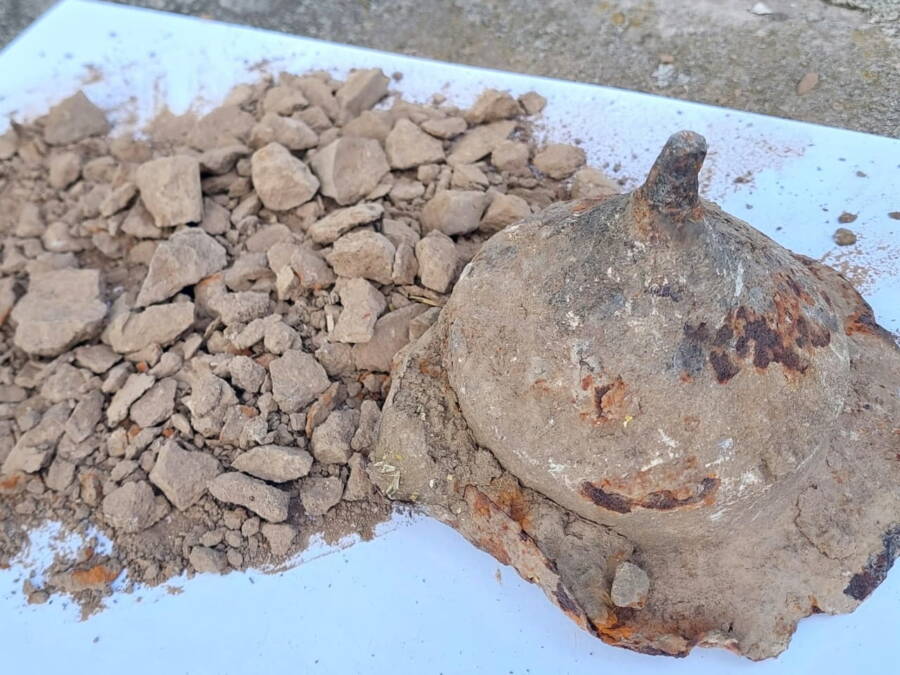
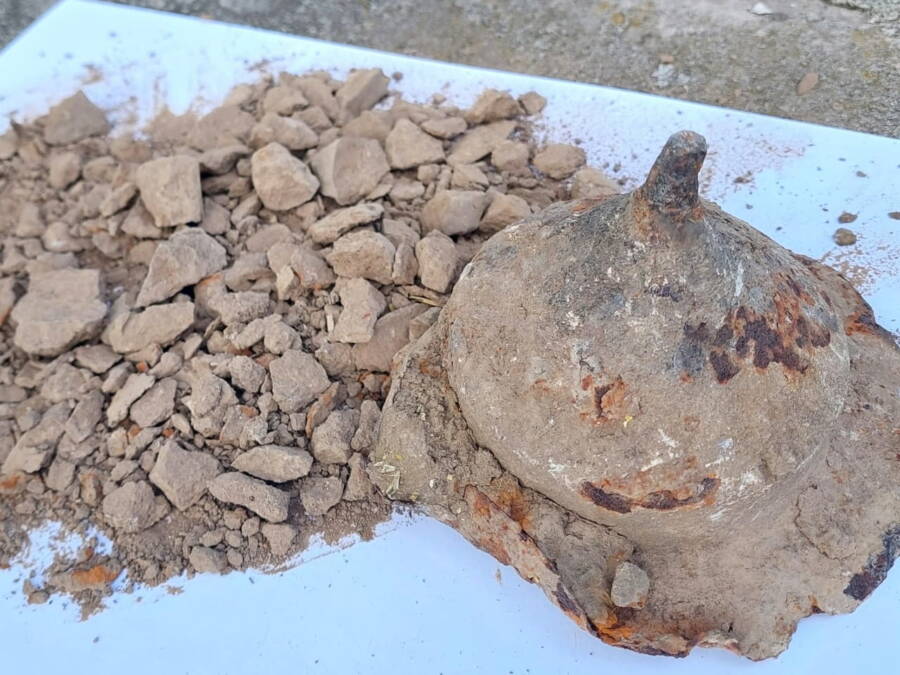
Muzeum im. ks. Stanisława Staszica w Hrubieszowie/FacebookA man looking for car parts in a Polish scrapyard stumbled upon an ancient iron umbo, the central fitting of an ancient shield.
Włodzimierz Starykiewicz was in a scrapyard in Hrubieszów, Poland, looking for parts from old motorcycles and cars when he came across a corroded iron object that seemed out of place.
Although the iron piece could have been any ordinary scrap metal, Starykiewicz sent a photo to the local Stanisław Staszic Museum — and officials there confirmed that the artifact was an umbo, the central fitting of an ancient shield, that dates back to the second century C.E.
The Chance Discovery Of The Ancient Artifact
In ancient times, an umbo — also known as a shield boss — helped protect a warrior’s hand while also reinforcing the center of the shield. This particular umbo is shaped like a funnel. The shield it was once attached to was likely made from wood, so the iron center piece is all that remains after nearly 2,000 years.
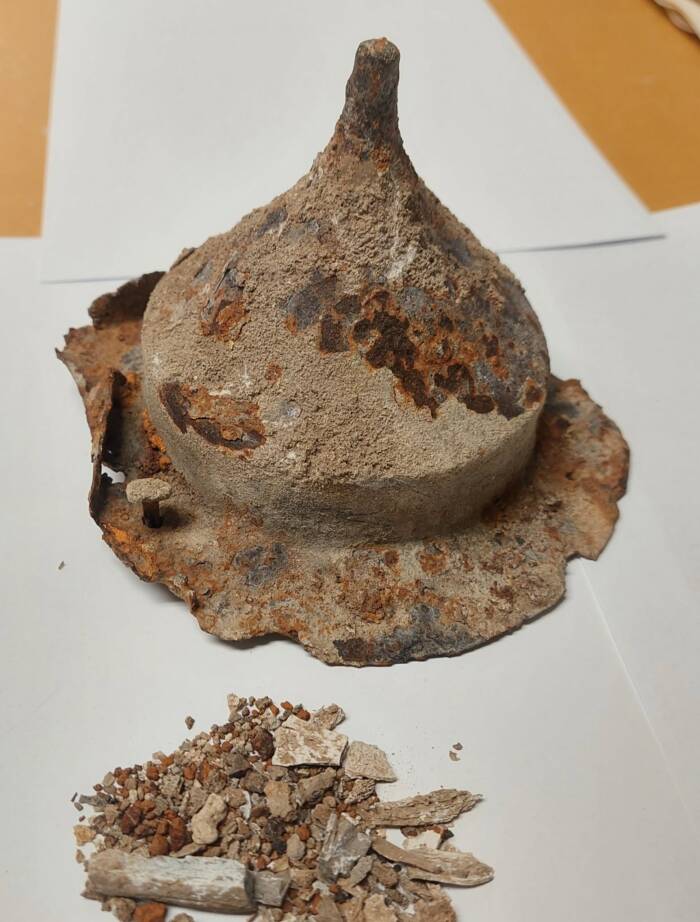
Muzeum im. ks. Stanisława Staszica w Hrubieszowie/FacebookThe object was filled with soil and bits of crops, suggesting that it was once buried beneath farmland.
That’s why it’s so surprising that Starykiewicz didn’t simply toss the artifact to the side while searching for car parts in August 2026.
“I found something that no one would expect in a scrapyard, it’s not something that should have ended up there,” Starykiewicz commented on the Stanisław Staszic Museum’s social media post about the discovery. “I am happy that I managed to find and recognize this monument and that it ended up where it was supposed to be practically undamaged.”
The umbo wasn’t the only thing Starykiewicz uncovered, though. Inside its hollow center, there were remnants of soil and plant matter, indicating that the artifact had once been buried in farmland. And when museum director Bartłomiej Bartecki broke open the clod of dirt, he found burnt fragments of human bones.
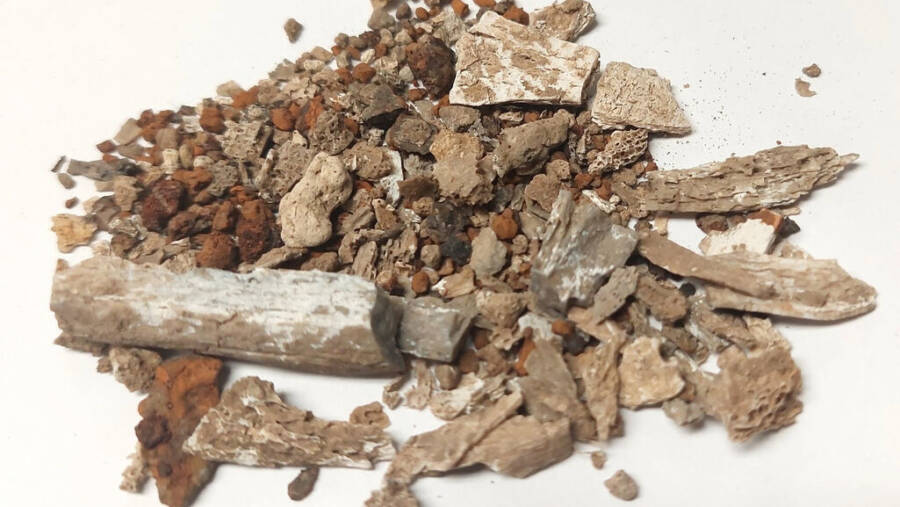
Muzeum im. ks. Stanisława Staszica w Hrubieszowie/FacebookThe soil contained remains of burnt human bones, leading researchers to believe the shield was burned on a funeral pyre alongside its owner.
This, paired with the iron surface itself, clued experts in on what happened to the shield almost 2,000 years ago. The iron had seemingly been exposed to intense heat, suggesting that the shield was burned alongside a warrior as part of a funeral pyre ritual.
“The discovery clearly indicates a disturbed cremation burial of a warrior from the Vandal community,” said Bartecki, as reported by the Polish outlet Super Tydzień Chełmski. “Plant remains preserved in the ground suggest that the artifact was recently plowed from the top layer of the field and then unintentionally discarded for scrap. But thanks to Mr. Włodek’s intuition, it was saved.”
What This Find Reveals About Vandal Warriors
The Vandal culture Bartecki references was an ancient group of several Germanic peoples who lived across central and eastern Europe. The early Vandals are linked to the Przeworsk culture, which thrived in what’s now Poland from the third century B.C.E. to the fifth century C.E.
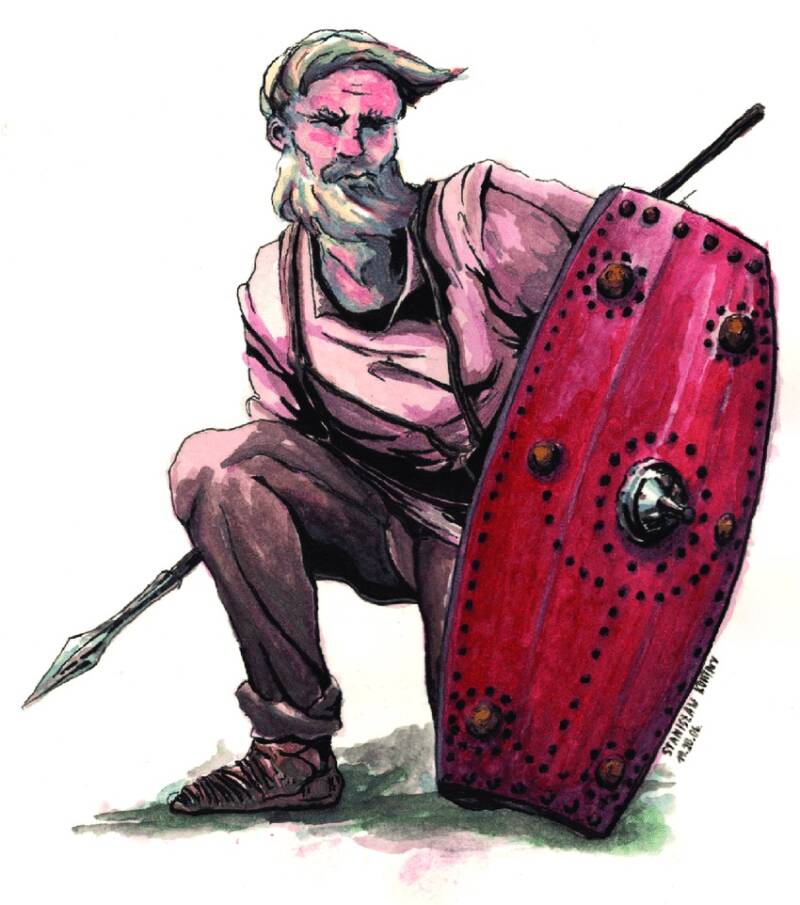
Stanisław Kontny/Kontny et al., Acta Archaeologica Carpathica (2019)The shield may have belonged to a warrior from the Przeworsk culture.
The discovery offers some rare insight into the funerary rituals of these cultures. A burial of this kind might have also included a sword, spearheads, buckles, or brooches. However, because archaeologists have no idea where the umbo was originally buried, they are currently unable to identify who it may have belonged to.
“We have a huge problem — we lack context,” said Bartecki. “The [umbo] was probably lying at the very top of the grave, caught by the plow. All the rest of the equipment is probably still buried deeper.”
The museum is now asking for help from the public: “[I]f, by some miracle, the person who — completely unknowingly — handed over an unfamiliar iron object for scrap were to see this post and recognize the artifact, we ask them to get in touch!”
If researchers can determine where the artifact was unearthed, they may be able to locate the grave and determine the exact age of the burial, whether the warrior was male or female, and more about the Przeworsk culture itself.

Fire Cloak - 1500F CE Certified Emergency Fire Blanket for Home & Kitchen | 500GSM Fabric & 0.5mm Thick - Silicon Coated 100% Fiberglass Essentials in House, Warehouse Office - 55"L x 70"W by Supa Ant
$83.99 (as of October 24, 2026 01:02 GMT +00:00 - More infoProduct prices and availability are accurate as of the date/time indicated and are subject to change. Any price and availability information displayed on [relevant Amazon Site(s), as applicable] at the time of purchase will apply to the purchase of this product.)
The Door Balancer Eliminates The Need for Door Props, Door Stops and Door Wedges
(as of October 24, 2026 01:02 GMT +00:00 - More infoProduct prices and availability are accurate as of the date/time indicated and are subject to change. Any price and availability information displayed on [relevant Amazon Site(s), as applicable] at the time of purchase will apply to the purchase of this product.)
Skater Trainer Wheels - Beginners get Skateboard Tricks Fast, Safe and Fun | Viral accessory gift - Helps beginners stay excited about their new skateboard - Kids & parents love these
$28.99 (as of October 24, 2026 01:02 GMT +00:00 - More infoProduct prices and availability are accurate as of the date/time indicated and are subject to change. Any price and availability information displayed on [relevant Amazon Site(s), as applicable] at the time of purchase will apply to the purchase of this product.)
Kinsa Smart,Fever, Digital Medical Baby, Kid and Adult Termometro - Accurate, Fast, FDA Cleared Thermometer for Oral, Armpit or Rectal Temperature Reading - QuickCare
$18.94 (as of October 24, 2026 01:02 GMT +00:00 - More infoProduct prices and availability are accurate as of the date/time indicated and are subject to change. Any price and availability information displayed on [relevant Amazon Site(s), as applicable] at the time of purchase will apply to the purchase of this product.)