The Unexpected Heirs to Lizzie Borden’s Secret Million-Dollar Fortune Revealed

How often does true crime meet a twist of generosity? Let’s talk Lizzie Borden—a woman forever tangled in mystery, haunting nursery rhymes and the nightmares of armchair detectives. She’s not just a historic “alleged murderer” (with a trial splashier than a Netflix trailer), but also a millionaire who, instead of hoarding her riches, left most of it to animal charities. I mean, shouldn’t every infamous figure end their tale with a soft spot for puppies and a bizarre last will? Even after sizzling in the court of public opinion and getting shunned by basically everyone except her cat, Lizzie lived out her days insulated by luxury, rumors and her own stubborn refusal to disappear. Now, as Netflix brings her back under the modern spotlight, I find myself wondering—if you became the most notorious suspect in America, would you bequeath your fortune to animal shelters, friends, or maybe a few shocked distant cousins? Dive into the tangled saga and see where all her millions really went… LEARN MORE.
Lizzie Borden is one of the most infamous female killers of all time, and despite dying rich, she gave away her wealth.
If you don’t know Lizzie or her story, she has become a historic alleged killer, yet she was never actually convicted of the murder of her father, Andrew, and stepmother, Abby.
Instead, she was acquitted of the crime after being unable to prove she had killed them – despite her being the only person aside from the maid prior to their deaths.
Borden will be the focus of Netflix’s Monster, with Ella Beatty playing the role of Lizzie in the show.
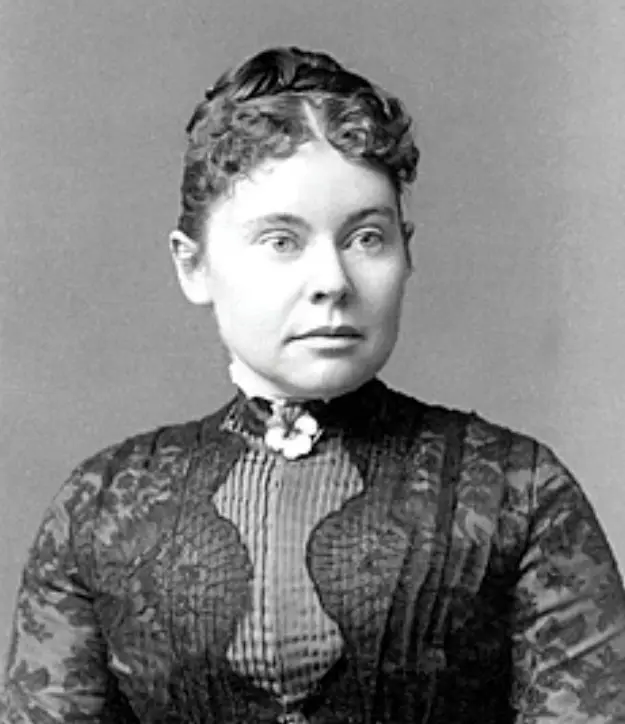
Lizzie Borden in 1890 (Unknown)
There, viewers will be able to see just what may have done on behind closed doors that August day in 1892.
The story is complex, and while Lizzie was eventually acquitted of this crime, she was still able to live a somewhat normal life within the exact same community – albiet shunned socially.
There, she lived with her older sister Emma for some time, and as the daughters of a property tycoon as such, they had a comfortable life until their deaths some 30 years later.

Lizzie Borden was a millionaire
But the amount of money Lizzie would have had at the time of her death, would amount to over $6 million today, making her one mega-millionaire.
Having written a will and final testament to deal with her wealth, Lizzie decided to hand down her money in a number of ways, but most notably to not a person, but a charity.
According to phayemuss, Lizzie’s will included her fondness of ‘animals’ and, at the time, $30,000 dollars.
Who did Lizzie Borden leave her money to?
Lizzie’s last will was dated 30 January 1926. Along with the probate accounts, it shows how the estate was actually distributed.
Lizzie did not leave anything to her sister Emma Borden. The will explicitly says that Emma had already received her share of their father’s estate.
Instead, the bulk of the remaining estate went equally to Helen Leighton and cousin Grace H. Howe.
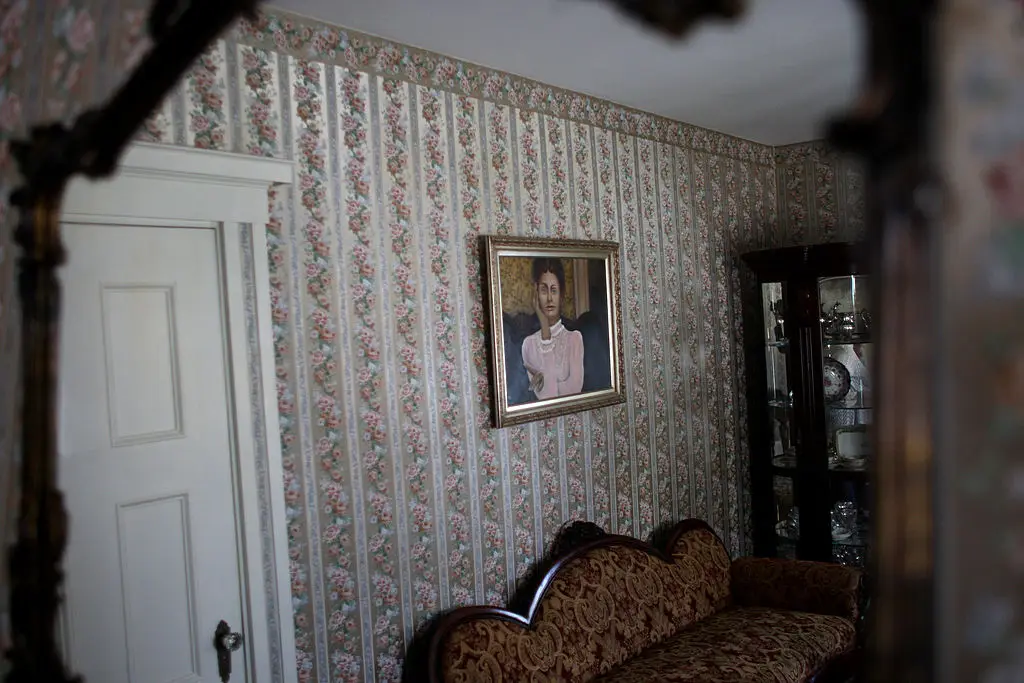
A portrait of Lizzie Borden hangs on a wall at the house which is now a bed and breakfast (Jonathan Wiggs/The Boston Globe via Getty Images)
According to the will, Leighton, received diamond rings and a diamond brooch, as well as library furniture and a choosing of other homewares.
Her cousin, Grace Howe received a diamond and amethyst ring as well as her share of the A. J. Borden Building in said Fall River.
The will states how she left $30,000 – worth $587,684 today – plus her Stevens Manufacturing Company stock to the Animal Rescue League of Fall River, and another $2,000 to the Animal Rescue League of Washington, D.C. – both animal charities.
She left $500 to the City of Fall River for the care of her father’s grave, $3,000 to her housekeeper and each servant that had been employed with her for five years.
Meanwhile, Charles C. Cook was awarded $10,000 plus the Baker Lot on French Street. He was also a named executor. This would be worth around $195,894.74 today.
According to the will, a number of other people were also listed and were entitled to varying amounts between one and five thousand dollars. It is not clear who all of them are.
However it included $1,000 to a doctor, Ms Annie Macrae, $1,000 each to two former schoolmates, money to her chauffeur’s wife and daughter, and to other distant cousins.
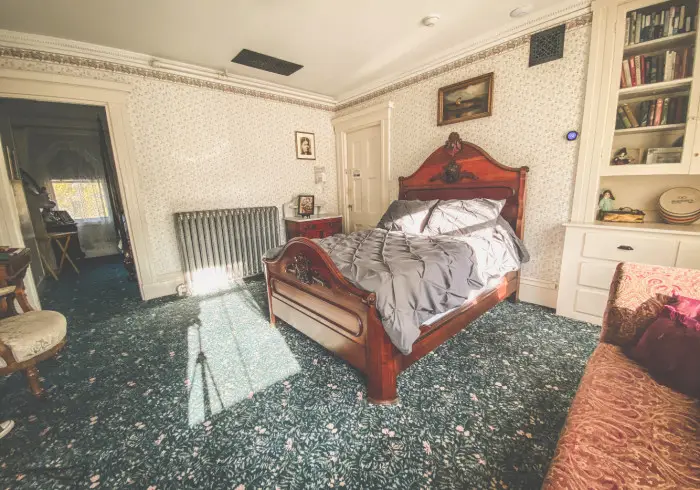
Lizzie’s room is available to stay in (Lizzie Borden House)
What happened after Lizzie was acquitted of murder?
After being acquitted of murder, Lizzie’s life dramatically changed. The jury in the case had only deliberated for a short time before the courtroom drama ended with a not guilty verdict.
She inherited wealth, along with her sister Emma, mainly from her father’s estate, and then moved into an elegant new home in Fall River’s Hill neighbourhood.
She attended theatre shows, travelling to Boston and New York and began going by the name Lizbeth A. Borden in an attempt to reinvent herself.
There, she employed servants and a coachman. At the home, later named Maplecroft, she entertained and held dinners, but was not accepted by everyone in the Fall River community who refused to forget the trial.
She had a well-documented friendship with actress Nance O’Neil. It was said the pair became close and spent time with one another.
In 1905, Lizzie’s sister Emma is thought to have suddenly left the home they shared for around ten years. No details are clear about this period, however they never reconciled.
Lizzie remained at Maplecroft for the remainder of her life, and became ill during her final year. She died on 1 June 1927 aged 66 from pneumonia. Her sister Emma died nine days later.
Monster: The Lizzie Borden Story releases on Netflix 17 September.

RIVER OF GOODS Stained Glass Magna Carta LED Ceiling Fan - 52" L x 52" W - Tiffany Style - Flush Mount Ceiling Fan with Remote - Teal
(as of September 17, 2026 00:42 GMT +00:00 - More infoProduct prices and availability are accurate as of the date/time indicated and are subject to change. Any price and availability information displayed on [relevant Amazon Site(s), as applicable] at the time of purchase will apply to the purchase of this product.)
Rhythm Superfoods Kale Chips, Zesty Nacho, Organic and Non-GMO, 2.0 Oz (Pack of 4), Vegan/Gluten-Free Superfood Snacks
(as of September 17, 2026 00:42 GMT +00:00 - More infoProduct prices and availability are accurate as of the date/time indicated and are subject to change. Any price and availability information displayed on [relevant Amazon Site(s), as applicable] at the time of purchase will apply to the purchase of this product.)
RIVER OF GOODS Stained Glass Bird Accent Lamp - 8" W x 13.5" H - Tiffany Style Table Lamps for Home, Office Desk, Bedroom, Nightstand - Blue Jay Decor
(as of September 17, 2026 00:42 GMT +00:00 - More infoProduct prices and availability are accurate as of the date/time indicated and are subject to change. Any price and availability information displayed on [relevant Amazon Site(s), as applicable] at the time of purchase will apply to the purchase of this product.)
RIVER OF GOODS Mid-Century Modern Transitional LED Bronze Chrome Ceiling Fan - 52" L x 52" W - Rich Barnwood/Light Driftwood Fan Blades - Metallic Ceiling Fan with Light and Fabric Shade
(as of September 17, 2026 00:42 GMT +00:00 - More infoProduct prices and availability are accurate as of the date/time indicated and are subject to change. Any price and availability information displayed on [relevant Amazon Site(s), as applicable] at the time of purchase will apply to the purchase of this product.)





















Post Comment