Unearthed 1800s Recording of Human Voice Sounds Shockingly Otherworldly—You Have to Hear It to Believe It
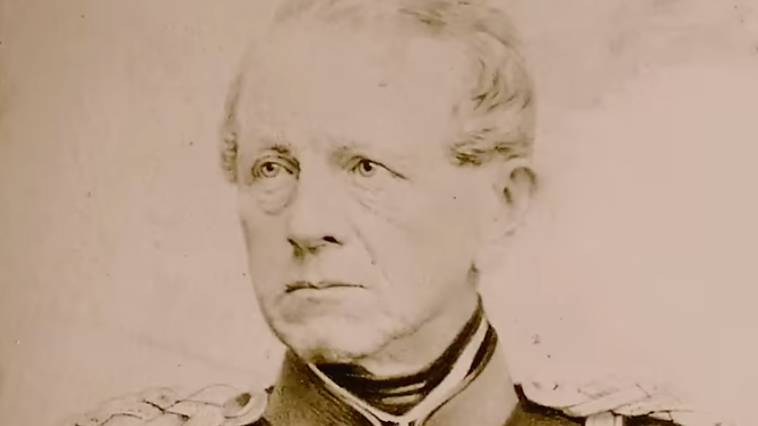
Imagine dusting off an ancient phonograph cylinder, expecting a creak or a pop—and instead, hearing the voice of a Prussian general born in 1800, whispering lines from Shakespeare and Goethe. Sounds like a sci-fi flick, right? Yet, that’s exactly what happened when the earliest known human voice recording, tucked away and forgotten for decades, finally resurfaced. Helmuth von Moltke the Elder—commander of armies and a man who helped forge modern Germany—left behind four wax-etched blessings from 1889, captured by a man who worked alongside Thomas Edison himself. It’s weirdly surreal to think this 88-year-old marshall’s voice traveled through time on fragile cylinders, only to be rediscovered over a century later, faintly saying his own name. So, what’s the feeling of hearing a voice that predates even your grandma’s stories? Dive in and find out this odd yet fascinating echo from the 19th century. LEARN MORE
The earliest ever recording of a human speaking from the 1800s was preserved and unknown about for decades.
It is seriously bizarre to hear; a former chief of staff of the Prussian army’s voice in recordings stored in what was then a newly-invented cylinder phonograph.
Helmuth von Moltke the Elder was a Prussian Generalfeldmarschall, who commanded troops in the Middle-East and Europe during the Second Schleswig War, Austro-Prussian War, and Franco-Prussian War that went on to create the nation of Germany.
But he is also notably the earliest-born human whose recorded voice remained preserved, being born in the year 1800.
He made four recordings, two of which were recorded in October 1889 and are still preserved to this day.
On 21 October 1889, then aged 88, he made two audio recordings with a German native named Adelbert Theodor Wangemann, who worked with Thomas Edison.
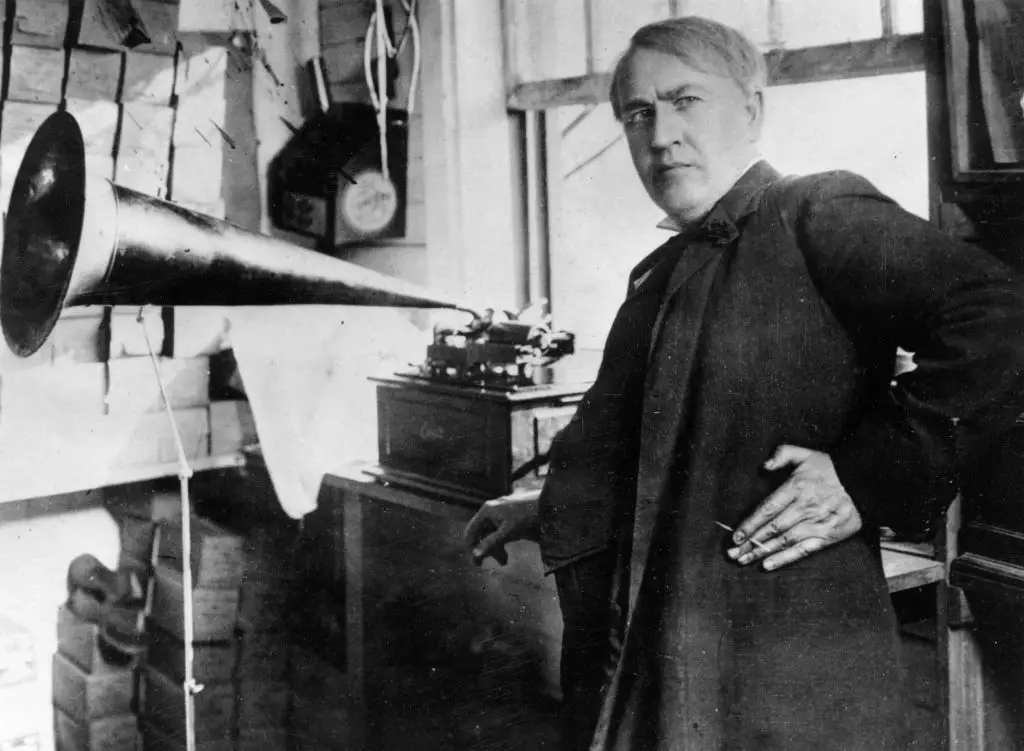
Thomas Edison with standard phonograph (Hulton Archive/Getty Images)
The American inventor had created the cylinder phonograph, which was sent across Europe to record famous voices at the time.
It reached von Moltke’s estate, where he recorded a line from William Shakespeare’s Hamlet as well as a passage from Goethe’s Faust, both of which were engraved onto two wax cylinders.
They were then shipped back to New Jersey but were lost until their rediscovery in 1957, though they remained unidentified for decades later.
They had been found unlabelled in a cabinet in Edison’s library after his death in 1931.
It was not until January 2012, more than 120 years later, that they were discovered again among recordings revealed by the Thomas Edison National Historical Park.
Sound historians matched the voice and the readings to the time period and were able to hear Moltke reading out his own name faintly at the end of the recording.
They can be heard in a recent video shared on YouTube by
The two record cylinders made by Moltke are the only known surviving voice recordings of a person born in the 18th century.

RIVER OF GOODS Stained Glass Bird Accent Lamp - 8" W x 13.5" H - Tiffany Style Table Lamps for Home, Office Desk, Bedroom, Nightstand - Blue Jay Decor
(as of September 19, 2026 00:44 GMT +00:00 - More infoProduct prices and availability are accurate as of the date/time indicated and are subject to change. Any price and availability information displayed on [relevant Amazon Site(s), as applicable] at the time of purchase will apply to the purchase of this product.)
Joking Hazard Enlarged Box Empty Box for Card Storage
$12.00 (as of September 19, 2026 00:44 GMT +00:00 - More infoProduct prices and availability are accurate as of the date/time indicated and are subject to change. Any price and availability information displayed on [relevant Amazon Site(s), as applicable] at the time of purchase will apply to the purchase of this product.)
The Door Balancer Eliminates The Need for Door Props, Door Stops and Door Wedges
(as of September 19, 2026 00:44 GMT +00:00 - More infoProduct prices and availability are accurate as of the date/time indicated and are subject to change. Any price and availability information displayed on [relevant Amazon Site(s), as applicable] at the time of purchase will apply to the purchase of this product.)
White Leaf Baby Food Pouches, Toddler Snack, Mango + Carrot + Banana + Pear | 24 Pack, Organic No Added Sugar, Non-GMO, BPA-Free Regeneratively Farmed, Squeeze Puree Smoothie Pouch for Adults & Children
$69.95 (as of September 19, 2026 00:44 GMT +00:00 - More infoProduct prices and availability are accurate as of the date/time indicated and are subject to change. Any price and availability information displayed on [relevant Amazon Site(s), as applicable] at the time of purchase will apply to the purchase of this product.)



















Post Comment