Soldiers in South Korea Unearth Ancient Gunpowder Weapon—A Discovery That Could Rewrite History
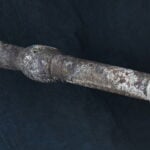
Ever stumbled upon a tiny 10-inch relic that packs more historical punch than a blockbuster summer flick? Well, South Korean soldiers did just that—digging up a small bronze hand cannon tucked just four inches beneath Mount Geumseong’s soil. Tipped to be the oldest gunpowder weapon the country has ever seen, this two-pounder isn’t just some dusty artifact. Nope—it’s got a full-on engraved memoir, complete with the name of its maker and all kinds of juicy deets about its origin. Imagine ancient craftsmanship shouting its story loud and clear after 600 years! So, was this smokin’ little cannon a game-changer in late medieval Korea’s arsenal, or just a blip in the timeline of warfare? Either way, it’s a sizzling discovery emblematic of a fascinating era where innovation was just starting to spark. LEARN MORE
This rare relic measures ten inches long and weighs in at about two pounds, but its most noteworthy feature is that it’s inscribed with detailed information about its manufacture — including the name of the person who made it.

Korea Heritage ServiceSouth Korean soldiers on a mine-detection operation discovered a small bronze hand cannon, the oldest gunpowder weapon ever found in the country.
South Korean soldiers sweeping Mount Geumseong for landmines unexpectedly discovered a small bronze cannon that dates back 600 years, making it the country’s oldest-known gunpowder weapon ever found.
The weapon, known as “Hwangja Hwatong,” also features an inscription that records its name, weight, age, provenance, and manufacturer. This information has enabled researchers to date the cannon back to the late Goryeo or early Joseon period, six centuries ago.
The Discovery Of This Medieval Hand Cannon, The Oldest Gunpowder Weapon In South Korean History
The weapon was found in November 2023 by soldiers performing a mine-detection operation. The soldiers were checking an area on the mountain suspected of containing mines before the construction of a hiking trail in the area was set to commence. It was then that they discovered this stunning bronze artifact, just four inches below the ground.
The mountain is near the Yeongsan River region, which has historically served as an important area in terms of military strategy. The summit, for instance, has been used by the military as an air-defense station since 1966.

Korea Heritage ServiceThe weapon weighs a little over two pounds, indicating to researchers that it was used as a portable firearm.
The Hwangja Hwatong was presented to the Naju National Research Institute of Cultural Heritage in September after three years of analysis and expert review.
The weapon is more than nine inches in length, with a diameter of around half an inch. The cannon weighs only two pounds, indicating that it was designed to be a portable firearm.
Scientific analysis also revealed that the weapon was cast from a bronze alloy mainly composed of copper, tin, and lead.

Korea Heritage ServiceTwenty-seven characters across six columns were inscribed on the cannon, identifying the weapon’s manufacturers and production date.
The weapon has three main sections: a socket that would hold a wooden handle, a gunpowder chamber, and a muzzle from which the projectile would be released. According to researchers, the weapon likely discharged arrows or other projectiles.
The most prominent feature of the artifact is its inscription of 27 characters organized in six columns. The letters were engraved into the handle socket, and an additional character was inscribed near the muzzle.

Korea Heritage ServiceA reconstruction of how the Hwangja Hwatong would have been used.
After analysis, researchers determined that the text classifies the weapon as a hwatong hand cannon and identifies the weapon’s weight as one geun and fourteen nyang, which are traditional Korean units of measurement. The character engraved near the muzzle means “eight,” and was likely a production or inventory number.
Most intriguingly to the researchers, the inscription also contains the names of two individuals: the supervising manufacturing official holding the title “noksa,” named An Hyu-bo, and the craftsman, Seok.
This means that the weapon came from the late Goryeo or early Joseon periods. It was during this time that officials involved in arms production held the title of “noksa.”
However, more specific dating of the cannon has proven difficult.
When This “Exceptionally Rare” Hwatong Was Made
The inscription furthermore states that it was manufactured in the twelfth month of a Jeongsa year. This name is part of the pre-modern style of Korean dating, which operated on a 60-year cycle.
Because researchers know that this weapon was produced in a Jeongsa year, they know which year within the cycle this weapon was made in — but not which cycle specifically. They then used context clues to narrow it down to two cycles, meaning that this cannon could have been produced in one of two years, 60 years apart: either 1377 or 1437.
If the weapon was manufactured in 1377, it would have been in the final years of the Goryeo Dynasty. During that year, the government had established the Hwatong Dogam, an agency with the sole responsibility of manufacturing firearms.

Skater Trainer Wheels - Beginners get Skateboard Tricks Fast, Safe and Fun | Viral accessory gift - Helps beginners stay excited about their new skateboard - Kids & parents love these
$28.99 (as of September 23, 2026 00:49 GMT +00:00 - More infoProduct prices and availability are accurate as of the date/time indicated and are subject to change. Any price and availability information displayed on [relevant Amazon Site(s), as applicable] at the time of purchase will apply to the purchase of this product.)
Joking Hazard by Cyanide & Happiness - 360+ Funny & Inappropriate Comic Cards, Hilarious Party Games | Includes Add-Your-Own-Words Cards
$24.95 (as of September 23, 2026 00:49 GMT +00:00 - More infoProduct prices and availability are accurate as of the date/time indicated and are subject to change. Any price and availability information displayed on [relevant Amazon Site(s), as applicable] at the time of purchase will apply to the purchase of this product.)
RIVER OF GOODS Stained Glass Bird Accent Lamp - 8" W x 13.5" H - Tiffany Style Table Lamps for Home, Office Desk, Bedroom, Nightstand - Blue Jay Decor
(as of September 23, 2026 00:49 GMT +00:00 - More infoProduct prices and availability are accurate as of the date/time indicated and are subject to change. Any price and availability information displayed on [relevant Amazon Site(s), as applicable] at the time of purchase will apply to the purchase of this product.)
The Door Balancer Eliminates The Need for Door Props, Door Stops and Door Wedges
(as of September 23, 2026 00:49 GMT +00:00 - More infoProduct prices and availability are accurate as of the date/time indicated and are subject to change. Any price and availability information displayed on [relevant Amazon Site(s), as applicable] at the time of purchase will apply to the purchase of this product.)



















Post Comment