Unearthed in Ethiopia: Could This 2,800-Year-Old Palace Be the World’s First Skyscraper?
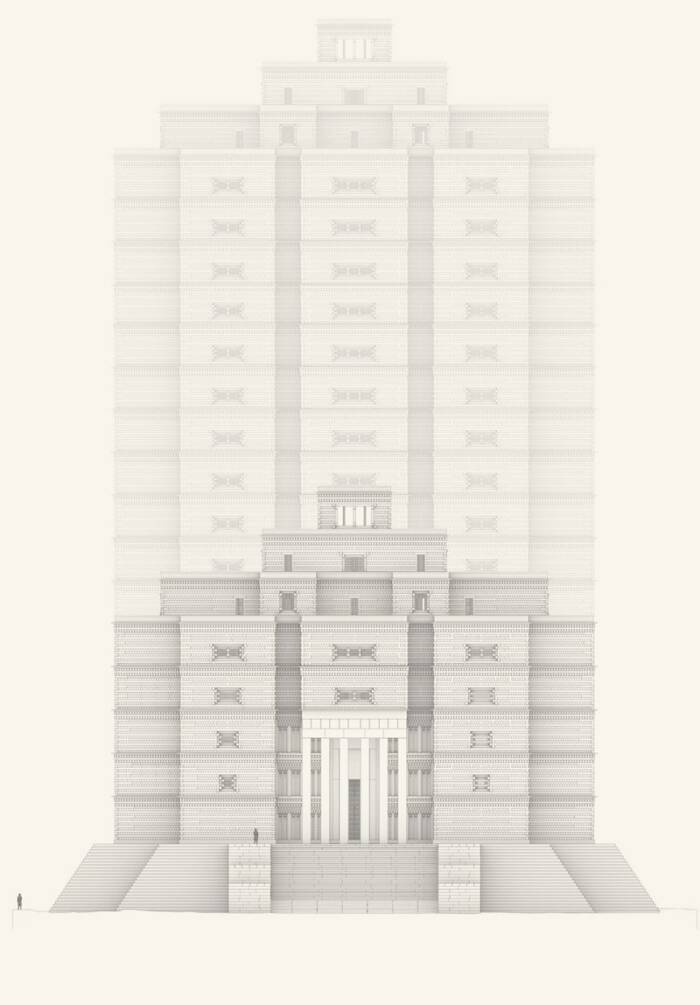
For centuries, whispers have floated like dust over the deserts and hills of the Middle East and northeastern Africa — tales of gargantuan structures so towering, they’d make today’s skyline blush. But could those ancient accounts of supertall buildings really be more than just legends? Well, buckle up, because recent discoveries at Yeha in northern Ethiopia suggest these weren’t just fanciful myths. The Grat Be’al Gibri palace, dating back around 2,800 years, might very well have been an architectural marvel capable of reaching 16 to 19 floors high — an ancient behemoth that rivals a modern skyscraper in ambition if not in steel. Imagine that: before the steel frame and glass curtain walls, our ancestors were already pushing the boundaries of construction with clever combinations of stone, clay, and timber. It’s a bit like finding out your great-great-grandpa was the original high-rise developer…but instead of elevators, they had termites to worry about! So, what wizardry allowed this palace to stand so tall, and how close was it to reshaping what we think about ancient architecture? Let’s climb into the past and see just how high those walls could go.
For centuries, historians have known of various accounts from the Middle East and northeastern Africa that speak of supertall buildings being constructed in the region some 2,000 years ago — and now we may have proof.

ⓒartefacts-berlin.de, DAI Orient Department // Mike Schnelle, Building ResearchA new study has shown that the Grat Be’al Gibri palace at Yeha could have supported 16-19 floors.
Today, the world’s great skyscrapers, built with steel frames and concrete, reach heights of more than 2,000 feet. Although the skyscraper may seem like a symbol of modernity itself, the fact is that, thousands of years ago, ancient builders were attempting to reach great heights as well.
Researchers studying the Grat Be’al Gibri palace in Yeha, an ancient site in northern Ethiopia, have revealed experimental and complex techniques employed by ancient builders working on this monumental palace circa 800 B.C.E. These techniques, researchers believe, strengthened the walls of the ancient palace so much that they could have supported 16-19 stories — perhaps making Grat Be’al Gibri an ancient “skyscraper,” one of the world’s first.
The Astounding Ancient Palace Of Grat Be’al Gibri In Yeha
This new study is built upon research that has been accumulating for more than a century. Researchers first began investigations at the ancient site in 1906, and, in the 1970s, archaeological excavations revealed ruins of the palace’s ground level, as well as its monumental entrance.

E Africa/FacebookThe palace has been investigated by archaeologists for more than a century, many of them attempting to determine how tall the building really was.
Since 2009, an Ethiopian-German joint project has been working to reconstruct the palace’s layout and determine how impressive the building once was when it was in use close to 2,800 years ago.
The palace has been identified by researchers as the largest known structure of its kind dating from the early first millennium B.C.E. in southern Arabia and northeastern Africa.
Its ground floor footprint spanned about 200 by 200 feet, but only parts of this floor have been preserved. Still, archaeologists have determined that the building sat on a massive, raised podium that stood around 20 feet tall.
The entrance of the palace had a monumental gateway with six sandstone pillars standing about 32 feet tall, a wide staircase, and enormous doors.

Wikimedia CommonsWith a footprint spanning nearly 200 feet by 200 feet, Grat Be’al Gibri was one of the largest palaces of its era.
With these ruins left to study, previous researchers were able to surmise that the ancient palace was at least several floors tall. This earlier research proposed virtual reconstructions of Grat Be’al Gibri with five main stories and three stories set back above them.
However, a study published in July in the journal Heritage, determined that the walls of the palace had the theoretical ability to support a building with 16-19 stories, rather than just eight.
What New Research Reveals About The Construction Of Ethiopia’s Ancient “Skyscraper”
In the recent study, researchers attempted to answer the question of how much weight, and thus how many stories, the surviving walls of the palace could have carried.

Mike Schnelle/DAI OrientThe walls in the palace were built with a combination of stone, clay mortar, and timber.
This required a detailed look at the palace’s ancient building techniques. The walls of Grat Be’al Gibri were made with a combination of stone, clay mortar, and wooden beams. The beams were made from African olive and Cordia africana timber, a choice that may have contributed to the durability of the walls, as both trees resisted wood-eating pests like termites.
The beams were cut into rectangles measuring around 8 to 11 inches in length, and close to 9 inches in width. The timber layers intersected within the wall, potentially held together by wooden nails that had been recovered at the site.

Skater Trainer Wheels - Beginners get Skateboard Tricks Fast, Safe and Fun | Viral accessory gift - Helps beginners stay excited about their new skateboard - Kids & parents love these
$28.99 (as of September 30, 2026 00:52 GMT +00:00 - More infoProduct prices and availability are accurate as of the date/time indicated and are subject to change. Any price and availability information displayed on [relevant Amazon Site(s), as applicable] at the time of purchase will apply to the purchase of this product.)
Supa Ant Fire Blanket -Certified 1200F Extra Thick, Glow in The Dark | Glow in The Dark Emergency Supplies 500gsm, 0.5mm Thick Wearable Fire Blankets for Home. Emergency Blanket with Cape & Hood
$83.99 (as of September 30, 2026 00:52 GMT +00:00 - More infoProduct prices and availability are accurate as of the date/time indicated and are subject to change. Any price and availability information displayed on [relevant Amazon Site(s), as applicable] at the time of purchase will apply to the purchase of this product.)
PROMIXX FORM Protein Shaker Bottle - A Premium Shaker Bottle for Protein Shakes Infusions and Hydration - Durable Gym Shaker Bottle, Leakproof Lid, Odorless - 26oz (Graphite Gray)
$17.32 (as of September 30, 2026 00:52 GMT +00:00 - More infoProduct prices and availability are accurate as of the date/time indicated and are subject to change. Any price and availability information displayed on [relevant Amazon Site(s), as applicable] at the time of purchase will apply to the purchase of this product.)
Kinsa Smart,Fever, Digital Medical Baby, Kid and Adult Termometro - Accurate, Fast, FDA Cleared Thermometer for Oral, Armpit or Rectal Temperature Reading - QuickCare
$29.00 (as of September 30, 2026 00:52 GMT +00:00 - More infoProduct prices and availability are accurate as of the date/time indicated and are subject to change. Any price and availability information displayed on [relevant Amazon Site(s), as applicable] at the time of purchase will apply to the purchase of this product.)



















Post Comment