Ancient Secrets Unearthed: Workers Unearth Mysterious Roman-Era Dwelling Hidden Beneath Corsican Coastbedrock
Imagine stumbling upon a house that dates back 1,600 years—carved right into the stubborn Corsican bedrock, no less—and wondering if these ancient folks had a better DIY game than your average weekend warrior. Archaeologists digging along Cap Corse’s Bay of Meria uncovered a surprisingly robust Roman-era foundation made from meticulously chiseled stone blocks, with rooms cleverly separated by large monoliths of schist. This wasn’t just any old shack; it was perched about 100 feet above a Roman pier, hinting at a bustling port settlement that may have thrived long before most modern maps even existed. Now, the question that keeps me up at night: was this a solitary cliffside retreat or part of a much larger seaside village where workers likely eyed the waves between chores? Either way, it’s a fascinating glimpse into ancient domestic life with fragments of cooking pottery, glassware, and iron tools telling stories louder than any history book. Curious how a simple excavation could reshape our understanding of Corsica’s role in Mediterranean trade over a millennium ago? Yeah, me too.
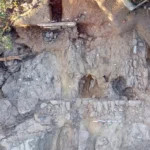
Archaeologists digging at Cap Corse along the Bay of Meria uncovered a sturdy foundation made of carefully-carved stone blocks, with rooms separated by large monoliths of schist.

Brice Chevaux, InrapThis ancient Roman-era dwelling was found during preventative excavations ahead of planned house construction on Corsica.
In a preventative archaeological excavation before a new house was to be built on the island of Corsica, researchers found the remains of a Roman-era home that was carved directly into the bedrock at least 1,600 years ago.
Found on the island’s northern Cap Corse peninsula, this ancient dwelling was built around 100 feet uphill from a pier that comes from the same era. Following the discovery of this seaside abode, researchers are curious about just how extensive of a port settlement may have surrounded this house well over a millennium ago.
The Discovery Of An Ancient Roman-Era House Carved Right Into The Bedrock In Corsica
Preventative excavations took place in May and June of 2026, and covered around 1,600 square feet of land. This is only the second time that a preventative excavation has been done on the island’s northern peninsula, which stretches about 20 miles long.

Maxime Hermsdorff, InrapArchaeologists discovered that slabs of schist rock were used to partition the house into separate rooms.
The first excavation, according to a statement put out by INRAP, took place in the spring of 2025, and it uncovered the Roman-era pier on the peninsula, which sits within the Bay of Meria. The newly-discovered house was found 100 feet above the pier, carved into the protruding rock that overlooks the bay.
Archaeologists ultimately discovered that the house covered about 540 square feet and was constructed in two phases. First, the house’s builders carved into the underlying schist — a metamorphic rock that splits easily into slabs — in order to make the foundation.
The removed schist was then cut into square blocks which were laid upon the foundation in an alternating pattern — first, placed in parallel with the foundation’s edge, and then perpendicularly — in order to form a secure wall.

Brice Chevaux, InrapArchaeologists found a millstone in one of the pits that had been dug into the corners of the house.
Archaeologists also found several post holes packed with stone wedges, indicating that large schist slabs were placed upright on their edges and held in place by these stones and wooden posts. These monoliths may have been used to separate rooms within the home. Additionally, other post holes found nearby could have been used to hold upright beams that might’ve supported a tiled roof.
Within this carefully-built structure, archaeologists also unearthed a wealth of artifacts that paint a picture of ancient domesticity: fragments of cooking pottery, as well as glassware, iron tools, and a millstone.
What This Find Could Reveal About Life Along The Bay Of Meria During Antiquity
The discovery of the house carved into bedrock, in tandem with the pier from the same era that was found right nearby, has researchers curious about the extent of the Roman-era settlement that once sat on the Bay of Meria at Cap Corse.

Brice Chevaux, InrapThe residents of the house may have worked at the pier, located only about 100 feet away.
Archaeologists are unsure whether the two excavations revealed just a single house with its own pier, or if these finds are indicative of a hamlet or larger seaside settlement.
“It’s quite rare to have several avenues of investigation in the same area, especially here in Meria where the land is rather limited,” dig director Brice Chevaux told Corse Net Infos. “Since it’s the same chronological window, we can be certain that the people who lived here had a commanding view of the landing stage.”

Nathalie Gonzalez, InrapResearchers also found a Roman-era pier nearby, indicating that this area may have once held a larger seaside settlement.
Chevaux believes that a large settlement once stood here and that the pier was large enough to have needed multiple laborers who in turn would have needed their own houses on the slopes along the bay. Researchers presently suspect that a village of seaside laborers sprang up here during the late Roman era before eventually being abandoned in the sixth century C.E.
RIVER OF GOODS Coastal 52 Inch Wooden Bead LED Ceiling Fan, Brown
(as of October 19, 2026 01:01 GMT +00:00 - More infoProduct prices and availability are accurate as of the date/time indicated and are subject to change. Any price and availability information displayed on [relevant Amazon Site(s), as applicable] at the time of purchase will apply to the purchase of this product.)
1MORE Triple Driver in-Ear Earphones Hi-Res Headphones with High Resolution, Bass Driven Sound, MEMS Mic, in-Line Remote, High Fidelity for Smartphones/PC/Tablet - Silver
$69.99 (as of October 19, 2026 01:01 GMT +00:00 - More infoProduct prices and availability are accurate as of the date/time indicated and are subject to change. Any price and availability information displayed on [relevant Amazon Site(s), as applicable] at the time of purchase will apply to the purchase of this product.)
Supa Ant 6x8ft. Welding Blanket Fireproof (Pack of 2) - Heavy Duty Weld Fire Blanket Tools - Welders Cover for Men Curtain with Gloves - Large Welding Gear for Welder Accessories
(as of October 19, 2026 01:01 GMT +00:00 - More infoProduct prices and availability are accurate as of the date/time indicated and are subject to change. Any price and availability information displayed on [relevant Amazon Site(s), as applicable] at the time of purchase will apply to the purchase of this product.)
White Leaf Baby Food Pouches, Toddler Snack, Mango + Carrot + Banana + Pear | 24 Pack, Organic No Added Sugar, Non-GMO, BPA-Free Regeneratively Farmed, Squeeze Puree Smoothie Pouch for Adults & Children
$69.95 (as of October 19, 2026 01:01 GMT +00:00 - More infoProduct prices and availability are accurate as of the date/time indicated and are subject to change. Any price and availability information displayed on [relevant Amazon Site(s), as applicable] at the time of purchase will apply to the purchase of this product.)

















Post Comment