Unprecedented Super El Niño Threatens Half a Million Lives in 2027—Are We Prepared?

So, here’s a spicy question for you: What do you get when you mix a Super El Niño with climate change? Well, according to some serious brainiacs, you might just be staring down the barrel of nearly half a million heat-related deaths in the next few months alone. And that’s not even counting the diseases that love to hitch a ride on warmer weather — yikes. Colin J. Carlson, a planetary epidemiologist from Yale, is sounding the alarm bells, urging the World Health Organization to label this a public health emergency of international concern. Pretty wild, right? This isn’t just another flu or virus — these experts reckon the Super El Niño might just deserve its own headline as a global crisis, predicting a death toll surpassing some of the worst pandemics we’ve seen. As someone who’s watched trends rise and fall online, this is the kind of headline that sticks — and for all the wrong reasons. Buckle up; things are heating up — literally. LEARN MORE
Scientists have warned that heat from the upcoming Super El Niño is likely to cause almost half a million deaths in the coming months, and that doesn’t even account for the possibility of diseases that could spread because of it.
Colin J. Carlson, planetary epidemiologist at the Yale School of Public health, has called on the World Health Organisation (WHO) to declare it a public health emergency of international concern.
There have been a dozen of these declared in the past, all of them infectious disease outbreaks, but Carlson and his colleague Christopher Callahan, assistant professor at Indiana University’s O’Neill School of Public & Environmental Affairs, believe the Super El Niño qualifies.
They have been warning that a ‘pandemic-scale mortality’ is coming with hundreds of thousands of deaths in the worst affected areas, pointing towards research from the University of Chicago’s Climate Impact Lab which is predicting around 451,000 heat deaths.
The scientists said that over the years climate change ‘has probably been responsible for several million deaths’.
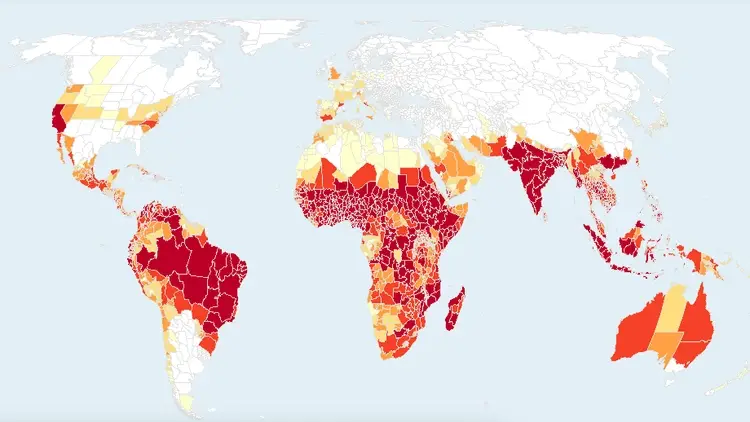
Researchers have been modelling which countries will be hardest hit (Climate Impact Lab)
Where the Super El Niño will hit hardest
“It is likely that more people will die in the next year than in the 2009 influenza A / H1N1 pandemic and several other PHEIC-level events since, making El Niño an emergency in its own right,” they warned.
This prediction is not counting potential excess deaths from the further spread of disease that may be boosted by hotter conditions of the Super El Niño.
In Africa, Nigeria is predicted to be the worst hit with an estimated 31,400 more deaths expected, and a further 17,500 in Sudan.
Between the Philippines, Vietnam, Thailand and Cambodia, predictions warn of 19,400 additional deaths, and another 19,300 in Indonesia.
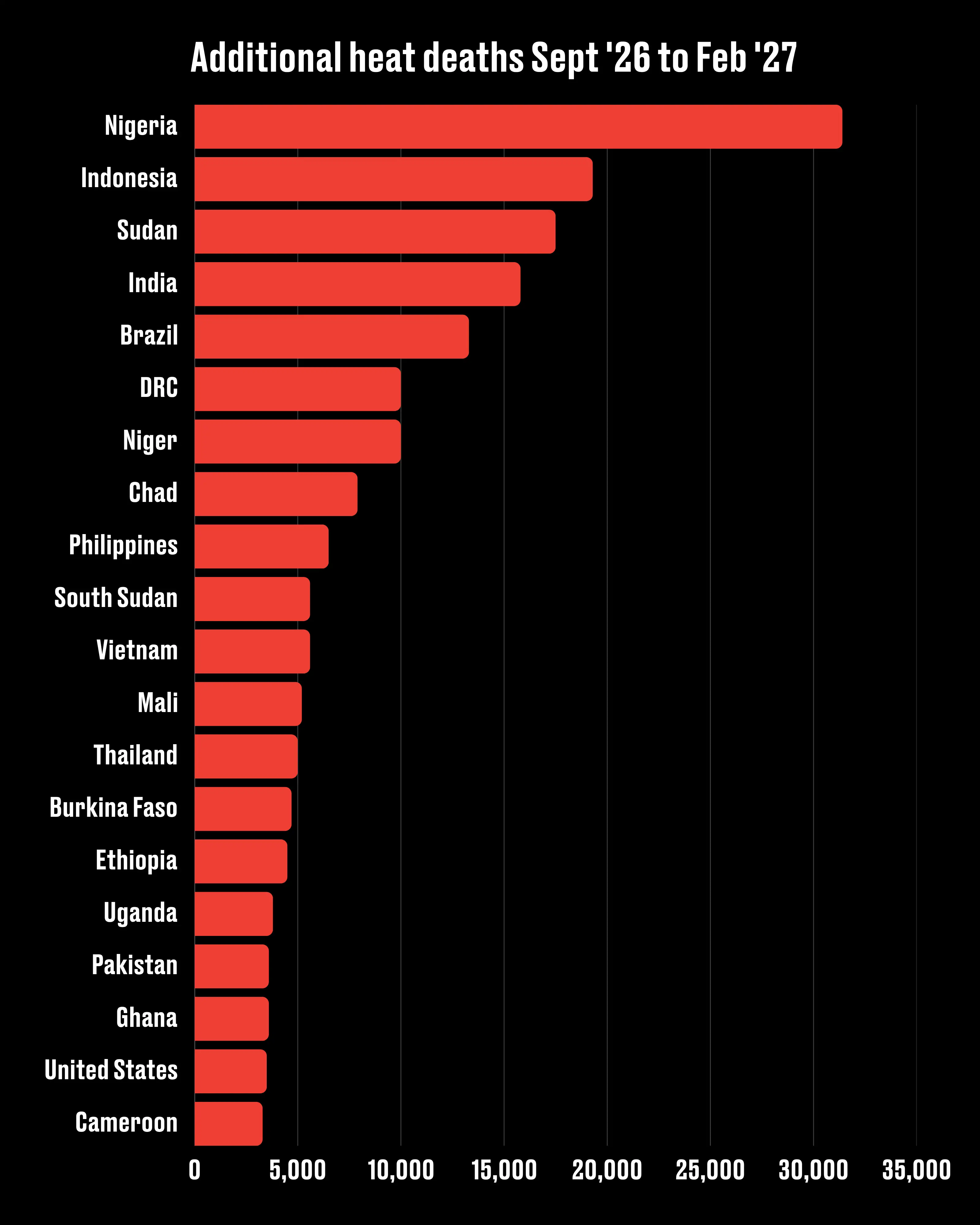
The predicted additional deaths from the El Niño make for concerning reading (LADbible/Climate Impact Lab)
India is predicted to lose 15,800 more people, and Brazil will be worst impacted in South America, with predictions claiming they’ll lose 13,300 people.
Researchers have been warning that the first signs of the Super El Niño are already here, with oceanic temperatures predicted to be highest in November and December.
“We build our infrastructure to what’s most common for us”
Matthew Cappucci, senior meteorologist at MyRadar, told LADbible that there would be winners and losers from the Super El Niño, with the hardest hit places on the planet in for a serious amount of pain.
He explained that the Super El Niño would be punishing for the Pacific and countries that were deeply connected to it, since that’s where it originated, but conversely countries which depended on the Atlantic Ocean more could see a reduction in hurricanes.
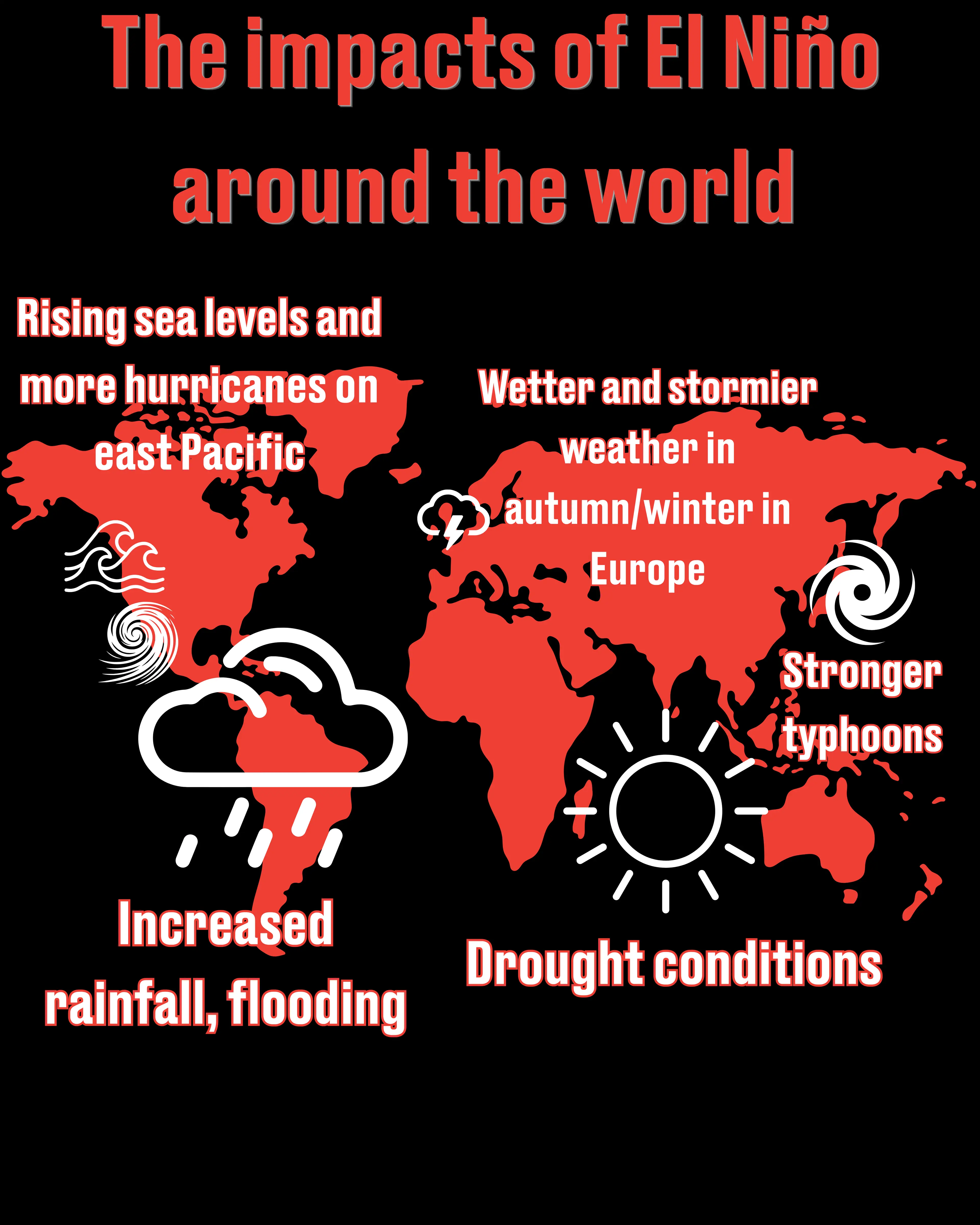
The damage done is expected to be catastrophic (LADbible)
For the other parts of the world they could expect ‘an extremifying of both drought and flooding’, which was a problem because the more extreme swings in weather would be more than many areas could bear.
He pointed out that most places build for the conditions they typically have, so when an extreme weather event like an El Niño comes along it’ll do significant damage.
Noting that ‘adaptation is going to be tough for people’, Cappucci made it clear affected areas would be in for a difficult time.

Skater Trainer Wheels - Beginners get Skateboard Tricks Fast, Safe and Fun | Viral accessory gift - Helps beginners stay excited about their new skateboard - Kids & parents love these
$28.99 (as of November 12, 2026 01:10 GMT +00:00 - More infoProduct prices and availability are accurate as of the date/time indicated and are subject to change. Any price and availability information displayed on [relevant Amazon Site(s), as applicable] at the time of purchase will apply to the purchase of this product.)
RIVER OF GOODS Stained Glass Bird Accent Lamp - 8" W x 13.5" H - Tiffany Style Table Lamps for Home, Office Desk, Bedroom, Nightstand - Blue Jay Decor
(as of November 12, 2026 01:10 GMT +00:00 - More infoProduct prices and availability are accurate as of the date/time indicated and are subject to change. Any price and availability information displayed on [relevant Amazon Site(s), as applicable] at the time of purchase will apply to the purchase of this product.)
RIVER OF GOODS LED Boho Ceiling Fan with Hand Woven Brown/Natural Rope - Macrame Knot Work and Hemp Rope Style Eclectic Cottage Decor - 52" L x 52" W - Rich Barnwood/Light Driftwood Fan Blades
(as of November 12, 2026 01:10 GMT +00:00 - More infoProduct prices and availability are accurate as of the date/time indicated and are subject to change. Any price and availability information displayed on [relevant Amazon Site(s), as applicable] at the time of purchase will apply to the purchase of this product.)
RIVER OF GOODS Mid-Century Modern Transitional LED Bronze Chrome Ceiling Fan - 52" L x 52" W - Rich Barnwood/Light Driftwood Fan Blades - Metallic Ceiling Fan with Light and Fabric Shade
(as of November 12, 2026 01:10 GMT +00:00 - More infoProduct prices and availability are accurate as of the date/time indicated and are subject to change. Any price and availability information displayed on [relevant Amazon Site(s), as applicable] at the time of purchase will apply to the purchase of this product.)




















Post Comment