Is America Ready? Next Week’s Emergency Broadcast Test Could Reveal Unseen Vulnerabilities as UK Prepares for ‘Black Sky’ Crisis

Ever wonder what it feels like when the US government hits the big red “interrupt” button on your TV or radio? Well, buckle up — they’re about to test their Emergency Alert System (EAS), that ominous mechanism designed to grab your attention during a national crisis. Picture this: mid-November, the Federal Emergency Management Agency (FEMA) cutting into your favorite show with a screechy alert sound and flashing text — all to prepare us for scenarios ranging from terrorist attacks to natural disasters. Unlike the UK, your phone won’t buzz with a warning this time (lucky, or unlucky?). This brief one-minute disruption isn’t just about rattling nerves; it’s a crucial drill to iron out the kinks before the real deal hits. Meanwhile, across the pond, the UK’s also plotting their broadcast contingency, prepping for a “black sky event” where the power grid might just ghost us all. It’s the kind of test that makes you wonder — could we all survive a minute without Netflix? Curious to find out more?
The US is due to test their emergency system which will interrupt TV and radio broadcasts to prepare for an event in which information would need to be urgently sent out to the public.
The Emergency Alert System (EAS) allows federal authorities to communicate urgent information nationwide during a major emergency and provides a means for the president to address the public when national safety is threatened.
The Federal Emergency Management Agency (FEMA) will conduct the nationwide exercise, broadcast across the US, at approximately 2.20pm Eastern Time on 17 November.
Unlike the UK, phones will not receive the alert as part of the exercise test.
It could be used in situations such as a major terrorist attack, a national security emergency or threat, or catastrophic natural disaster.
As per FEMA’s official announcement, the interruption is expected to last approximately one minute.
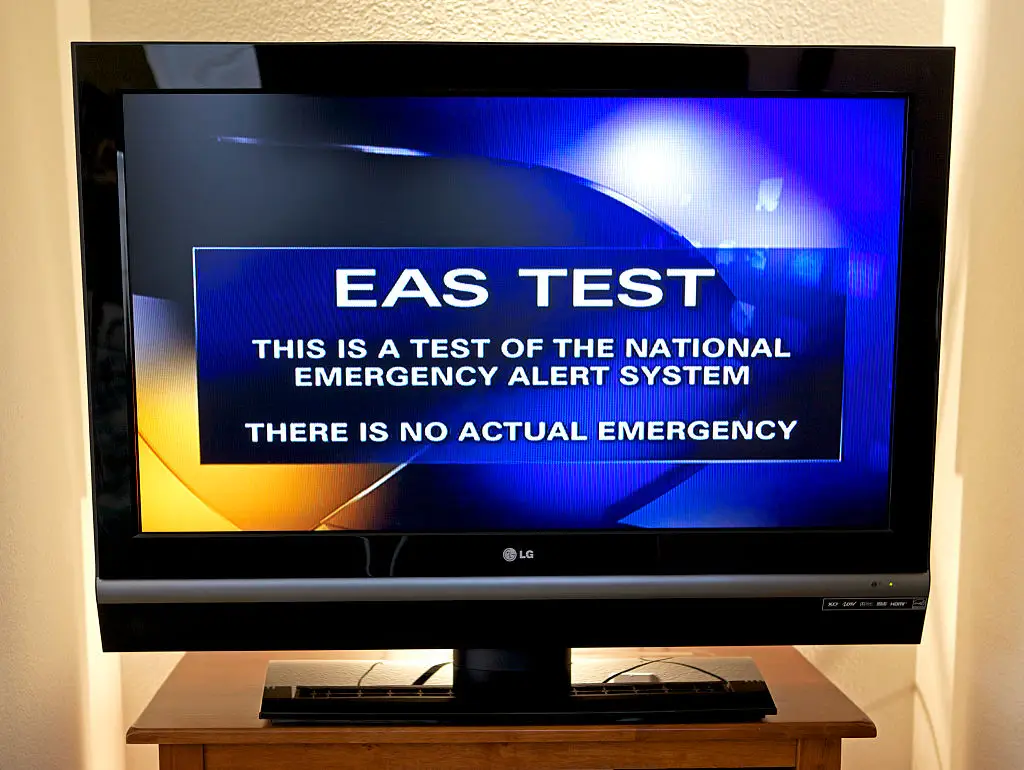
An example of what the EAS test could look like (Kim Kulish/Corbis via Getty Images)
The message will clearly identify the exercise as a test, and the public will not need to take any action, but it is preparing them for what the notice would look like if and when they are required.
Cable systems, satellite television and radio providers, and wireline video services will participate in the test, which would make an alert sound before displaying text on-screen.
The message is using the distinctive tones that accompany emergency broadcasts, which have been part of the public warning system for decades.
The test plans will also test the usability or identify weaknesses in the system, but also come amid further fears with tensions between the US and Iran.
Under the Integrated Public Alert and Warning System Modernisation Act, FEMA must conduct nationwide tests of public warning technology at least once every three years.
What are the UK’s plans for broadcast?
The UK is also putting broadcast contingency plans in place ahead of what has been dubbed a ‘black sky event’.
It references a catastrophic scenario in which the national electricity grid suffers a complete and prolonged outage, meaning Brits need to be prepared.
It would potentially cause failures across critical and major infrastructure such as internet and mobile connectivity and also water supplies, sewage systems, payment systems and shops.
Although the UK National Grid has never experienced a total blackout in its history, the potential concept has gained further attention in recent weeks following a UK resilience summit, focussing on the nation’s ability to cope through a grid failure for a minimum of 72 hours.
Brits could face a loss of power (Getty Stock)
Brits were urged to stockpile essential items to be able to cope with any major power outages, cyber attacks or adverse weather conditions cutting off vital services.
In the event of something like this happening, the government even has a series of messages in place which will be broadcast to help keep people safe.
One expert told LADbible that wind-up or battery powered FM radios may be the best bet for receiving communications in the event of a blackout.
The scripts are health advice which has been put together by the four chief health officers in the UK, and provides general advice on public health subjects.
The UK government website explains that these are not a part of UK government policy, they are put together as public health programmes separate from that.
The UK contingency plans have been revealed (Anna Barclay/Getty Images)
The scrips focus on access to clean water, one about food and nutrition, and one about keeping warm or cool in the event of a total outage, which would be broadcast if the temperature drops below -2 degrees celsius.
The BBC has its own plan for ‘Black Sky’ to ensure that emergency messages can still be broadcast out which would be broadcast on FM radio.
According to BBC reporting, around 100 people would be involved in a ‘special emergency radio studio’, and would have a line of power which is separate from the power grid which can operate independently for up to three days.
The Door Balancer Eliminates The Need for Door Props, Door Stops and Door Wedges
(as of November 13, 2026 01:10 GMT +00:00 - More infoProduct prices and availability are accurate as of the date/time indicated and are subject to change. Any price and availability information displayed on [relevant Amazon Site(s), as applicable] at the time of purchase will apply to the purchase of this product.)
Skater Trainer Wheels - Beginners get Skateboard Tricks Fast, Safe and Fun | Viral accessory gift - Helps beginners stay excited about their new skateboard - Kids & parents love these
$28.99 (as of November 13, 2026 01:10 GMT +00:00 - More infoProduct prices and availability are accurate as of the date/time indicated and are subject to change. Any price and availability information displayed on [relevant Amazon Site(s), as applicable] at the time of purchase will apply to the purchase of this product.)
Rhythm Superfoods Kale Chips, Zesty Nacho, Organic and Non-GMO, 2.0 Oz (Pack of 4), Vegan/Gluten-Free Superfood Snacks
(as of November 13, 2026 01:10 GMT +00:00 - More infoProduct prices and availability are accurate as of the date/time indicated and are subject to change. Any price and availability information displayed on [relevant Amazon Site(s), as applicable] at the time of purchase will apply to the purchase of this product.)
KiddyCare Diaper Caddy Organizer Cart for Nursery Baby Basket Gift for Boy/Girl | Diaper Caddy for Changing Table Basket Organizer with Dividers | Caddy for Baby Stuff Breast Pump Caddy - Regular
$9.99 (as of November 13, 2026 01:10 GMT +00:00 - More infoProduct prices and availability are accurate as of the date/time indicated and are subject to change. Any price and availability information displayed on [relevant Amazon Site(s), as applicable] at the time of purchase will apply to the purchase of this product.)


















Post Comment