Inside the Enormous 2,000-Year-Old Mongolian Tomb: Untold Treasures and Mysteries Revealed
Imagine going down nearly 50 feet into the earth, peeling back nine layers of stone, and discovering a tomb so massive and packed with relics it practically screams, “I was built for someone who knew how to roll in the ancient world!” That’s exactly what archaeologists stumbled upon in the windswept steppes of Mongolia—a sprawling, two-chambered Xiongnu tomb dating back 2,000 years. This isn’t your average burial plot; it’s a grandiose time capsule filled with over 400 artifacts sourced from China, Korea, and even the Roman Empire. Clearly, whoever was laid to rest here had status—and seriously rich taste. But here’s the kicker: What does all this opulence say about the rise and fall of the Xiongnu empire, and how did their ancient trade routes stretch so far and wide? Buckle up, because this tomb might just rewrite the rulebook on nomadic empires and their secret connections to the ancient world’s superpowers.
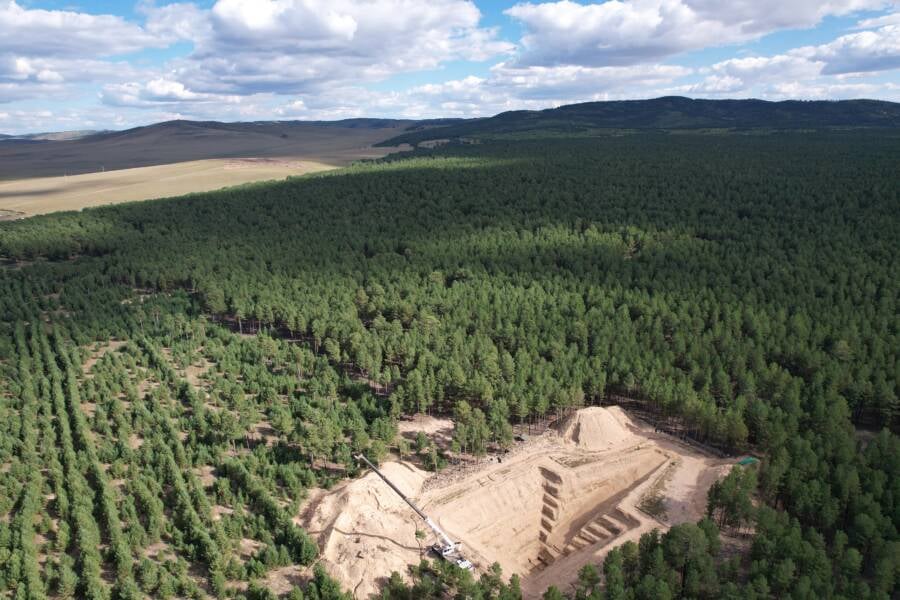
This sprawling tomb is made up of two nested burial chambers that are covered with nine layers of stone — a highly elaborate construction that suggests a Xiongnu elite of considerable wealth and power was buried here.

National Museum of KoreaIn a find that dates back 2,000 years, archaeologists discovered the largest Xiongnu tomb ever unearthed in Mongolia.
Archaeologists excavating the ancient Duurlig Nars cemetery in the steppes of eastern Mongolia discovered an enormous tomb that was dug almost 50 feet down into the earth and was filled with more than 400 relics coming from China, Korea, and even Rome.
This 2,000-year-old tomb belonged to an elite member of the Xiongnu civilization, an empire that ruled modern-day Mongolia for almost 500 years beginning around the 3rd century B.C.E. Researchers believe that this tomb, which is the largest Xiongnu burial identified in Mongolia to date, will reveal more than ever before about the Xiongnu and their interactions with other ancient empires.
The Discovery Of An Enormous Xiongnu Tomb At Mongolia’s Duurlig Nars
Excavation of the tomb began in 2023 and was conducted as a collaboration between the National Museum of Korea, the Institute of Archaeology of the Mongolian Academy of Sciences, and the National Museum of Mongolia.

National Museum of KoreaThe central burial chamber of the tomb was dug 50 feet deep.
The tomb, which archaeologists date back to the late 1st century or early 2nd century C.E., is around 240 feet long, including its entrance path.
In order to construct the tomb, ancient builders dug down in steps, and applied nine layers of stone, which archaeologists peeled back to get to the wooden coffin at the tomb’s center.

National Museum of KoreaThe researchers found a handled glass vessel that may have been produced in the Roman Empire.
In total, the team retrieved 413 artifacts from the tomb, including a handled vessel made from glass. Researchers tentatively believe the glass came from the Roman Empire, however they plan to confirm this through chemical analysis.
Archaeologists also uncovered 15 ornate jade discs laying on the bottom of the coffin, as well as intricate silver decorations for horse harnesses whose style recalls that of similar artifacts unearthed in Korea.

National Museum of KoreaArchaeologists recovered silver ornaments for a horse harness that may have come from Korea.
What This Find Could Reveal About Ancient Xiongnu Burial Rituals
From the 3rd century B.C.E. until around the late 1st century C.E., the Xiongnu people dominated the Eurasian steppes and held an empire that spanned much of present-day Mongolia. This recently-discovered tomb dates to the era in which the Xiongnu were beginning to lose power in the region.
In fact, researchers believe that this tomb might reflect this pivotal political shift.

National Museum of KoreaResearchers hope that the tomb’s 413 relics will shed light on the Xiongnu people’s relations with other empires near and far.
For instance, despite the tomb’s large overall footprint, archaeologists noted that its central burial chamber is significantly shallower than those in other similar Xiongnu tombs that have been found in central Mongolia. One tomb, in particular, was a full 25 feet deeper than this one.
The relatively less elaborate construction of the newly-found tomb could be connected to the Xiongnu civilization’s fading strength.
Meanwhile, the grave goods that were uncovered reveal the extent of the Xiongnu’s trade relations with other empires. The Xiongnu fought wars with China’s Han Dynasty, but also enjoyed economic cooperation with that formidable empire.

National Museum of KoreaThe jade discs are similar to those found in Han Dynasty burials.
This relationship is evidenced by the presence of the jade discs that were found in the tomb, as similar relics have been found among Han Dynasty burials. The jade discs found here are shaped differently, however, and feature more detailed engravings, which could show how the Xiongnu adapted Chinese customs for their own culture.
The added presence of both possibly Roman goods and Korean silver also point to how the Xiongnu elite had access to goods from numerous other empires situated elsewhere in the ancient world. These goods may have made their way to Mongolia via trade routes, as diplomatic gifts, or with the help of other civilizations that mediated between the empires.

The Door Balancer Eliminates The Need for Door Props, Door Stops and Door Wedges
(as of November 13, 2026 01:10 GMT +00:00 - More infoProduct prices and availability are accurate as of the date/time indicated and are subject to change. Any price and availability information displayed on [relevant Amazon Site(s), as applicable] at the time of purchase will apply to the purchase of this product.)
RIVER OF GOODS Mid-Century Modern Transitional LED Bronze Chrome Ceiling Fan - 52" L x 52" W - Rich Barnwood/Light Driftwood Fan Blades - Metallic Ceiling Fan with Light and Fabric Shade
(as of November 13, 2026 01:10 GMT +00:00 - More infoProduct prices and availability are accurate as of the date/time indicated and are subject to change. Any price and availability information displayed on [relevant Amazon Site(s), as applicable] at the time of purchase will apply to the purchase of this product.)
Joking Hazard Enlarged Box Empty Box for Card Storage
$12.00 (as of November 13, 2026 01:10 GMT +00:00 - More infoProduct prices and availability are accurate as of the date/time indicated and are subject to change. Any price and availability information displayed on [relevant Amazon Site(s), as applicable] at the time of purchase will apply to the purchase of this product.)
RIVER OF GOODS Alabaster LED Mesh Caged Ceiling Fan - 52" L X 52" W - White/Oak Wood-Grain Blades
(as of November 13, 2026 01:10 GMT +00:00 - More infoProduct prices and availability are accurate as of the date/time indicated and are subject to change. Any price and availability information displayed on [relevant Amazon Site(s), as applicable] at the time of purchase will apply to the purchase of this product.)





















Post Comment