Ancient Ice, Modern Mystery: How Ötzi The Iceman Could Rewrite The History Of HPV!
So, here’s a mind-bender for you: what if I told you that HPV—yes, that pesky virus we usually talk about in the context of modern health—has been lurking in human cells way before recorded history? For the longest time, scientists figured Neanderthals were the original culprits passing this viral party favor to us early humans. But hold on! New evidence is flipping the script. Imagine Ötzi the Iceman—our incredibly well-preserved prehistoric buddy—actually carrying the cancer-causing strain HPV16 in his genome, alongside a 45,000-year-old Siberian gent. This doesn’t just push back the timeline; it challenges everything we thought we knew about HPV’s origins and how intertwined it is with human history. Did Homo sapiens give the Neanderthals a viral handshake instead? Wild, right? Let’s dig into this ancient viral mystery and see just how deep the rabbit hole goes. LEARN MORE
While researchers have long known that HPV was in existence before recorded history even began, they theorized that it was first passed to early humans by Neanderthals — but new evidence says otherwise.
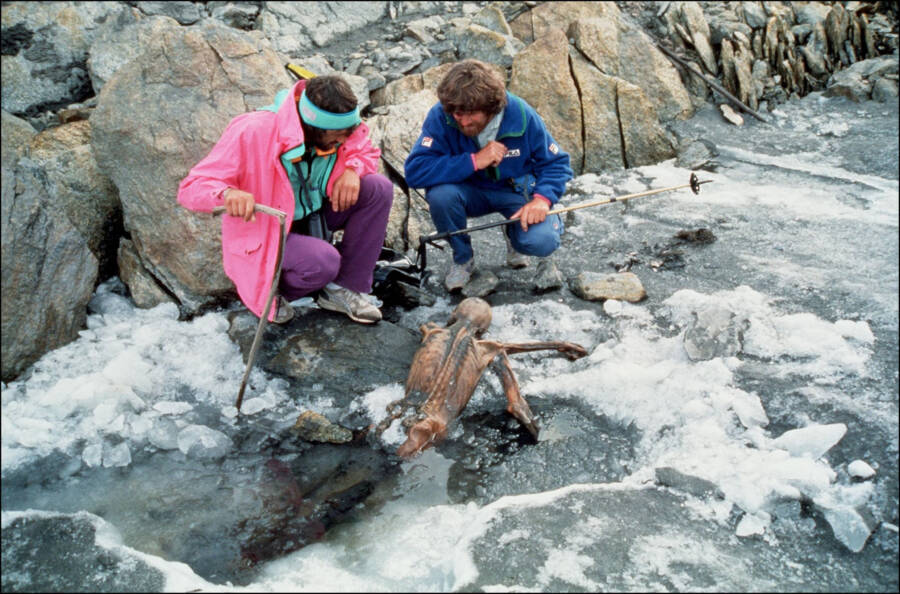
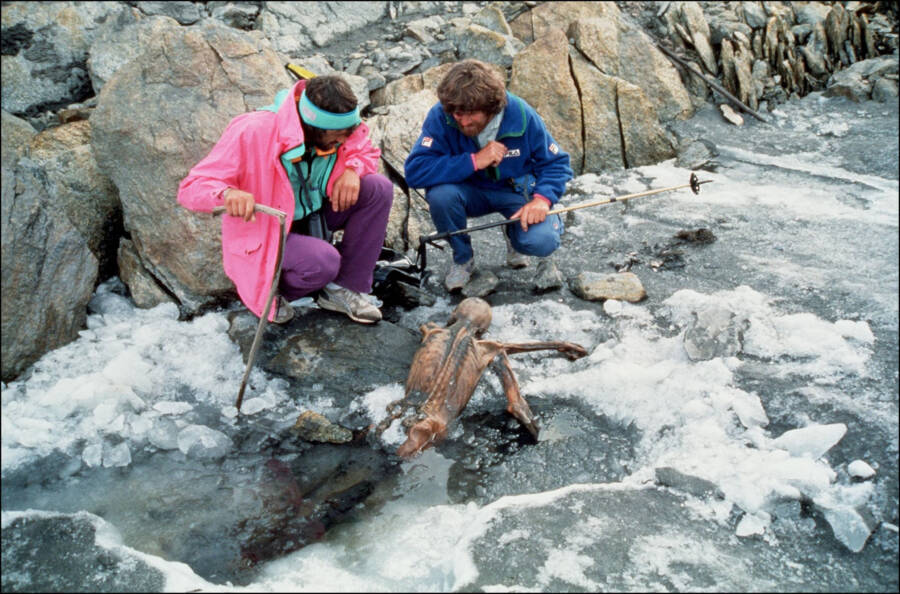
Paul HANNY/Gamma-Rapho via Getty ImagesNew research found evidence of HPV16 in Ötzi’s genome, revealing groundbreaking insights into the virus’ evolutionary history.
Both Ötzi the Iceman, the oldest well-preserved human ever found, as well as a prehistoric man who lived in Siberia 45,000 years ago were recently found to be carriers of a cancer-causing strain of human papillomavirus (HPV), according to new research posted to bioRxiv.
Since his discovery along the Austrian-Italian border in 1991, Ötzi has been the subject of several scientific analyses that have revealed details of his life some 5,300 years ago. Researchers have, for instance, learned that he was likely killed after an arrow struck him in the shoulder, uncovered what his last meal was, and even revealed what ailments had plagued him, including broken bones, intestinal parasites, and lungs blackened by soot.
Now, analysis of genetic data from Ötzi and another prehistoric individual has revealed that both were likely infected with HPV16, which would mark the “earliest molecular evidence” of the disease in human history, researchers say. The research has yet to be peer-reviewed, but if the findings are accurate, they could help to identify when and how humans first came into contact with the virus.
Pushing Back The Historical Timeline Of HPV

Wikimedia CommonsA reconstruction of an early Neanderthal man.
“Our results suggest that HPV16 was already present in modern humans during the Upper Paleolithic, indicating a long-standing host-virus independent of Neanderthal transmission,” the researchers wrote in the new preprint paper.
This is an especially notable finding, as it is commonly believed that Neanderthals, who overlapped with modern humans in Eurasia from 60,000 to 34,000 years ago, were responsible for transmitting the virus to Homo sapiens. The team’s sample size is admittedly small, and so the origins of HPV are still largely shrouded in mystery, but the research does at least challenge the Neanderthal-transmission theory to a considerable degree.
“This is a very nice finding,” Ville Pimenoff, a computational geneticist at the University of Oulu who was not involved in the study, told Science. “Homo sapiens was basically infected by these viruses for all of its existence.”
Scientists are starting to gain a better understanding of just how intertwined the evolutionary history of HPV is with that of humankind itself. Viruses in the Papillomaviridae family are prehistoric and have co-diverged with their vertebrate hosts over extensive timescales, exhibiting strict host specificity that mirrors the phylogeny of their hosts. In other words, the virus and its host evolved in lock step, side by side.
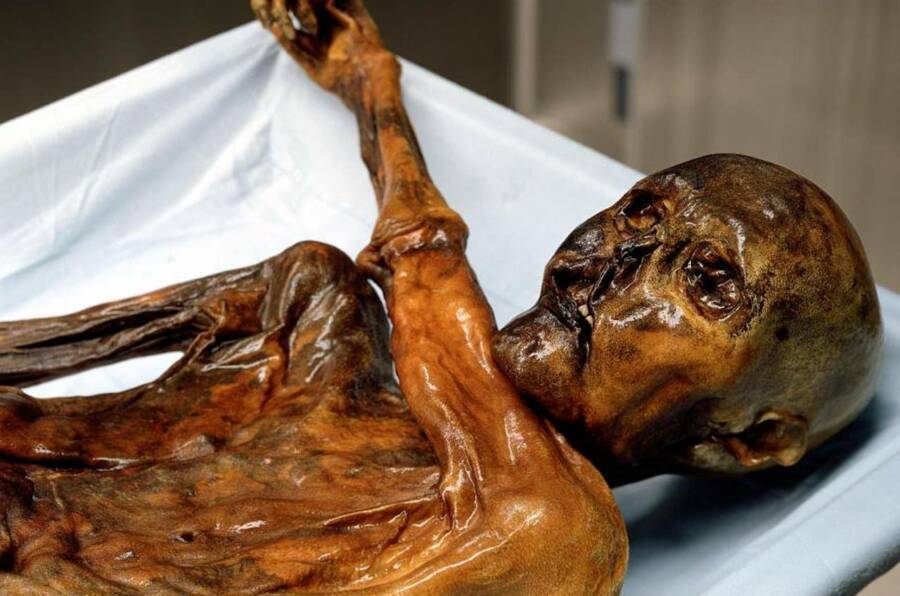
South Tyrol Museum of ArchaeologyÖtzi is one of the best-preserved prehistoric mummies ever found.
Phylogenetic studies suggest that the timescale of papillomavirus evolution spans millions of years, largely inferred from a model of virus-host co-divergence. This means, essentially, that as different species evolved, their associated papillomaviruses evolved with them. And while general papillomaviruses are very old, the specific high-risk types that affect humans today and can cause cancer, such as HPV16, have divergence times that align with significant events in human prehistory.
Research into how these specific high-risk HPV lineages evolved can also provide insight into how ancient human populations interacted and spread viruses. Modern analyses indicate that the major variant lineages of HPV16 (A, B, C, and D) split apart around 500,000 years ago – predating the emergence of Homo sapiens and coinciding with the evolutionary divergence between Neanderthals and modern humans.
“The results indicate that HPV16 has been associated with anatomically modern humans for a very long time, likely well before major population splits outside Africa,” study co-author Marcelo Briones told Live Science.
Fire Blanket - 1500F CE Certified Emergency Fire Blanket for Home and Kitchen. 500GSM Fabric & 0.5mm Thick - 100% Fiberglass Fire Extinguisher for Car,Warehouse Office - 2pc (47x47 inches) by Supa Ant
$53.45 (as of March 3, 2026 16:43 GMT +00:00 - More infoProduct prices and availability are accurate as of the date/time indicated and are subject to change. Any price and availability information displayed on [relevant Amazon Site(s), as applicable] at the time of purchase will apply to the purchase of this product.)
1MORE Triple Driver in-Ear Earphones Hi-Res Headphones with High Resolution, Bass Driven Sound, MEMS Mic, in-Line Remote, High Fidelity for Smartphones/PC/Tablet - Silver
(as of March 3, 2026 16:43 GMT +00:00 - More infoProduct prices and availability are accurate as of the date/time indicated and are subject to change. Any price and availability information displayed on [relevant Amazon Site(s), as applicable] at the time of purchase will apply to the purchase of this product.)
SkaterTrainers- Skateboard Tricks Fast No Experience Needed- Fun, Safe, and Easy- Ollies, Kickflips and More- All Ages- Accessories Make Great Stocking Stuffers Gifts for Teen Boys and Girls
$28.99 (as of March 3, 2026 16:43 GMT +00:00 - More infoProduct prices and availability are accurate as of the date/time indicated and are subject to change. Any price and availability information displayed on [relevant Amazon Site(s), as applicable] at the time of purchase will apply to the purchase of this product.)
Joking Hazard Deck Enhancement #1 - Expansion Pack for Fun Party Games by Cyanide & Happiness, 100 New Hilarious Comic Cards | Perfect for Game Night
$10.00 (as of March 3, 2026 16:43 GMT +00:00 - More infoProduct prices and availability are accurate as of the date/time indicated and are subject to change. Any price and availability information displayed on [relevant Amazon Site(s), as applicable] at the time of purchase will apply to the purchase of this product.)