Ancient Secrets Unveiled: Were Dwarves and Disabled Individuals Revered as Sacred Figures?
Ever wonder if people born with rare diseases like dwarfism or cleft palates were treated as outcasts in ancient times? Prepare to have that long-held assumption flipped on its head! Time and again, researchers have dug up graves that tell a very different story—one where individuals with these conditions were laid to rest in culturally significant sites, sometimes even among society’s elite. It’s like discovering that history’s underdogs had VIP passes after all. Imagine a medieval Hungarian man with a cleft palate receiving a stately burial or dwarves in Ancient Egypt being revered rather than ridiculed. This fascinating field known as the bioarchaeology of care uncovers how communities worldwide may have not only supported but revered people with rare disabilities, shattering the myths of neglect and marginalization. So, were these physical differences social stigmas—or rather badges of honor with divine connections? Dive into this intriguing mystery that’s rewriting ancient narratives and challenging us to rethink the past with fresh eyes.
Time and time again, researchers have excavated the bodies of individuals who died of rare diseases and found that they were buried in culturally significant gravesites or among those held in high esteem by society.
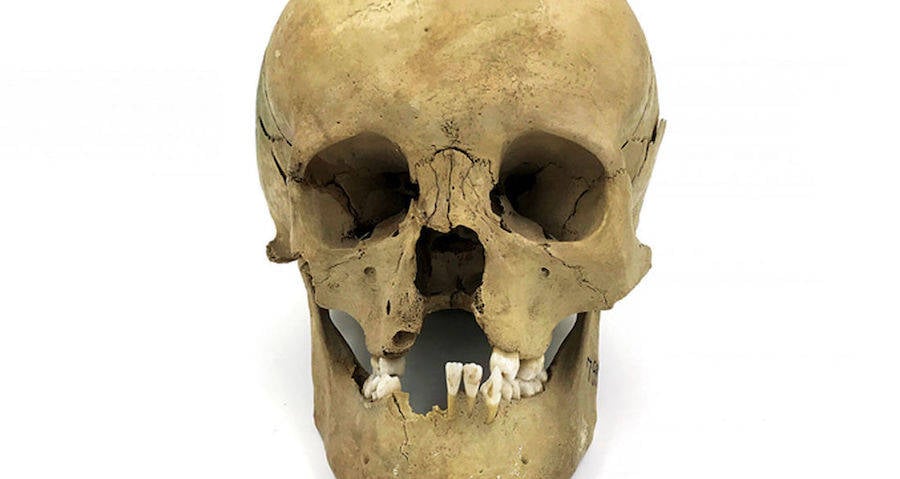
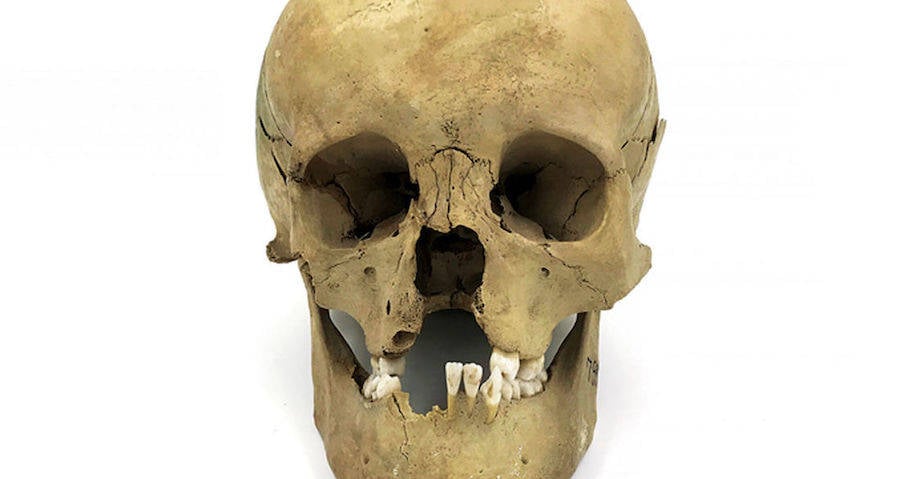
Luca Kis/ScienceThe skull of a medieval Hungarian man with a cleft palate who was given a stately burial.
A conference in Berlin that drew more than 130 paleopathologists, bioarchaeologists, geneticists, and rare disease experts has challenged long-held notions that those born with rare physical disabilities such as dwarfism or cleft palates worldwide were treated harshly in the distant past.
According to Science, the line of research involved here is called the bioarchaeology of care and researchers in this field have found sufficient evidence that those born with various disabilities long ago were actually supported by their communities around the world far more than previously thought.
In addition to receiving care and support from their communities, these people were also buried alongside their able-bodied peers, lived well into adulthood, and weren’t cast out or marginalized — which has long been the assumption.
“This is really the first time people have been confronted with this subject,” said Michael Schultz, a paleopathologist in Germany’s Georg-August University of Göttingen.
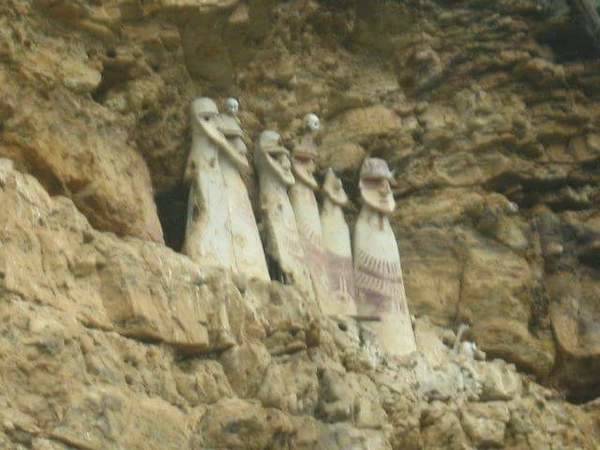
Wikimedia CommonsThe sarcophagi of the Chachapoyas people in northern Peru.
Time and time again, researchers have excavated the bodies of brittle-boned people that died of rare diseases and found that they were buried in culturally significant gravesites or among those held in high esteem by society.
When physical anthropologist Marla Toyne of the University of Central Florida in Orlando discovered a mummy buried around 1200 C.E. by Peru’s Chachapoyas people, for instance, she immediately noticed the body’s surprising combination of physical disabilities and burial location.
The man had a collapsed spine and extreme bone loss, which pointed toward late-stage adult T-cell leukemia — yet he had been buried at a respectable cliffside site, and his bones suggested he’d had years of light work before his death.
“He had fragile bones, pain in his joints — he wasn’t walking a great deal,” she said. “We begin with the individual, but they never live alone. The community was aware of his suffering. And they most likely had to make some accommodations for his care and treatment.”
Bioarchaeologist Anna Pieri, meanwhile, argued that the disadvantaged weren’t merely treated kindly and supported, but often even admired, revered, and thought of as having a connection with the divine. Textual evidence from Ancient Egypt, for instance, showed that rulers preferred to have dwarves as their courtiers because of this.
“They are not considered people with disabilities — they were special,” she said.
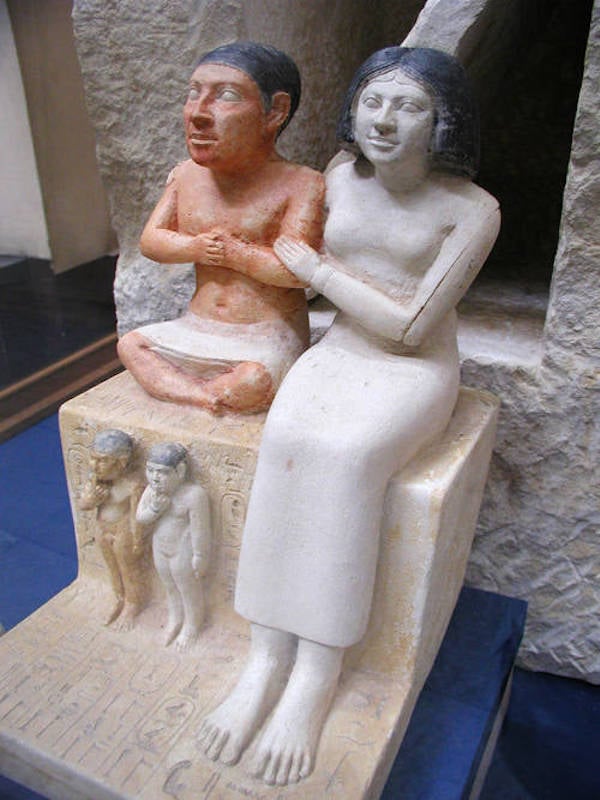
Wikimedia CommonsSeneb the dwarf with his wife and children, who lived in ancient Egypt’s fourth or fifth dynasty.
Pieri recently supported her theory with two 4,900-year-old cases of dwarfism in Egypt’s Hierakonpolis. The two burials, a man and a woman buried in the middle of two separate royal tombs, clearly showed a reverence of dwarves that seemingly dated even farther back than the first pharaohs.
The man appeared to be in his 30s or 40s, one of the oldest burials in the cemetery, and seemed to have lived a life of ease. X-ray analysis of his bones led Pieri to believe the dwarves in Hierakonpolis had pseudoachondroplasia — a disease that only occurs once in every 30,000 modern-day births.
The cleft palate — a condition often looked at as a socially debilitating deformity today and one for which standardized surgeries are common — seemed to have been culturally accepted in ancient times as well.
University of Szeged paleopathologist Erika Molnar reported on a man born with a strong cleft palate and complete spina bifida around 900 C.E. in central Hungary — and that even though breastfeeding and eating became difficult for him, he lived well past his 18th birthday and was buried with treasure.

Joking Hazard Deck Enhancement #1 - Expansion Pack for Fun Party Games by Cyanide & Happiness, 100 New Hilarious Comic Cards | Perfect for Game Night
$10.00 (as of March 3, 2026 16:43 GMT +00:00 - More infoProduct prices and availability are accurate as of the date/time indicated and are subject to change. Any price and availability information displayed on [relevant Amazon Site(s), as applicable] at the time of purchase will apply to the purchase of this product.)
Supa Ant Silicone Fire Cloak for Fireproof Suit Emergency Blanket for Home and Kitchen - Emergency Poncho as Heat Shield Blanket -Fire Resistant Hoodie-Escape Suit with Cape and Hood (70x55 in.-Large)
$83.99 (as of March 3, 2026 16:43 GMT +00:00 - More infoProduct prices and availability are accurate as of the date/time indicated and are subject to change. Any price and availability information displayed on [relevant Amazon Site(s), as applicable] at the time of purchase will apply to the purchase of this product.)
White Leaf Provisions Organic Purees / Baby Food Pouches - Fruits, Veggies & Grains, Toddler snack, Regeneratively Farmed, No Added Sugar, Non-GMO, BPA-Free Pouches 3.17 oz (Pack of 24, Mango + Carrot + Banana + Pear)
$70.37 (as of March 3, 2026 16:43 GMT +00:00 - More infoProduct prices and availability are accurate as of the date/time indicated and are subject to change. Any price and availability information displayed on [relevant Amazon Site(s), as applicable] at the time of purchase will apply to the purchase of this product.)
Fire Blanket - 1500F CE Certified Emergency Fire Blanket for Home and Kitchen. 500GSM Fabric & 0.5mm Thick - 100% Fiberglass Fire Extinguisher for Car,Warehouse Office - 2pc (47x47 inches) by Supa Ant
$53.45 (as of March 3, 2026 16:43 GMT +00:00 - More infoProduct prices and availability are accurate as of the date/time indicated and are subject to change. Any price and availability information displayed on [relevant Amazon Site(s), as applicable] at the time of purchase will apply to the purchase of this product.)