Ancient Shipwreck Unearthed on New Jersey Shore Sparks Mystery of the ‘Graveyard Of The Atlantic’
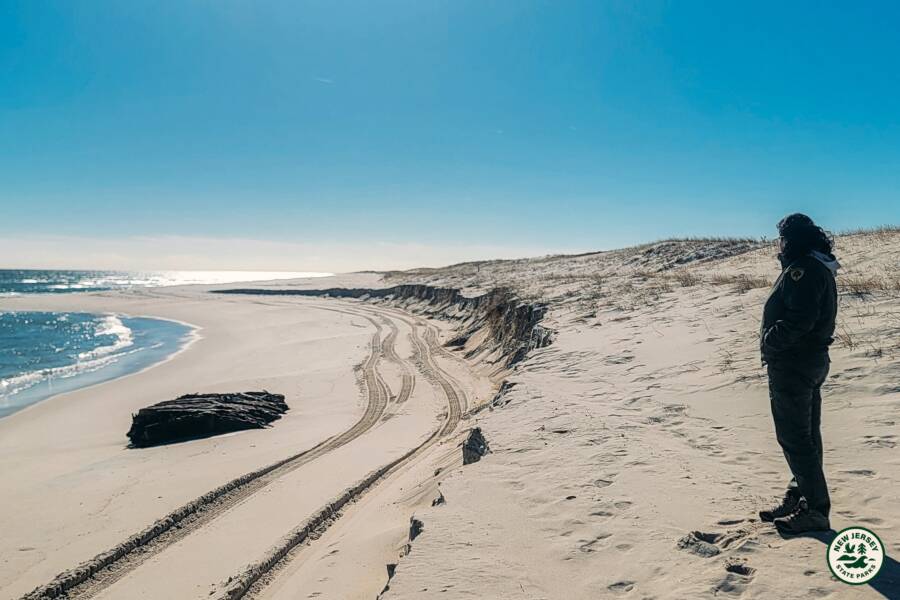
Ever wonder what happens when a ship full of oranges meets the foggy, treacherous waters off New Jersey? Well, the Lawrence N. McKenzie found out the hard way on March 21, 1890. More than 136 years later, the skeletal remains of this orange-hauling schooner have resurfaced at Island Beach State Park, peeling back layers of maritime mystery and reminding us why this stretch of coast earned the ominous nickname “Graveyard of the Atlantic.” It’s like a juicy citrus crime scene unearthed by nature’s own hand, inviting us to ponder how a simple voyage turned into a centuries-old ghost story beneath the sands. Curious about the tale behind those sunken oranges?
The Lawrence N. McKenzie sank on March 21, 1890, while carrying oranges from Puerto Rico to New York.
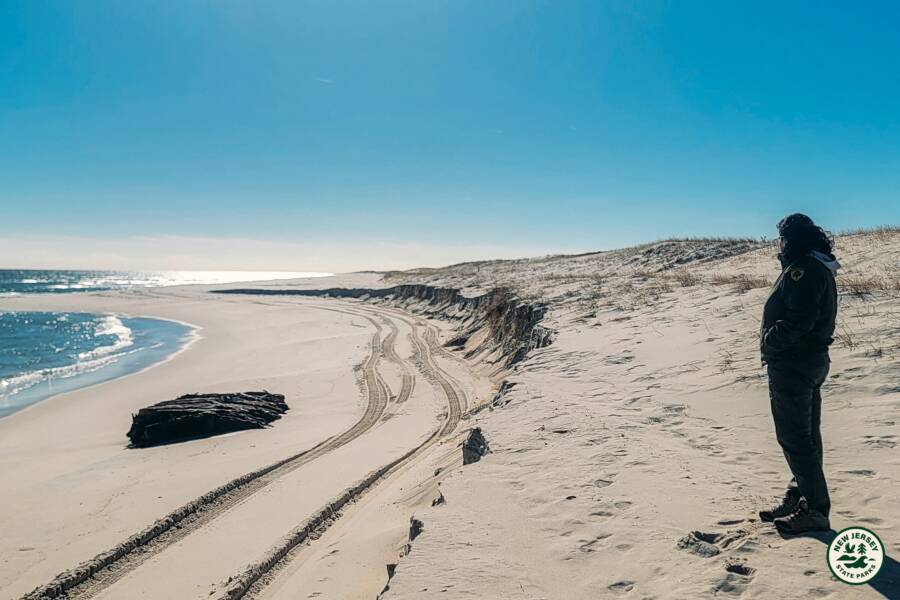
Island Beach State Park/FacebookWreckage from the Lawrence N. McKenzie at Island Beach State Park.
The skeletal remains of a 19th-century schooner that sank during a violent storm more than 136 years ago have emerged from the sands of Island Beach State Park, offering a tangible link to New Jersey’s treacherous maritime history.
Park officials announced the discovery of the wreck, identified as the Lawrence N. McKenzie, on social media. Pieces of the vessel, which was caught in heavy fog and foundered on the shoals off Barnegat Bay in 1890, were uncovered by recent beach erosion and tidal activity.
Erosion Reveals The Remains Of The ‘Lawrence N. McKenzie’
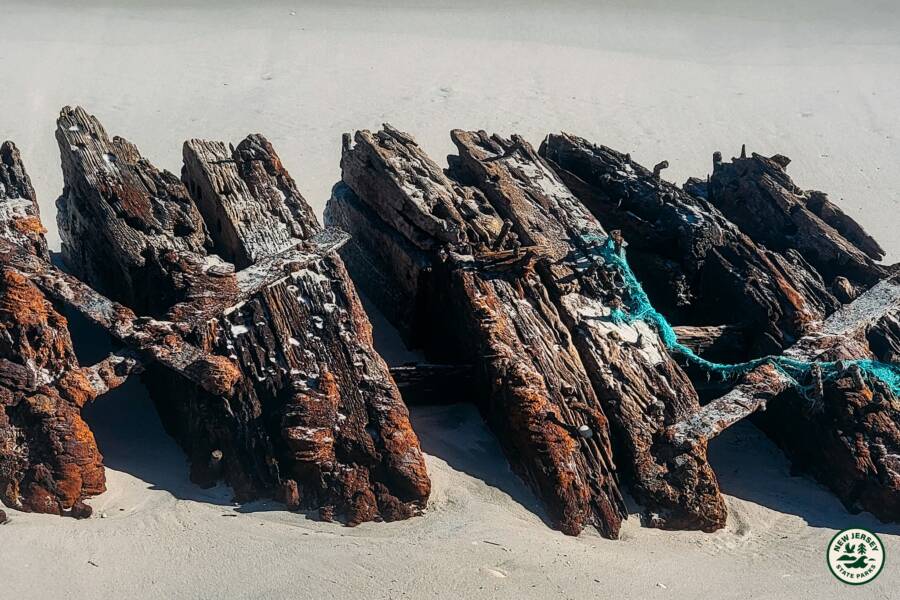
Island Beach State Park/FacebookWood from the shipwreck was revealed by natural beach erosion.
On March 21, 1890, the Lawrence N. McKenzie was hauling a cargo of oranges from Puerto Rico to New York City when it ran into heavy fog off the coast of New Jersey, wrecked, and started taking on water. The U.S. Life-Saving Service arrived and rescued all eight crew members, but the 98-foot schooner was lost.
For over a century, the wreck remained buried beneath the dunes, a forgotten casualty of what mariners long ago dubbed the “Graveyard of the Atlantic.” Now, it’s appeared once more due to erosion at Island Beach State Park.
“Beach erosion during the winter months is common at Island Beach State Park and is part of a natural, cyclical process,” park officials wrote. “Each year, high-energy waves and seasonal storms remove sand from the shoreline, resulting in narrower beaches and steeper profiles. Most beaches recover from the erosion during the calmer summer months — but for now, this winter’s erosion has revealed a glimpse into the park’s maritime history.”
Wreckage From A 19th-Century Cargo Vessel
The “Graveyard of the Atlantic” nickname for the stretch of coastline off central New Jersey is well-earned. The combination of the offshore Labrador Current meeting the warm Gulf Stream creates frequent fog and unpredictable conditions. This, coupled with a series of offshore sandbars and shoals — like the Barnegat Shoals where the McKenzie sank — created a navigational nightmare for mariners, especially before modern technology.
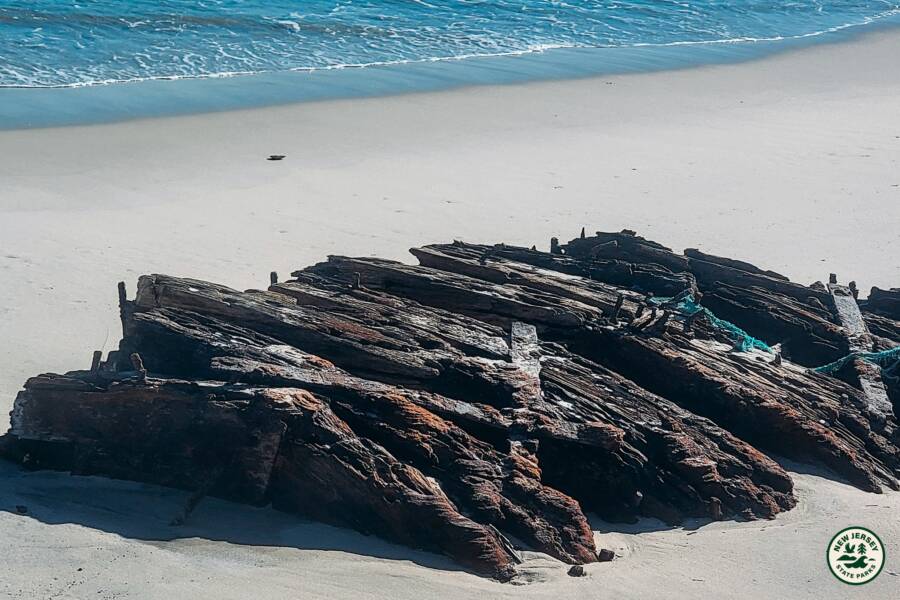
Island Beach State Park/FacebookThe Lawrence N. McKenzie was carrying a cargo of oranges when it wrecked.
An estimated 40 vessels sank in the area each year, and the Lawrence N. McKenzie is just the latest to emerge from its watery grave. The visible portions of the wreck include large sections of the wooden hull’s framing and planking.
State park officials and archaeologists are working to document the exposed remains before they are potentially reclaimed by the sea or further damaged by weather. The wood, having been submerged in saltwater and sand for so long, is fragile and can degrade quickly when exposed to air and sunlight.
The public is being asked not to disturb the site, as removing even a single timber can compromise the structural integrity of the remaining wreckage and is also illegal under state and federal laws protecting historic shipwrecks.
After reading about the rediscovery of the Lawrence N. McKenzie in New Jersey, check out 10 more astonishing shipwrecks from around the world. Then, read about what happened to the Titanic after it sank into the Atlantic.

RIVER OF GOODS Coastal 52 Inch Wooden Bead LED Ceiling Fan, Brown
(as of March 3, 2026 16:43 GMT +00:00 - More infoProduct prices and availability are accurate as of the date/time indicated and are subject to change. Any price and availability information displayed on [relevant Amazon Site(s), as applicable] at the time of purchase will apply to the purchase of this product.)
Supa Ant Silicone Fire Cloak for Fireproof Suit Emergency Blanket for Home and Kitchen - Emergency Poncho as Heat Shield Blanket -Fire Resistant Hoodie-Escape Suit with Cape and Hood (70x55 in.-Large)
$83.99 (as of March 3, 2026 16:43 GMT +00:00 - More infoProduct prices and availability are accurate as of the date/time indicated and are subject to change. Any price and availability information displayed on [relevant Amazon Site(s), as applicable] at the time of purchase will apply to the purchase of this product.)
Kinsa Smart,Fever, Digital Medical Baby, Kid and Adult Termometro - Accurate, Fast, FDA Cleared Thermometer for Oral, Armpit or Rectal Temperature Reading - QuickCare
$24.98 (as of March 3, 2026 16:43 GMT +00:00 - More infoProduct prices and availability are accurate as of the date/time indicated and are subject to change. Any price and availability information displayed on [relevant Amazon Site(s), as applicable] at the time of purchase will apply to the purchase of this product.)
1MORE Triple Driver In-Ear Headphones - Silver - Wired - Adult - In Ear - 18 grams - 90 days limited warranty
(as of March 3, 2026 16:43 GMT +00:00 - More infoProduct prices and availability are accurate as of the date/time indicated and are subject to change. Any price and availability information displayed on [relevant Amazon Site(s), as applicable] at the time of purchase will apply to the purchase of this product.)