Inside the Secret, Surprising Challenges of Astronauts’ Bathroom Breaks in Space

Yet despite numerous improvements to the design, using the ISS toilet is still far from a pleasant experience, with most astronauts listing going to the bathroom as their least favourite part of spaceflight. As veteran astronaut Peggy Whitson – who holds the NASA record for most time spent in space at 665 days – explains:
“After [the collection bag] starts getting full, you have to put a rubber glove on and pack it down.”
Meanwhile, urine is collected much as it has been for decades: using a separate vacuum hose with male and female adaptors. However, since water is such a precious commodity and very heavy and bulky to launch into orbit, urine is not jettisoned overboard as in previous systems but rather recycled into potable drinking water via a sophisticated reclamation system called the Water Processor Assembly or WPA, which uses a series of micofilters and catalyst beds to remove and neutralize contaminants. As NASA astronaut Jessica Muir explains.:
“We recycle about 90% of all water-based liquids on the space station, including urine and sweat. What we try to do aboard the space station is mimic elements of Earth’s natural water cycle to reclaim water from the air. And when it comes to our urine on ISS, today’s coffee is tomorrow’s coffee!”
As in previous space programmes, some of the astronauts’ waste is stored and returned to earth for analysis by flight surgeons. Urine is first collected in plastic bags very similar to the Urine Collection Devices used by the Mercury, Gemini, and Apollo astronauts. Syringes are then used to extract samples, which are stored in a special compartment called the Minus Eighty Degree Laboratory Freezer for ISS (MELFI) until they can be returned to earth by a Soyuz or Dragon spacecraft.
As of this recording, solid waste is not processed to extract its moisture, though NASA is working on it. In 2021, the agency also sent a Brine Processor unit to the ISS to reclaim the remaining water that can’t be processed by the WPA. The goal is to achieve at least 98% reclamation before sending the first humans to Mars. So good news for all you Dune fans out there: real-life stillsuits may be just around the corner!
Currently, there are three toilets aboard the ISS, located in the Zvezda, Nauka, and Tranquility modules. Like the earlier Shuttle WCS, these toilets have a less-than-perfect track record, with the most serious failure occurring on May 21, 2008 when the pump for the liquid waste collection system broke. At the time, there was only one toilet aboard the ISS, forcing the astronauts to use bags or the toilet aboard the attached Soyuz spacecraft for urine collection. The solid waste system remained unaffected. Thankfully, the launch of STS-124 was scheduled for launch just 10 days later, so a replacement pump was overnighted from Russia to the Kennedy Space Centre in the diplomatic pouch and successfully delivered to the ISS on June 2. It is estimated that the three toilets aboard the ISS suffer some kind of breakdown – thankfully almost always minor – around once every month.
But with NASA preparing to send astronauts back to the moon and eventually to Mars, even the relatively advanced toilets aboard the ISS are no longer adequate. Consequently, in 2018 NASA introduced the next generation of space waste disposal: the Universal Waste Management System or UWMS. Costing $23 million to develop, the UWMS is 40% lighter, 65% more compact, and significantly more energy-efficient than the existing ISS toilets, allowing it to be more easily integrated into the Orion capsules slated to travel to the moon on the upcoming Artemis missions. When installed aboard the ISS or Mars-bound spacecraft, the UWMS will connect to onboard water-reclamation systems, while on shorter duration missions like Artemis the waste will simply be stored in a tank for later disposal. UWMS is also designed for greater comfort and ergonomics, with a tilted, form-fitting seat and an elongated, integrated funnel that allows astronauts to urinate and defecate at the same time. Greater care was also taken to make the new toilet convenient for both men and women to use.
But while the UWMS represents the current state of the art of space toilet design, one major spaceflight problem remains unsolved: how to adequately manage waste collection in a spacesuit. Currently, this is handled through the use of Maximum Absorbency Garments – AKA adult diapers – but this is only adequate for current EVAs, which typically last only a few hours. Longer-duration EVAs such as those astronauts might encounter on future missions to the Moon or Mars are a completely different animal. Collection of urine is fairly straightforward, but for men only. The specifics of female anatomy, including the shape of the genital region, the presence of pubic hair, and the realities of menstruation, greatly complicate the process. While some of these problems could be mitigated by, for example, having female astronauts shave off their pubic hair and go on birth control to regulate their menstrual cycles, this is beyond what NASA is willing to ask of its astronauts. Instead, the agency is seeking an entirely hardware-based solution. For example, in 1981 NASA patented a female urine collection device with a vaginal insert to prevent stray urine droplets or particles of faeces from drifting into the vagina and causing infections. However, such a system has not yet been successfully integrated into any practical spacesuit.

The Door Balancer Eliminates The Need for Door Props, Door Stops and Door Wedges
$7.99 (as of March 3, 2026 16:43 GMT +00:00 - More infoProduct prices and availability are accurate as of the date/time indicated and are subject to change. Any price and availability information displayed on [relevant Amazon Site(s), as applicable] at the time of purchase will apply to the purchase of this product.)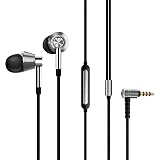
1MORE Triple Driver in-Ear Earphones Hi-Res Headphones with High Resolution, Bass Driven Sound, MEMS Mic, in-Line Remote, High Fidelity for Smartphones/PC/Tablet - Silver
(as of March 3, 2026 16:43 GMT +00:00 - More infoProduct prices and availability are accurate as of the date/time indicated and are subject to change. Any price and availability information displayed on [relevant Amazon Site(s), as applicable] at the time of purchase will apply to the purchase of this product.)
RIVER OF GOODS Stained Glass Bird Accent Lamp - 8" W x 13.5" H - Tiffany Style Table Lamps for Home, Office Desk, Bedroom, Nightstand - Blue Jay Decor
(as of March 3, 2026 16:43 GMT +00:00 - More infoProduct prices and availability are accurate as of the date/time indicated and are subject to change. Any price and availability information displayed on [relevant Amazon Site(s), as applicable] at the time of purchase will apply to the purchase of this product.)
Joking Hazard Deck Enhancement #1 - Expansion Pack for Fun Party Games by Cyanide & Happiness, 100 New Hilarious Comic Cards | Perfect for Game Night
$10.00 (as of March 3, 2026 16:43 GMT +00:00 - More infoProduct prices and availability are accurate as of the date/time indicated and are subject to change. Any price and availability information displayed on [relevant Amazon Site(s), as applicable] at the time of purchase will apply to the purchase of this product.)

















Post Comment