Meet the Power Players: 8 Ancient Roman Women Who Secretly Shaped an Empire
The plot succeeded, and the 14-year-old Elagabalus was placed on the throne with his mother acting as the real authority. Julia Soaemias became the first woman ever permitted to enter the Senate. However, Elagabalus’s eccentric behavior, which included religious scandals and disregard for Roman tradition, quickly made him unpopular. The Praetorian Guard, who had helped bring him to power, eventually turned on him, executing both the young emperor and his mother.
5. Julia Maesa

Image Credit: Julia Maesa (impératrice romaine) – Bibliothèque nationale de France – Public Domain/Wiki Commons.
The grandmother of one emperor and the architect of another’s rise, Julia Maesa was a political survivor. She was the driving force behind the plot that put her grandson, Elagabalus, in power. But when she saw how Elagabalus’s behavior was threatening the stability of their dynasty, she pivoted. Maesa began grooming her other grandson, Alexander Severus, the son of her other daughter, Julia Mamaea.
She convinced Elagabalus to adopt Alexander as his heir and grant him public honors, effectively setting up a replacement. When the inevitable rebellion against Elagabalus occurred, Alexander was ready to step in. After her death, the grateful new emperor had his grandmother deified.
6. Julia Mamaea

Image Credit: José Luiz Bernardes Ribeiro – CC BY-SA 4.0/Wiki Commons.
Julia Mamaea was the last of the powerful Severan women. When her son, Alexander Severus, became emperor at just 14 years old, she stepped in as his regent and governed the empire. Unlike her sister Soaemias, Mamaea cultivated a reputation for traditional Roman values while capably managing the state. She reversed many of Elagabalus’s controversial policies and brought a period of stability.
Even when Alexander came of age, he continued to rely heavily on her guidance, officially naming her as his imperial consort. Her influence was so complete that she reportedly had Alexander’s first wife exiled, viewing her as a rival. Their shared rule came to a violent end during a military campaign, when discontented soldiers mutinied and killed them both.
7. Ulpia Severina

Image Credit: Classical Numismatic Group – CC BY-SA 2.0/Wiki Commons.
Ulpia Severina’s story is a fascinating historical puzzle. She was the wife of Emperor Aurelian, who is credited with reunifying the empire after the Crisis of the Third Century. Aurelian’s rule was transformative but brief, ending with his assassination. Historical sources suggest there was an unusual gap between his death and the naming of his successor.
During this interregnum, it is possible that Ulpia Severina ruled the Roman Empire in her own right. The evidence comes from coins minted with her image that appear to date from after her husband’s death. This suggests she may have held imperial authority, possibly managing the transition of power. What happened to her afterward remains unknown, but for a short time, she may have been the sole ruler of Rome.
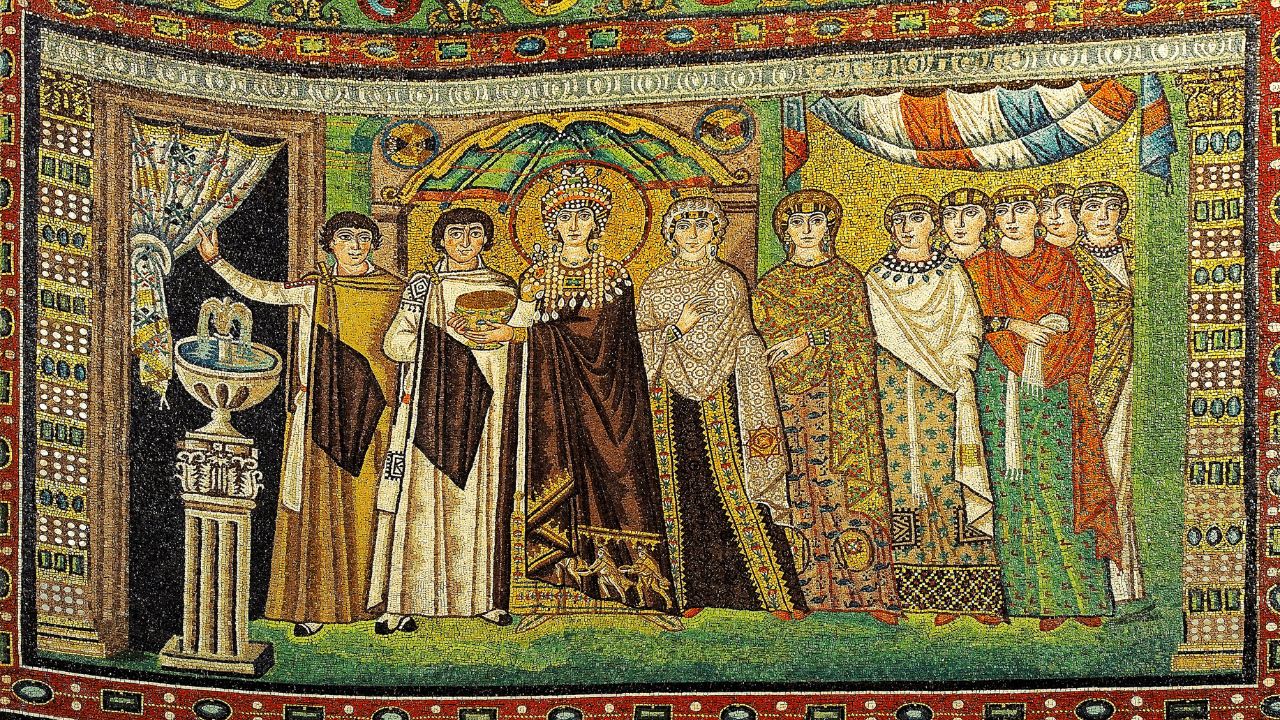
8. Theodora

Image Credit: Petar Milošević – CC BY-SA 2.0/Wiki Commons.
Theodora’s journey to the throne was anything but conventional. Born into a lower-class family, with a father who was a bear trainer and a mother who was an actress, she started her career on the stage and was rumored to have worked as a prostitute. Her life changed when she met Justinian, the heir to the throne of the Eastern Roman Empire. He was so captivated that he changed the law to marry her.
As empress, Theodora became a powerful force at court. Her most famous moment came during the Nika riots, when Justinian was ready to flee the capital. Theodora refused, delivering a powerful speech that convinced him to stay and fight, ultimately saving his throne. She was a true partner in his rule, influencing legal reforms that improved the rights of women and promoting her own allies to positions of power.
Influencing in the Background

Image Credit: G. Ferrero, The Women of the Caesars, New York, 1911 – Public Domain/Wiki Commons.
The stories of these women show that power has always found a way to express itself, even when official channels are closed. They used their intelligence, relationships, and sheer force of will to shape one of history’s greatest empires. Their careers remind us that a person’s influence is not always measured by their title.
Sometimes, the most powerful person in the room is the one who isn’t officially on the roster but is quietly directing the play. Recognizing their contributions gives us a fuller, more accurate picture of the past and a better appreciation for the many ways leadership can emerge.

RIVER OF GOODS Stained Glass Bird Accent Lamp - 8" W x 13.5" H - Tiffany Style Table Lamps for Home, Office Desk, Bedroom, Nightstand - Blue Jay Decor
(as of March 3, 2026 16:43 GMT +00:00 - More infoProduct prices and availability are accurate as of the date/time indicated and are subject to change. Any price and availability information displayed on [relevant Amazon Site(s), as applicable] at the time of purchase will apply to the purchase of this product.)
1MORE Triple Driver in-Ear Earphones Hi-Res Headphones with High Resolution, Bass Driven Sound, MEMS Mic, in-Line Remote, High Fidelity for Smartphones/PC/Tablet - Silver
(as of March 3, 2026 16:43 GMT +00:00 - More infoProduct prices and availability are accurate as of the date/time indicated and are subject to change. Any price and availability information displayed on [relevant Amazon Site(s), as applicable] at the time of purchase will apply to the purchase of this product.)
RIVER OF GOODS Farmhouse LED Ceiling Fan - 52" L x 52" W - Metal Caged Fixture - Rich Barnwood/Light Driftwood Fan Blades
(as of March 3, 2026 16:43 GMT +00:00 - More infoProduct prices and availability are accurate as of the date/time indicated and are subject to change. Any price and availability information displayed on [relevant Amazon Site(s), as applicable] at the time of purchase will apply to the purchase of this product.)
Fire Blanket - 1500F CE Certified Emergency Fire Blanket for Home and Kitchen. 500GSM Fabric & 0.5mm Thick - 100% Fiberglass Fire Extinguisher for Car,Warehouse Office - 5pc (40x40 inches) by Supa Ant
(as of March 3, 2026 16:43 GMT +00:00 - More infoProduct prices and availability are accurate as of the date/time indicated and are subject to change. Any price and availability information displayed on [relevant Amazon Site(s), as applicable] at the time of purchase will apply to the purchase of this product.)
RIVER OF GOODS Stained Glass Magna Carta LED Ceiling Fan - 52" L x 52" W - Tiffany Style - Flush Mount Ceiling Fan with Remote - Teal
(as of March 3, 2026 16:43 GMT +00:00 - More infoProduct prices and availability are accurate as of the date/time indicated and are subject to change. Any price and availability information displayed on [relevant Amazon Site(s), as applicable] at the time of purchase will apply to the purchase of this product.)


You May Have Missed










gbs LEGAL LOOTING GIVEAWAY
WIN $500 OF SHOPPING!
This will close in 0 seconds