NASA Breaks Silence on Viral Claim: Will Earth Really Lose Gravity for Seven Seconds on August 12?
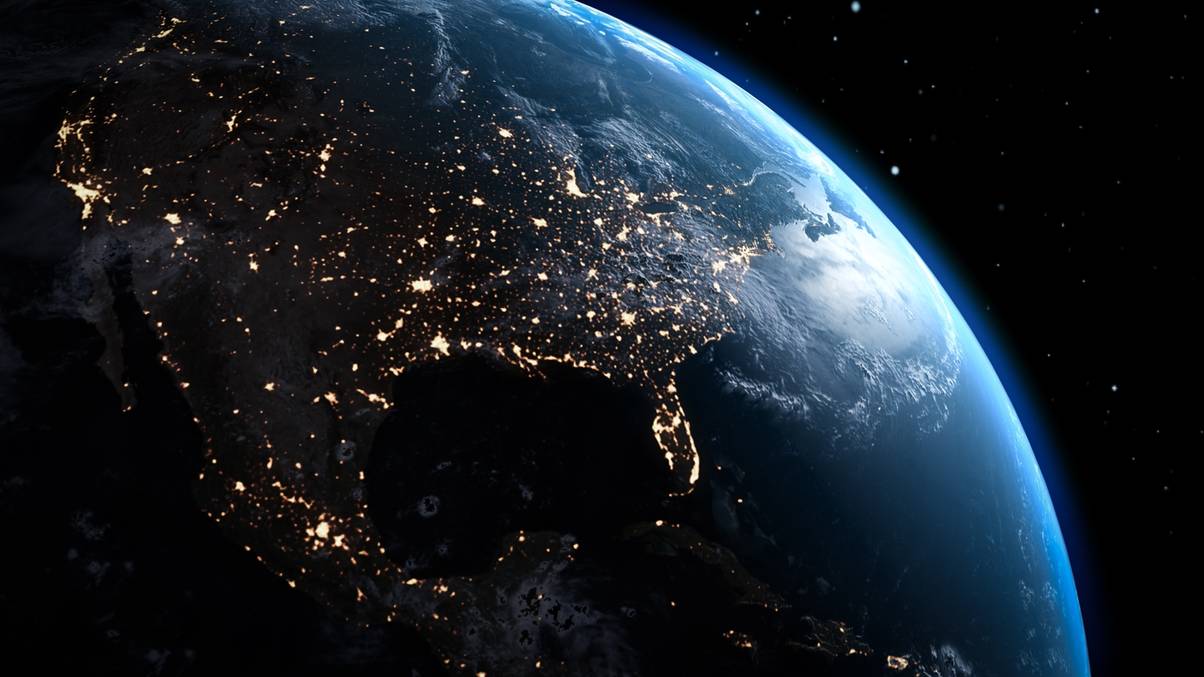
So, did you hear about that wild claim making the rounds—that Earth might just lose gravity for a whopping seven seconds later this year? Talk about a brief escape from physics! Apparently, some leaked NASA document, secretly dubbed ‘Project Anchor,’ stirred up a frenzy, warning of a gravity blackout come August 12, 2026. Cue visions of people, cars, and cats floating helplessly, with the internet predicting mass chaos and millions of toppling casualties. But, before you start padding your ceiling with pillows, NASA has stepped in to squash the drama, reminding us gravity’s got a pretty firm grip, determined by Earth’s mass—and a solar eclipse won’t throw it off balance. So, while the thought of weightlessness—even momentary—sounds like sci-fi fun, reality’s a bit less thrilling… and a whole lot safer. Curious to dive deeper into how this theory took flight and why it’s just plain balderdash? LEARN MORE.
NASA has responded to a theory claiming planet Earth will lose gravity for seven seconds later this year.
An alleged document from the space agency known as ‘Project Anchor’, originally leaked in November 2024, with it claiming NASA believed Earth would ‘lose gravity’ for seven seconds on August 12, 2026.
Speculation got a bit out of hand earlier this month after it was claimed ’40 million deaths from falls’ would come because of the loss of gravity.
But you’ll be pleased to know, NASA has since debunked the wild online theory and there’s absolutely nothing to worry about.
The space agency told Snopes: “The Earth will not lose gravity on Aug. 12, 2026. Earth’s gravity, or total gravitational force, is determined by its mass. The only way for the Earth to lose gravity would be for the Earth system, the combined mass of its core, mantle, crust, ocean, terrestrial water, and atmosphere, to lose mass. A total solar eclipse has no unusual impact on Earth’s gravity.
The theory has been debunked by NASA (Kevin Carter/Getty Images)
“The gravitational attraction of the Sun and Moon on the Earth, which doesn’t impact Earth’s total gravity, but does impact tidal forces, is well understood and is predictable decades in advance.”
Multiple social media accounts discussed the theory until NASA cleared it all up, including one from a now-deleted Instagram account that gained a lot of traction.
A caption to the post read: “On August 12, 2026, the world will lose gravity for 7 seconds. NASA knows. They’re preparing but won’t tell us why. In November 2024, a secret NASA document titled ‘Project Anchor’ leaked online.
“The project’s budget is $89 billion, and its goal is to survive a 7-second gravitational anomaly expected on August 12, 2026, at 14:33 UTC.”
The wild internet theory went on to claim ‘infrastructure destruction’, ‘mass panic’ occurring and ‘economic collapse lasting over ten years’.

The theory claimed ‘infrastructure destruction’ was on the horizon (Getty Stock Photo)
As per Snopes, the theory was explained step-by-step with another social media post. It stated: “What will happen:1-2 seconds: Everything not secured will rise (people, vehicles, animals).3-4 seconds: Objects will continue to rise to 15-20 meters.5-6 seconds: Panic and chaos will ensue as people hit ceilings.7 seconds: Gravity returns, and everything falls from height.”
Thankfully, the whole internet theory is a load of nonsense, with NASA dismissing the claims and Snopes doing their investigative work to rule out any possibility the suggestion has any truth to it.
RIVER OF GOODS Farmhouse LED Ceiling Fan - 52" L x 52" W - Metal Caged Fixture - Rich Barnwood/Light Driftwood Fan Blades
(as of March 3, 2026 16:43 GMT +00:00 - More infoProduct prices and availability are accurate as of the date/time indicated and are subject to change. Any price and availability information displayed on [relevant Amazon Site(s), as applicable] at the time of purchase will apply to the purchase of this product.)
1MORE Triple Driver in-Ear Earphones Hi-Res Headphones with High Resolution, Bass Driven Sound, MEMS Mic, in-Line Remote, High Fidelity for Smartphones/PC/Tablet - Silver
(as of March 3, 2026 16:43 GMT +00:00 - More infoProduct prices and availability are accurate as of the date/time indicated and are subject to change. Any price and availability information displayed on [relevant Amazon Site(s), as applicable] at the time of purchase will apply to the purchase of this product.)
Fire Blanket - 1500F CE Certified Emergency Fire Blanket for Home and Kitchen. 500GSM Fabric & 0.5mm Thick - 100% Fiberglass Fire Extinguisher for Car,Warehouse Office - 5pc (40x40 inches) by Supa Ant
(as of March 3, 2026 16:43 GMT +00:00 - More infoProduct prices and availability are accurate as of the date/time indicated and are subject to change. Any price and availability information displayed on [relevant Amazon Site(s), as applicable] at the time of purchase will apply to the purchase of this product.)
1MORE Triple Driver In-Ear Headphones - Silver - Wired - Adult - In Ear - 18 grams - 90 days limited warranty
(as of March 3, 2026 16:43 GMT +00:00 - More infoProduct prices and availability are accurate as of the date/time indicated and are subject to change. Any price and availability information displayed on [relevant Amazon Site(s), as applicable] at the time of purchase will apply to the purchase of this product.)