Scientists Uncover Bizarre Four-Winged Dinosaur That Defies Evolutionary Science
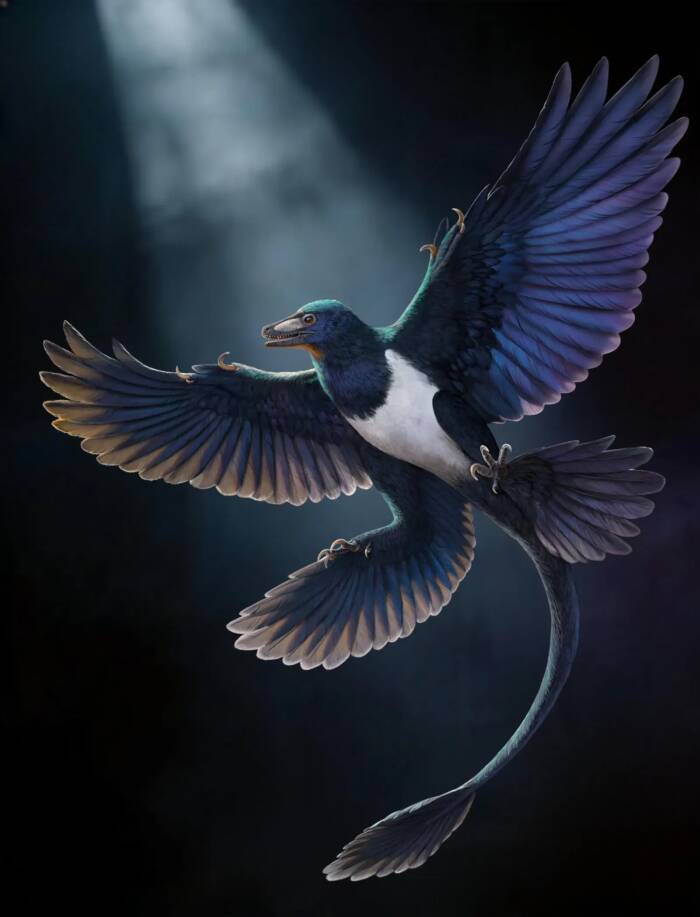
However, according to the researchers, these changes occurred in different orders between the two groups.
“This demonstrates that microraptors acquired traits convergent with the early evolutionary stages of true birds, albeit through a distinct evolutionary pathway, supporting the hypothesis that flapping flight evolved independently in non-avialan dinosaurs and birds,” Rui Pei, a paleontologist at the Institute of Vertebrate Paleontology and Paleoanthropology at the Chinese Academy of Sciences who wasn’t involved in the study, told Live Science.
Although the exact flight mechanism used by microraptors has not been determined, Hartman suggested to Live Science that the dinosaurs may have used a mix of gliding and flapping flight.
“I doubt they could climb trees like a squirrel to gain height because their forelimbs don’t have that range of motion,” Hartman said, adding that they may have been able to leap from hills or cliffs. It could also be possible that the wings had other purposes than flight, Hartman noted, like warming eggs or demonstrating healthiness to attract mates.
The study’s authors concluded that different selective pressures likely caused the evolution of flight-related features in each lineage. This study sets the stage for further research and evidence collection to determine how widespread this growth pattern was among bird-like dinosaurs — and keep charting the path by which dinosaurs eventually came to rule the skies of prehistoric Earth tens of millions of years ago.
After reading about the newly-discovered four-winged dinosaur in China, discover the Nodosaurus, the armored dinosaur that roamed the Earth 100 million years ago. Then, read up on the 11 most unbelievable prehistoric animals.

Fire Blanket - 1500F CE Certified Emergency Fire Blanket for Home & Kitchen | 500GSM Fabric & 0.5mm Thick - 100% Fiberglass Fire Extinguisher for Car,Warehouse Office - 2pc (47x47 inches) by Supa Ant
$53.45 (as of October 27, 2026 01:02 GMT +00:00 - More infoProduct prices and availability are accurate as of the date/time indicated and are subject to change. Any price and availability information displayed on [relevant Amazon Site(s), as applicable] at the time of purchase will apply to the purchase of this product.)
RIVER OF GOODS LED Boho Ceiling Fan with Hand Woven Brown/Natural Rope - Macrame Knot Work and Hemp Rope Style Eclectic Cottage Decor - 52" L x 52" W - Rich Barnwood/Light Driftwood Fan Blades
(as of October 27, 2026 01:02 GMT +00:00 - More infoProduct prices and availability are accurate as of the date/time indicated and are subject to change. Any price and availability information displayed on [relevant Amazon Site(s), as applicable] at the time of purchase will apply to the purchase of this product.)
Rhythm Superfoods Kale Chips, Zesty Nacho, Organic and Non-GMO, 2.0 Oz (Pack of 4), Vegan/Gluten-Free Superfood Snacks
(as of October 27, 2026 01:02 GMT +00:00 - More infoProduct prices and availability are accurate as of the date/time indicated and are subject to change. Any price and availability information displayed on [relevant Amazon Site(s), as applicable] at the time of purchase will apply to the purchase of this product.)
Joking Hazard by Cyanide & Happiness - 360+ Funny & Inappropriate Comic Cards, Hilarious Party Games | Includes Add-Your-Own-Words Cards
$24.95 (as of October 27, 2026 01:02 GMT +00:00 - More infoProduct prices and availability are accurate as of the date/time indicated and are subject to change. Any price and availability information displayed on [relevant Amazon Site(s), as applicable] at the time of purchase will apply to the purchase of this product.)




















Post Comment