Shocking Discovery Claims Great Pyramid of Giza May Be 20,000 Years Older—Rewriting History as We Know It!
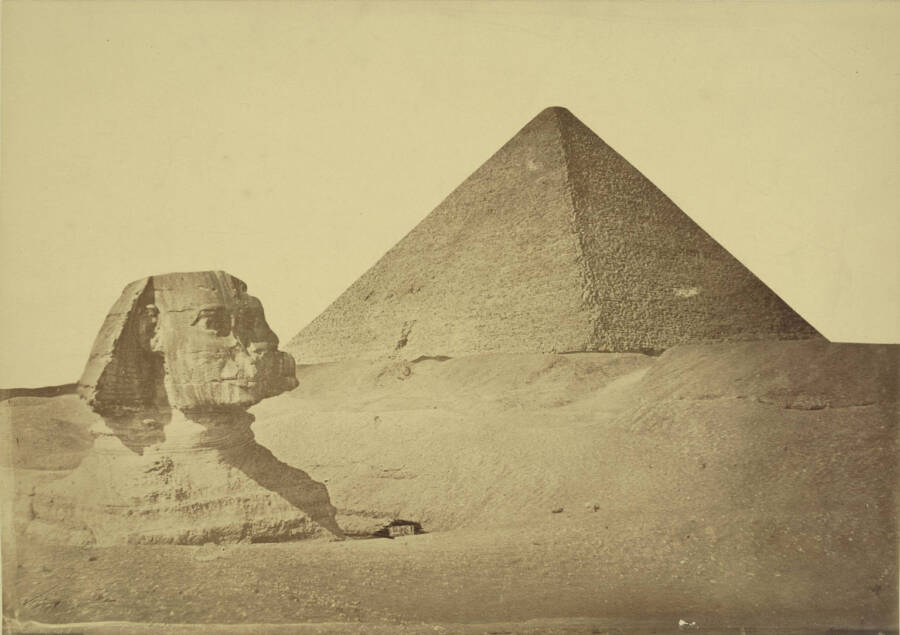
Donini noted that erosion occurs by several means. Water is a major source, from runoff dripping onto surfaces to trickles of liquid seeping into small cracks, freezing, and expanding. Wind blowing rough sand from Egypt’s desert also wore down the limestone over time, as did temperature fluctuations, acid rain, and surface wear from humans touching and walking on the surfaces.
There were several factors that Domini took into account while making his calculations. First, he acknowledged that there’s been an increase in foot traffic in the modern era, leading to more surface erosion in recent years than in ancient times. There’s also likely been more acid rain since the Industrial Revolution. These elements could lead to an underestimation of the Great Pyramid’s age.
Alternatively, the climate was wetter in ancient times, so more rain then could have led to faster erosion rates than those seen in the past few centuries. This, in turn, could lead to an overestimation of the monument’s age.
With all this in mind, Domini developed a mathematical formula for REM. He then selected 12 points around the Great Pyramid’s base to analyze, aiming to compare two areas of erosion from the same stone block. “The arithmetic means of these 12 values represents the earliest probable estimate for the age of the Pyramid of Khufu,” Domini wrote.
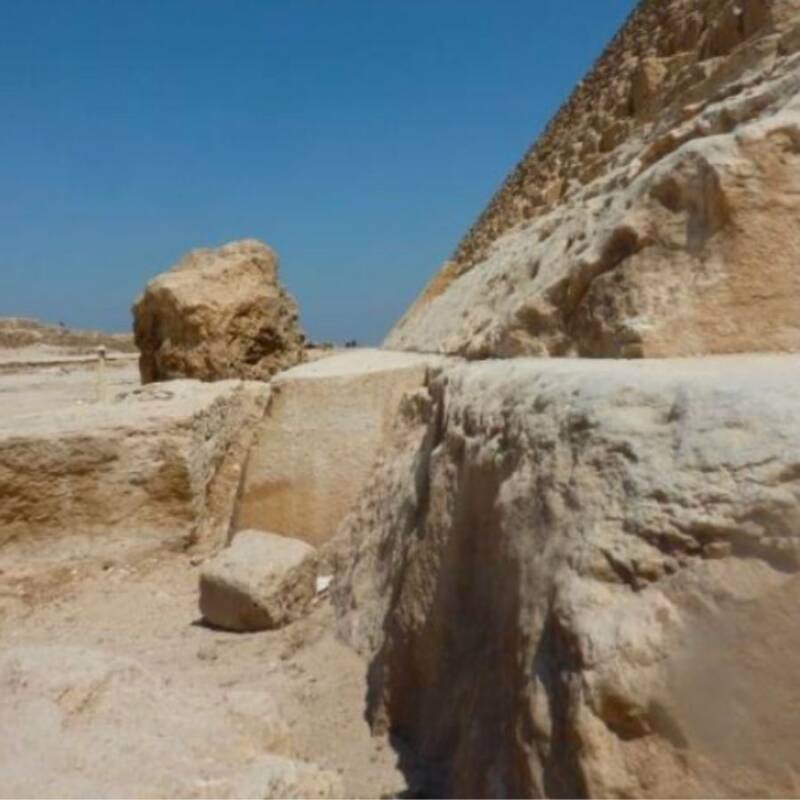
Alberto DominiOne of the eroded limestone blocks that Alberto Domini analyzed in his study.
The results? The Great Pyramid of Giza could be 25,000 years old.
If Domini’s method is accurate, the pyramid potentially could have been built around 23000 B.C.E. — a staggering 20,000 years before its currently accepted age.
“On the basis of this preliminary report on relative erosion measurements,” Domini wrote, “it can be concluded that around 20,000 years before Christ there existed a civilization in Egypt capable of constructing at least the Khufu Pyramid.”
Of course, his findings are controversial. Other archaeologists have pointed out that erosion rates are extremely variable and unreliable for linear models. The study has also not yet undergone peer review, so it remains to be seen if his Relative Erosion Method is scientifically sound.
However, if it is, Domini may have just rewritten the entire history of ancient Egypt.
After reading about the new study that suggests the Great Pyramid of Giza is perhaps 25,000 years old, go inside El Castillo, the ancient Maya temple that towers over Chichén Itzá. Then, explore the Nubian pyramids of Sudan.

Joking Hazard Deck Enhancement #1 - Expansion Pack for Fun Party Games by Cyanide & Happiness, 100 New Hilarious Comic Cards | Perfect for Game Night
$10.00 (as of March 3, 2026 16:43 GMT +00:00 - More infoProduct prices and availability are accurate as of the date/time indicated and are subject to change. Any price and availability information displayed on [relevant Amazon Site(s), as applicable] at the time of purchase will apply to the purchase of this product.)
Promixx FORM Sports Water Bottle - Premium BPA Free Water Bottle for Fitness Sports & Outdoors - Sustainable Drinks Bottle with Measurement Markers and Leakproof Lid - 760ml / 26oz (Midnight Blue)
$19.99 (as of March 3, 2026 16:43 GMT +00:00 - More infoProduct prices and availability are accurate as of the date/time indicated and are subject to change. Any price and availability information displayed on [relevant Amazon Site(s), as applicable] at the time of purchase will apply to the purchase of this product.)
Supa Ant Silicone Fire Cloak for Fireproof Suit Emergency Blanket for Home and Kitchen - Emergency Poncho as Heat Shield Blanket -Fire Resistant Hoodie-Escape Suit with Cape and Hood (70x55 in.-Large)
$83.99 (as of March 3, 2026 16:43 GMT +00:00 - More infoProduct prices and availability are accurate as of the date/time indicated and are subject to change. Any price and availability information displayed on [relevant Amazon Site(s), as applicable] at the time of purchase will apply to the purchase of this product.)
Rhythm Superfoods Beet Chips Organic and Non GMO Vegan Gluten Free Snacks, Naked, 1.4 Ounce (Pack of 4)
(as of March 3, 2026 16:43 GMT +00:00 - More infoProduct prices and availability are accurate as of the date/time indicated and are subject to change. Any price and availability information displayed on [relevant Amazon Site(s), as applicable] at the time of purchase will apply to the purchase of this product.)