The Hidden Challenges NASA Overcame to Achieve the Impossible Moon Landing
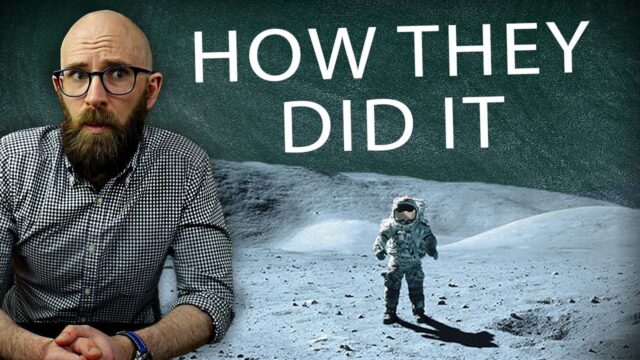
So, picture this: It’s July 20, 1969, and rather than binge-watching the latest cat videos or doomscrolling through social media, the entire planet is glued to their flickering TV sets, watching Neil Armstrong—whose spot on the mission was nearly a bureaucratic hiccup—take that surreal and historic “one small step.” But did you ever stop and think just how wildly complicated it was to get that “strange, spidery vehicle” on the Moon safely? I mean, landing on a place where nobody’s parked before asked for directions isn’t exactly a casual walk in Central Park! The Apollo 11 mission wasn’t just about rockets and astronauts; it was about navigating a maze of political quirks, engineering nightmares, and a heroic NASA engineer who basically had to elbow his way through red tape to convince everyone that lunar orbit rendezvous was the genius trick that made the impossible, possible. Get ready, because this tale unpacks the wild, winding road — from fiery setbacks and political drama to the gold-foil-wrapped ‘bug’ that changed space travel forever. You’ll never look at that “giant leap for mankind” the same way again.
 On July 20, 1969, the whole world gathered around their flickering television sets and watched in awe as astronaut Neil Armstrong who, if not for someone secretly slipping his very late application to the astronaut program into the pile wouldn’t have even been there (more on this in the Bonus Facts later), climbed down the leg of a strange, spidery vehicle, stepped onto the surface of the moon, and spoke the immortal words: “That’s one small step for [a] man, one giant leap for mankind.” …Followed by the much less memorable second words, “I can – I can pick it up loosely with my toe. It does adhere in fine layers like powdered charcoal to the sole and sides of my boots. I only go in a small fraction of an inch, maybe an eighth of an inch, but I can see the footprints of my boots and the treads in the fine, sandy particles.”
But for the first time in history, a human being had set foot on another world. The historic flight of Apollo 11 was the culmination of a massive eight-year effort to realize President John F. Kennedy’s goal of landing a man on the moon and returning him safely to the earth by the end of the decade. But the road from the earth to the moon was far from a smooth one, beset by numerous hurdles and setbacks. For example, the deaths of the Apollo 1 crew in a launch pad fire on January 27, 1967 prompted a complete redesign of the Apollo spacecraft, while ongoing problems with the Saturn V rocket’s massive F-1 rocket engines nearly resulted in the cancellation of the entire Apollo programme. But perhaps the greatest challenge of all was deciding how to land on the moon in the first place. Solving this seemingly trivial question proved far more difficult than expected, requiring years of careful study and the heroic persistence of an obscure but determined engineer. This is the story of how we learned to land on the moon only a little over a half century after humans were still hitching up covered wagons to go places.
By the time President Kennedy announced Project Apollo in May 1961, scientists and engineers at NASA had already been studying methods for manned lunar flight for several years. Initially, the preferred approach was the simplest; known as Direct Ascent, this involved launching one big spacecraft directly to the moon, landing the whole thing on the surface, lifting off again, and returning to earth. This was the approach seen in nearly all science fiction media up to that point, from Jules Verne’s 1865 novel From The Earth to the Moon and its 1902 film adaptation to the 1929 German film Woman in the Moon, the 1950 American film Destination Moon, and the 1954 Tintin comic book Explorers on the Moon. An early concept for Direct Ascent prepared by North American Aviation showed a spacecraft comprising three sections or modules: at the top was the cone-shaped Apollo capsule or Command Module housing the three-man astronaut crew and fitted with a heat shield to allow the spacecraft to reenter the earth’s atmosphere at the end of the mission. Below this was a cylindrical Service Module containing the oxygen tanks, fuel cells, communications gear, and all the other equipment required to keep the crew alive during the mission. And finally at the bottom was a large Descent and Ascent Stage with landing legs and rocket engines to land the whole vehicle on the lunar surface and lift it back off again.
While theoretically straightforward, in practice the Direct Ascent strategy suffered from a host of practical drawbacks – chief among them being that it was extremely heavy. The Command Module needed to be robust enough to survive the heat and stress of atmospheric reentry, while the Service Module needed to carry all the equipment and consumables needed for the entire mission to the moon and back. All this mass needed to be safely soft-landed on the moon and blasted off again, requiring the use of a massive Descent/Ascent stage and large quantities of fuel – so large in fact, that despite the moon’s gravity being 1/6th that of earth, early estimates put the total mass of the spacecraft at a whopping 90 metric tons! Such a gargantuan spacecraft would, in turn, require an equally gargantuan rocket to haul it from the earth to the moon and back. Known as the Nova, this behemoth would have stood nearly 110 metres or 360 feet tall, weighed 4.5 million kilograms or 9.9 million pounds, and had a first stage delivering a total thrust of 61,925 kilonewtons or 13.9 million pounds force. By comparison, the Saturn V rocket that ultimately took men to the moon stood 86 metres or 282 feet tall, weighed 2.8 million kilograms or 6.2 million pounds, and had a first-stage thrust of 34,500 kilonewtons or 7.75 million pounds force. Not only were engineers unsure if the Nova could even be constructed by the end of the decade, but the rocket would have been too powerful to launch from the pads at Cape Canaveral; indeed, one proposal called for the rocket to be launched from hollowed-out cliffs in Hawaii. Another early concept proposal called for Nova to be fitted with nuclear rocket engines, which would have required launching it from an uninhabited island or a giant barge to prevent contaminating populated areas with radioactive fallout.
RIVER OF GOODS Stained Glass Magna Carta LED Ceiling Fan - 52" L x 52" W - Tiffany Style - Flush Mount Ceiling Fan with Remote - Teal
(as of March 3, 2026 16:43 GMT +00:00 - More infoProduct prices and availability are accurate as of the date/time indicated and are subject to change. Any price and availability information displayed on [relevant Amazon Site(s), as applicable] at the time of purchase will apply to the purchase of this product.)
KiddyCare Diaper Caddy Organizer for Baby Nursery Basket with Handle Lid Nursing Caddy with Changing Table Organizer Cart Newborn Caddy Rosy (Floral Print) X-Large
$16.50 (as of March 3, 2026 16:43 GMT +00:00 - More infoProduct prices and availability are accurate as of the date/time indicated and are subject to change. Any price and availability information displayed on [relevant Amazon Site(s), as applicable] at the time of purchase will apply to the purchase of this product.)
White Leaf Provisions Organic Purees / Baby Food Pouches - Fruits, Veggies & Grains, Toddler snack, Regeneratively Farmed, No Added Sugar, Non-GMO, BPA-Free Pouches 3.17 oz (Pack of 24, Mango + Carrot + Banana + Pear)
$70.37 (as of March 3, 2026 16:43 GMT +00:00 - More infoProduct prices and availability are accurate as of the date/time indicated and are subject to change. Any price and availability information displayed on [relevant Amazon Site(s), as applicable] at the time of purchase will apply to the purchase of this product.)
RIVER OF GOODS Coastal 52 Inch Wooden Bead LED Ceiling Fan, Cream
(as of March 3, 2026 16:43 GMT +00:00 - More infoProduct prices and availability are accurate as of the date/time indicated and are subject to change. Any price and availability information displayed on [relevant Amazon Site(s), as applicable] at the time of purchase will apply to the purchase of this product.)

















Post Comment