The Hidden Challenges NASA Overcame to Achieve the Impossible Moon Landing

Even before Apollo 11 touched down on the moon, a division of NASA known as the Apollo Applications Program or AAP was formed to find future scientific uses for Apollo hardware. This included long-duration missions on the lunar surface, and for this purpose a number of advanced versions of the Lunar Module were devised. For example, the Apollo LM Taxi was a standard LM fitted with hydrogen fuel cells and extra oxygen and hydrogen tanks to allow astronauts to remain on the moon for up to 14 days. Meanwhile, the Apollo LM Shelter was a small “moon base” comprising a standard LM with its ascent stage engine and propellant tanks removed and replaced with more consumables storage. Together with the LM Taxi, the LM Shelter would allow astronauts to extend their stay up to three months – or even longer with the help of the Apollo LM Truck, an unmanned, remotely-guided LM designed to deliver food, oxygen, and other supplies to the lunar surface. However, changing politics, flagging public interest in space exploration, and severe budget cuts led to nearly all the proposed Apollo Applications Projects missions being cancelled in 1968. The only one to make it off the drawing board was Skylab, an earth-orbiting space station constructed from a modified Saturn V SIVB rocket stage. Launched into orbit on May 14, 1973, Skylab was visited by three three-man crews between May 25, 1973 and February 8, 1974 before being deorbited and burning up in the atmosphere on July 11, 1979. The Skylab program marked the last operational use of a Grumman Lunar Module, the descent stage of which formed the base of the Apollo Telescope Mount solar observatory. In total, 15 Lunar Modules were manufactured and 10 operationally flown, with the remaining 5 either being used for ground testing or intended for the cancelled Apollo 18-20 missions. Today, three original production vehicles are on display at the National Air & Space Museum in Washington, D.C.; the Cradle of Aviation Museum in Long Island, New York; and the Kennedy Space Centre in Florida. Various test articles are also on display in other museums.
Given the success and cultural impact of the Apollo missions, it is easy to forget that the Race to the Moon was, well, a race – one with one other competitor: the Soviet Union. As was often the case throughout the Space Race, the Soviet approach to landing on the moon was in many ways similar to NASA’s but in other ways very, very different. But that, dear viewers, is a subject for another video.
Expand for References
Apollo Lunar Landing, Encyclopedia Astronautica, http://www.astronautix.com/a/apollolunarlanding.html
Apollo Direct 2-Man, Encyclopedia Astronautica, http://www.astronautix.com/a/apollodirect2-man.html
Text of John Houbolt’s Letter Proposing Lunar Orbit rendezvous for Apollo? Space Exploration Stack Exchange, https://space.stackexchange.com/questions/2823/text-of-john-houbolts-letter-proposing-lunar-orbit-rendezvous-for-apollo
John C. Houbolt, NASA, https://www.nasa.gov/centers-and-facilities/langley/john-c-houbolt/
Neuman, Scott, Meet John Houbolt: He Figured Out How to Go to the Moon, But few Were Listening, NPR, July 18, 2019, https://www.npr.org/2019/07/18/739934923/meet-john-houbolt-he-figured-out-how-to-go-to-the-moon-but-few-were-listening
Apollo LM, Encyclopedia Astronautica, http://www.astronautix.com/a/apollolm.html
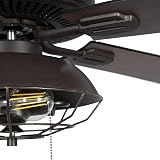
RIVER OF GOODS Farmhouse LED Ceiling Fan - 52" L x 52" W - Metal Caged Fixture - Rich Barnwood/Light Driftwood Fan Blades
(as of March 3, 2026 16:43 GMT +00:00 - More infoProduct prices and availability are accurate as of the date/time indicated and are subject to change. Any price and availability information displayed on [relevant Amazon Site(s), as applicable] at the time of purchase will apply to the purchase of this product.)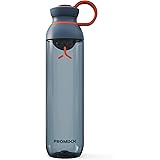
Promixx FORM Sports Water Bottle - Premium BPA Free Water Bottle for Fitness Sports & Outdoors - Sustainable Drinks Bottle with Measurement Markers and Leakproof Lid - 760ml / 26oz (Midnight Blue)
$19.99 (as of March 3, 2026 16:43 GMT +00:00 - More infoProduct prices and availability are accurate as of the date/time indicated and are subject to change. Any price and availability information displayed on [relevant Amazon Site(s), as applicable] at the time of purchase will apply to the purchase of this product.)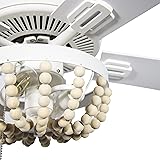
RIVER OF GOODS Coastal 52 Inch Wooden Bead LED Ceiling Fan, Cream
(as of March 3, 2026 16:43 GMT +00:00 - More infoProduct prices and availability are accurate as of the date/time indicated and are subject to change. Any price and availability information displayed on [relevant Amazon Site(s), as applicable] at the time of purchase will apply to the purchase of this product.)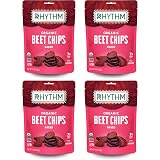
Rhythm Superfoods Beet Chips Organic and Non GMO Vegan Gluten Free Snacks, Naked, 1.4 Ounce (Pack of 4)
(as of March 3, 2026 16:43 GMT +00:00 - More infoProduct prices and availability are accurate as of the date/time indicated and are subject to change. Any price and availability information displayed on [relevant Amazon Site(s), as applicable] at the time of purchase will apply to the purchase of this product.)
















Post Comment