The Hidden Challenges NASA Overcame to Achieve the Impossible Moon Landing
Respectfully yours,
John C. Houbolt”
Unorthodox and insubordinate as it was, the letter succeeded in getting Seaman’s attention, with the former Administrator stating in 2008 that:
“It was rather strident in the way it was written. My first reaction was, ‘I’d like some way to get that son of a gun off my back.’”
Nonetheless, Seamans was swayed by Houbolt’s arguments, and he replied by promising to put LOR into active consideration. With Seaman’s backing, resistance to Houbolt’s plan soon began to crumble. Further tradeoff analyses revealed the risk of rendezvous and docking in lunar orbit to be much lower than had previously been assumed, while in June 1962, Wernher von Braun, long a staunch advocate of Earth Orbit Rendezvous, unexpectedly reversed course and announced he was now backing LOR. One month later on July 11, NASA Administrator James Webb held a press conference in which he officially announced Lunar Orbit Rendezvous as the chosen mission profile for Project Apollo, stating that it was:
“…most desirable from the standpoints of time, cost, and mission accomplishments.”
Suddenly, the once-maligned John Houbolt became a NASA hero; upon learning of the selection, Houbolt’s supervisor shook his hand and declared:
“I can safely say I’m shaking hands with the man who single-handedly saved the government $20 billion.”
In 1963, Houbolt was awarded the NASA Exceptional Scientific Achievement Medal, the citation for which read:
“[For his] foresight, perseverance, and incisive theoretical analysis of the concept of lunar orbit rendezvous, revealing the important engineering and economic advantages that led to its adoption as a central element in the U.S. manned lunar exploration.”
It is worth noting here that in addition to Direct Ascent, Earth Orbit Rendezvous, and Lunar Rendezvous, a fourth lunar landing profile was also proposed, known as Lunar Surface Rendezvous or LSR. This involved landing an unmanned spacecraft loaded with fuel ahead of the astronauts, who would then land nearby and transfer the fuel into their own tanks, allowing them to lift off from the lunar surface.While this approach reduced the payload that had to be carried by any one launch vehicle, it was deemed far too risky and never seriously considered.
But our story is far from over, for while straightforward on paper, actually implementing Lunar Orbit Rendezvous was a whole other matter. On July 25, 1962, NASA sent out invitations to eleven aerospace contractors to bid on the contract for the Lunar Excursion Vehicle or LEM – of which nine submitted detailed proposals. On November 7, the Grumman Aerospace Corporation of Bethpage, New York – which had conducted extensive preliminary studies on lunar landing vehicles – was selected as prime contractor, with development costs estimated at $350 million. The company had its work cut out for it; at the time, the United States had only a few hours of cumulative spaceflight under its belt, and the Grumman engineers were being tasked with building a spacecraft that could land two astronauts on the surface of another world and return them safely to orbit. There were countless unknowns. How easy would it be for two spacecraft to rendezvous and dock in lunar orbit? How would the astronauts guide the LEM down to the lunar surface and make a soft landing – and what would await them when they touched down? No spacecraft – unmanned or otherwise – had yet landed on the moon or even taken high-resolution pictures of its surface; in the early days of the Apollo Programme, it was feared that the lunar surface might be covered by several metres of fine dust or regolith, which would swallow up a landing spacecraft or make it tilt severely to one side, preventing it from safely lifting off again. And could all these tasks be accomplished using a vehicle light enough to be launched to the moon by a single Saturn C5 rocket – by now renamed the Saturn V? With the 1970 deadline uncomfortably close, much of the hardware would have to be designed before any of these questions could be definitely answered; educated guesses were the order of the day.
The design and development of the Lunar Excursion Module – or simply the Lunar Module, as it was later renamed – is a huge subject worthy of its own separate video. However, we will attempt to summarize it here as best we can. Early on, engineers settled on a strange, insect-shaped vehicle comprising two main sections: a lower descent module with legs and a rocket engine to allow the vehicle to touch down on the lunar surface, and an upper ascent stage containing the pressurized crew cabin. The whole vehicle would be stored aboard the Saturn V rocket in a cone-shaped shroud or adapter just behind the Apollo CSM. After lifting off from the earth, the CSM, LM, and SIVB [“S-four-B”] upper rocket stage would enter a parking orbit around the earth, allowing the crew to make last-minute checks before making a Trans Lunar Injection or TLI burn to send them on their way to the moon. Shortly thereafter, the CSM would detach from the rocket stack, turn around, dock with the LM, and extract it from its adapter. Then, upon reaching lunar orbit, two astronauts – dubbed the Commander and the Lunar Module Pilot – would enter the LM through a short tunnel, undock from the CSM, and descend to the lunar surface, leaving the third crew member, the Command Module Pilot, orbiting overhead. On completion of the mission, the crew would fire the ascent stage engine, using the now-spent descent stage as a launch pad to send them back into orbit where they would rendezvous with the Command Module Pilot aboard the CSM. Once the crew were safely aboard the CSM, the LM ascent stage would be discarded and the CSM would fire its engines, sending the crew back towards the earth.
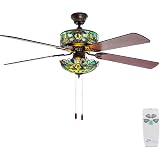
RIVER OF GOODS Stained Glass Magna Carta LED Ceiling Fan - 52" L x 52" W - Tiffany Style - Flush Mount Ceiling Fan with Remote - Teal
(as of March 3, 2026 16:43 GMT +00:00 - More infoProduct prices and availability are accurate as of the date/time indicated and are subject to change. Any price and availability information displayed on [relevant Amazon Site(s), as applicable] at the time of purchase will apply to the purchase of this product.)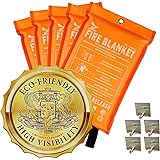
Fire Blanket - 1500F CE Certified Emergency Fire Blanket for Home and Kitchen. 500GSM Fabric & 0.5mm Thick - 100% Fiberglass Fire Extinguisher for Car,Warehouse Office - 5pc (40x40 inches) by Supa Ant
(as of March 3, 2026 16:43 GMT +00:00 - More infoProduct prices and availability are accurate as of the date/time indicated and are subject to change. Any price and availability information displayed on [relevant Amazon Site(s), as applicable] at the time of purchase will apply to the purchase of this product.)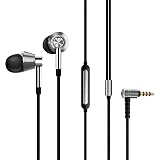
1MORE Triple Driver in-Ear Earphones Hi-Res Headphones with High Resolution, Bass Driven Sound, MEMS Mic, in-Line Remote, High Fidelity for Smartphones/PC/Tablet - Silver
(as of March 3, 2026 16:43 GMT +00:00 - More infoProduct prices and availability are accurate as of the date/time indicated and are subject to change. Any price and availability information displayed on [relevant Amazon Site(s), as applicable] at the time of purchase will apply to the purchase of this product.)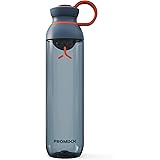
Promixx FORM Sports Water Bottle - Premium BPA Free Water Bottle for Fitness Sports & Outdoors - Sustainable Drinks Bottle with Measurement Markers and Leakproof Lid - 760ml / 26oz (Midnight Blue)
$19.99 (as of March 3, 2026 16:43 GMT +00:00 - More infoProduct prices and availability are accurate as of the date/time indicated and are subject to change. Any price and availability information displayed on [relevant Amazon Site(s), as applicable] at the time of purchase will apply to the purchase of this product.)

















Post Comment