The Hidden Challenges NASA Overcame to Achieve the Impossible Moon Landing

While conceptually simple, in practice this basic configuration spawned hundreds of unforeseen design challenges, mainly relating to that universal enemy of spacecraft designers: weight. To allow the LM and the already overweight Apollo CSM to be launched to the moon by a single Saturn V rocket, the lander had to weigh under 10 tons. However, the estimated mass quickly ballooned to over twice that figure, forcing engineers to make numerous clever design decisions in a bid to slim the vehicle down. For example, the original design had the two astronauts strapped into seats in the middle of the ascent stage, but this configuration required the use of large – and very heavy – windows to give them adequate visibility for landing. But designers soon realized that in 1/6 earth’s gravity, human legs are perfectly adequate as shock absorbers. The seats were thus deleted and the cabin reconfigured to have the astronauts land the LM while standing up, secured in place by a system of pulleys and cables. This placed the astronauts’ heads closer to the windows, allowing them to be made much smaller and lighter while preserving the overall field of view. Another major weight-related problem had to do with the heat shielding needed to protect the LM from the extremes of the lunar environment, which could reach 121 degrees celsius in direct sunlight and -133 degrees in the shade. In this case, the problem was solved using brand-new technology: a lightweight, metal-coated Mylar plastic film developed by DuPont, which gave the finalized LM its distinctive gold foil-wrapped appearance. Further, while early concepts featured smooth, rounded surfaces, the final vehicle was largely constructed from a complex array of flat panels closely faired around the various internal components, with the descent stage going from a cylinder to an octagonal prism. The result was a truly alien-looking vehicle unlike anything which had come before, a true spacecraft designed purely for use in the vacuum of space. In a desperate bid to save weight, Grumman engineers made each body panel only as thick as it absolutely needed to be, with some being only as thick as a few layers of tinfoil. This meant that workers at the Grumman factory had to take special precautions lest a dropped tool puncture the hull. Indeed, to eliminate dust, loose fasteners and other debris that might float out, injure the astronauts, or short out electronics, the LMs were constructed in some of the first industrial “clean rooms” under sterile conditions, with workers wearing full “bunny suits” with hair nets, booties, gloves, and face masks. And just to make sure nothing was missed, the completed vehicles were placed in a special jig and turned upside down to shake out any remaining foreign objects.
Other design decisions concerned the unique challenges of landing on the moon. For example, more landing legs ensured greater stability – especially if one of those legs broke on impact – but increased the vehicle’s overall weight. Extensive drop tests conducted with models revealed that four legs were an adequate compromise, and this was integrated into the final design. To avoid having to use hydraulic shock absorbers in the vacuum of space, the legs were fitted with blocks of rigid plastic foam that would crush on impact, absorbing most of the shock of landing. Originally, the astronauts were to enter and exit the LEM cabin by climbing up and down a simple rope – the assumption being that this would be easy in lunar gravity. However, tests using a full-scale mockup and a counterweight system to simulate reduced gravity proved this assumption wrong, and instead the descent stage was rotated to place one of the four landing legs in line with the ascent stage hatch and its “porch”, and ladder rungs added to the leg strut. The hatch itself was originally round, but was eventually redesigned to be square to fit the astronauts Portable Life Support System or PLSS backpacks.
The finalized Lunar Module, whose design was frozen in April 1963, measured 7 metres tall and 9 metres across with the landing legs extended and, despite Grumman’s best efforts, weighed in at 15 tons – fully half again as much as the original design goal. Thankfully, however, the Saturn V design team led by Wernher von Braun succeeded in squeezing 20% more payload capacity out of the rocket, allowing this weight increase to be accommodated. The descent stage of the LM was powered by a 45,000 Newton thrust, fully throttleable rocket engine manufactured by TRW Inc., which burned a combination of Aerozine 50 and nitrogen tetroxide. These propellants are hypergolic, igniting on contact with one another, meaning no separate igniter was needed and the astronauts only had to open a pair of propellant valves to light the engine – and for more on how these nasty substances contributed to a now-forgotten nuclear disaster, please check out our previous video When Dropping a Wrench Almost Caused Armageddon. In addition to the descent engine and propellant tanks, the descent stage also contained wedge-shaped Scientific Equipment or SEQ Bays for storing tools, scientific instruments like the Apollo Lunar Surface Experiments Package or ALSEP and – on Apollos 15-17, the Lunar Roving Vehicle or LRV – AKA the “Moon Buggy” – and for an exhaustive breakdown of the ALSEP system, please check out the video on Our Own Devices, the personal YouTube channel of this video’s author. The descent stage also housed a continuous wave doppler radar to provide the astronauts with their altitude and rate of descent above the lunar surface.

RIVER OF GOODS Coastal 52 Inch Wooden Bead LED Ceiling Fan, Cream
(as of March 3, 2026 16:43 GMT +00:00 - More infoProduct prices and availability are accurate as of the date/time indicated and are subject to change. Any price and availability information displayed on [relevant Amazon Site(s), as applicable] at the time of purchase will apply to the purchase of this product.)
White Leaf Provisions Organic Purees / Baby Food Pouches - Fruits, Veggies & Grains, Toddler snack, Regeneratively Farmed, No Added Sugar, Non-GMO, BPA-Free Pouches 3.17 oz (Pack of 24, Mango + Carrot + Banana + Pear)
$70.37 (as of March 3, 2026 16:43 GMT +00:00 - More infoProduct prices and availability are accurate as of the date/time indicated and are subject to change. Any price and availability information displayed on [relevant Amazon Site(s), as applicable] at the time of purchase will apply to the purchase of this product.)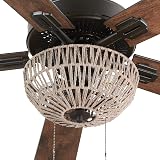
RIVER OF GOODS LED Boho Ceiling Fan with Hand Woven Brown/Natural Rope - Macrame Knot Work and Hemp Rope Style Eclectic Cottage Decor - 52" L x 52" W - Rich Barnwood/Light Driftwood Fan Blades
(as of March 3, 2026 16:43 GMT +00:00 - More infoProduct prices and availability are accurate as of the date/time indicated and are subject to change. Any price and availability information displayed on [relevant Amazon Site(s), as applicable] at the time of purchase will apply to the purchase of this product.)
Joking Hazard Deck Enhancement #1 - Expansion Pack for Fun Party Games by Cyanide & Happiness, 100 New Hilarious Comic Cards | Perfect for Game Night
$10.00 (as of March 3, 2026 16:43 GMT +00:00 - More infoProduct prices and availability are accurate as of the date/time indicated and are subject to change. Any price and availability information displayed on [relevant Amazon Site(s), as applicable] at the time of purchase will apply to the purchase of this product.)


















Post Comment