The Secret Processes That Strip Caffeine and Alcohol—Revealed!

As previously discussed, the traditional method of removing alcohol from wine and beer was simply to boil it off. However, this tended to give the resulting product an unpleasant “cooked” or “burnt” flavour. This problem was largely solved by vacuum distillation, the technique developed in 1908 by German winemaker Carl Jung. The boiling point of liquids is dependent on ambient pressure; the lower the pressure, the lower the temperature needed, which is why water will boil at only 68 degrees Celsius atop Mount Everest as compared to 100 degrees at sea level. In vacuum distillation, the pressure in the still is reduced so that the temperature of the wine never exceeds 48 degrees, helping to preserve its flavour. Of course, many other volatile compounds including ethyl esters and aliphatic alcohols escape along with the ethanol, but these are typically separated out via fractional distillation and re-added to the de-alcoholized wine along with concentrated grape juice, tannins, natural flavours and other compounds to restore the original flavour profile. The primary advantage of vacuum distillation is efficiency, with the process being capable of bringing the alcohol content of wine down to as low as 0.02% in a single pass. The process is also widely used by wineries to make finer adjustments to the alcohol content of regular wines. However, despite measures to capture and restore volatile flavour compounds, some losses are inevitable, which is why more sophisticated de-alcoholization processes are increasingly being used to satisfy customers’ discerning palates.
One of the first major improvements to vacuum distillation technology was the spinning cone column or SCC, developed in 1991 by Australian food chemist Andrew Craig. This consists of a tall stainless steel column containing a rotating shaft and a series of spinning and stationary cones. The wine is injected at the top of the column and flows over the spinning cones, which produce centrifugal force that spreads the wine into a thin film. Air is then pumped out of the vessel and steam injected from the bottom in two stages. The first, conducted at 30 degrees Celsius, strips the wine of its volatile flavour compounds; while the second, conducted at 40 degrees, strips it of its alcohol. The volatile compounds are then re-introduced to the de-alcoholized wine in order to restore its flavour. By promoting greater evaporation rates at even lower temperatures, SCC allows for more efficient de-alcoholization and greater flavour preservation than traditional vacuum distillation, though it still suffers from unavoidable losses of volatile flavour compounds.
Due to its lower alcohol content and the need to preserve carbonation, beer is typically not de-alcoholized using vacuum distillation or SCC. Instead, a variety of “cold” methods are used including reverse osmosis. Very similar to the dialysis process used to clean the blood of patients with kidney disease, reverse osmosis involves forcing the beverage at high pressure through a semi-permeable polymer membrane surrounded by a stripping fluid – typically water. Typically, water will diffuse from a region of low solute concentration to one of high solute concentration (in this case, the beverage) but when high enough pressure is applied to the concentrated solution, the reverse occurs, and the ethanol from the beverage diffuses through the membrane into the stripping fluid, leaving most other compounds behind and preserving the original flavour. Furthermore, the process works at temperatures as low as 1-5 degrees Celsius, eliminating the danger of denaturing flavour compounds through heating. However, reverse osmosis also has a number of disadvantages – namely inefficiency, with the process only reducing alcohol by 0.7-1.5% per pass. Furthermore, the process requires the original beverage to be diluted with water prior to processing – which, as we’ve previously discussed – is illegal to do with wine in many regions.
A related process is osmotic distillation or evaporative perstraction. Like in reverse osmosis, the beverage is forced at high pressure past a semi-permeable membrane, on the other side of which a stripping fluid – typically water – is forced in the opposite direction, forming a counter-flow diffuser. In this method, the pressure of the beverage causes the ethanol to evaporate and diffuse through the membrane, whereupon it condenses in the stripping fluid and is carried away. Like reverse osmosis, osmotic distillation is carried out at low temperatures, preventing the denaturing of flavour compounds, but is slightly more energy-efficient.
Finally, the last major method used for de-alcoholizing wine and beer is nanofiltration, in which the beverage is forced through a semi-permeable membrane covered in tiny pores ranging from 1-10 nanometers in size, which allows nearly all the flavour compounds in the beverage to pass through while leaving ethanol molecules behind. This method allows larger volumes to be processed faster than reverse osmosis or osmotic distillation, reduces alcohol content by about 7-10% per pass, and operates at lower pressures, making it more energy-efficient.
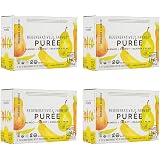
White Leaf Provisions Organic Purees / Baby Food Pouches - Fruits, Veggies & Grains, Toddler snack, Regeneratively Farmed, No Added Sugar, Non-GMO, BPA-Free Pouches 3.17 oz (Pack of 24, Mango + Carrot + Banana + Pear)
$70.37 (as of March 3, 2026 16:43 GMT +00:00 - More infoProduct prices and availability are accurate as of the date/time indicated and are subject to change. Any price and availability information displayed on [relevant Amazon Site(s), as applicable] at the time of purchase will apply to the purchase of this product.)
Joking Hazard Enlarged Box Empty Box for Card Storage
$12.00 (as of March 3, 2026 16:43 GMT +00:00 - More infoProduct prices and availability are accurate as of the date/time indicated and are subject to change. Any price and availability information displayed on [relevant Amazon Site(s), as applicable] at the time of purchase will apply to the purchase of this product.)
The Door Balancer Eliminates The Need for Door Props, Door Stops and Door Wedges
$7.99 (as of March 3, 2026 16:43 GMT +00:00 - More infoProduct prices and availability are accurate as of the date/time indicated and are subject to change. Any price and availability information displayed on [relevant Amazon Site(s), as applicable] at the time of purchase will apply to the purchase of this product.)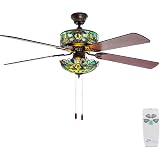
RIVER OF GOODS Stained Glass Magna Carta LED Ceiling Fan - 52" L x 52" W - Tiffany Style - Flush Mount Ceiling Fan with Remote - Teal
(as of March 3, 2026 16:43 GMT +00:00 - More infoProduct prices and availability are accurate as of the date/time indicated and are subject to change. Any price and availability information displayed on [relevant Amazon Site(s), as applicable] at the time of purchase will apply to the purchase of this product.)

















Post Comment