The Shocking Truth About Alcohol vs. Weed: Which One Really Wrecks Your Body Long-Term?

So, here’s a little brain teaser for you: is alcohol really the villain we all love to hate when stacked against cannabis, or is weed the sneaky underdog playing the long game on our health? You see, a recent deep dive study has peeled back the curtain on what happens to your body after years of cozying up with these substances. Now, we’ve all seen those graphic simulations of a daily weed habit—smoke ’em if you got ’em, right? But, plot twist, the Class B label on cannabis isn’t just for show; there are some health quirks lurking beneath that green haze. Everyone loves to say weed’s the ‘safer’ choice compared to the boozy option, especially if you fancy yourself a Snoop Dogg type, but does the science back up those chill vibes? Meanwhile, alcohol sits on its legal throne, casually linked to a buffet of serious health headaches—from liver chaos to mental health tangles. So, if you’re wondering which one might actually be the rougher roommate in your body’s long-term lease, buckle up. This isn’t your average health scare story—it’s a nuanced showdown that might just flip your perspective.
A study has delved into the long-term effects of alcohol and cannabis, listing how a person can be impacted by use of the substances over time.
Many simulations have depicted what can happen if you smoke weed everyday, but the reality is that there are a number of health risks which are associated with the Class B drug.
In comparison to other drugs such as ketamine and cocaine, though, the vast majority agree that weed is a lot ‘safer’ to consume.
As for alcohol, while perfectly legal and readily available at your nearest boozer or supermarket, several serious health complications are linked to the substance, as per several in-depth studies over the years.
If you were to ask someone like Snoop Dogg about which of the substances was worse, you’d be led to believe that cannabis is less harmful in the long-term, but how true is this claim?
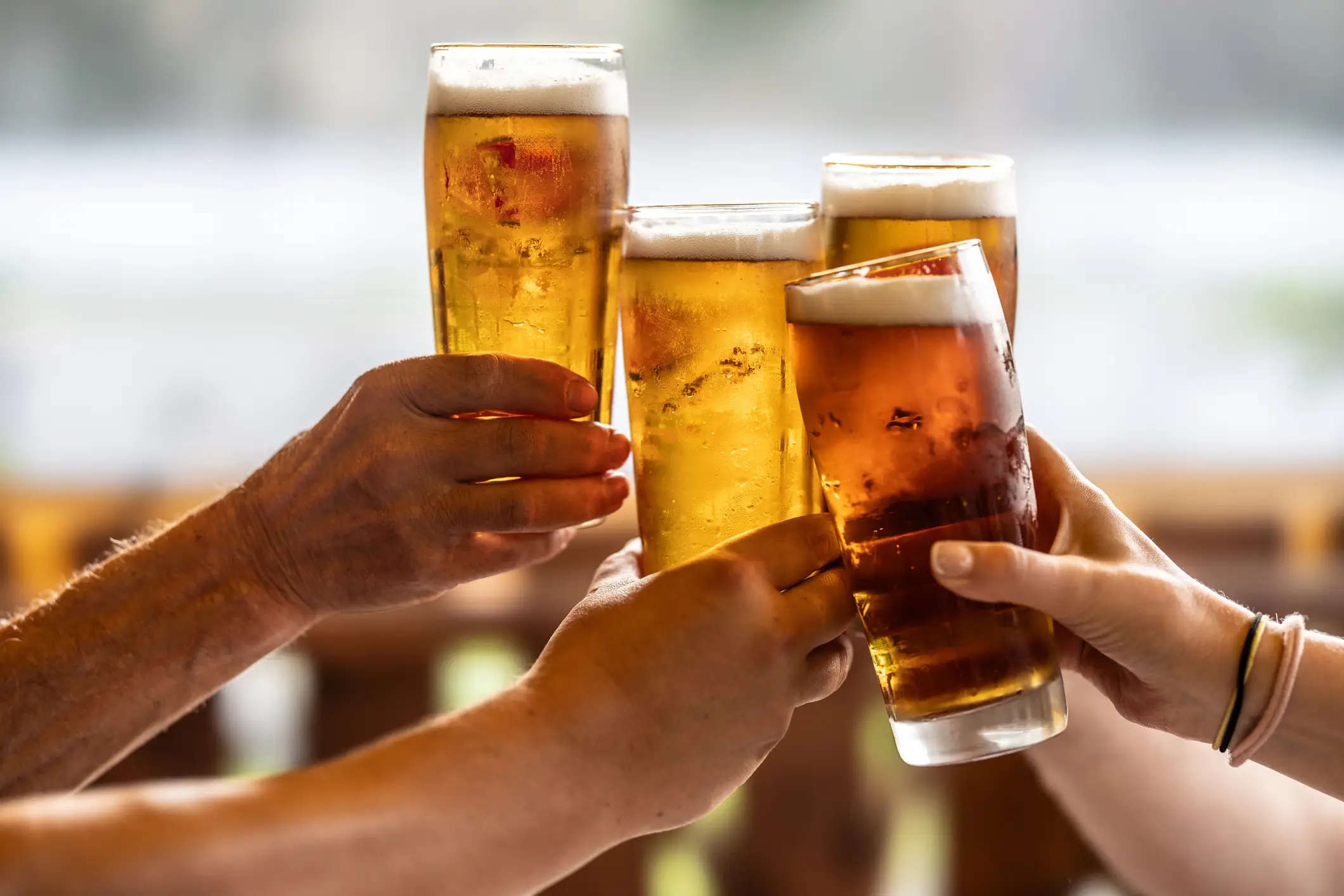
Is alcohol that much worse for you than weed is? (Getty Stock Image)
What are the long-term effects of alcohol?
While having a pint or two every now and then is okay, but if you’re regularly having over 14 units per week, this is when you start putting your health at risk.
The NHS list some of the long-term effects which come with alcohol misuse, some of which include stroke, liver disease, pancreatitis, high blood pressure, numerous cancers and a number of mental health issues.
It can also cause damage to the brain, with the Royal College of Psychiatrists saying that alcohol can affect brain chemistry and increase the risk of depression, panic disorder, and impulsive behaviour.
The substance can also cause issues in the heart, pancreas, and kidneys over time, while also weakening your immune system.
What are the long-term effects of cannabis?
According to a 2016 study published in the International Journal of Drug Policy, most long-term adverse effects of cannabis are milder than those brought on by alcohol.
It’s highlighted that these are not as well understood due to there simply being fewer daily cannabis smokers than daily drinkers, while few daily cannabis users have smoked for decades, with studies on this remaining scarce.
Smoking weed has more of an effect on the lungs, while from a mental health point of view, you are more likely to develop psychotic symptoms and schizophrenia compared to alcohol.
According to Anthony et al. (1994), it is argued that the risk of developing dependence on cannabis is much smaller than the comparable risks for alcohol, nicotine or heroin, with health and social consequences of the drug far less serious too.
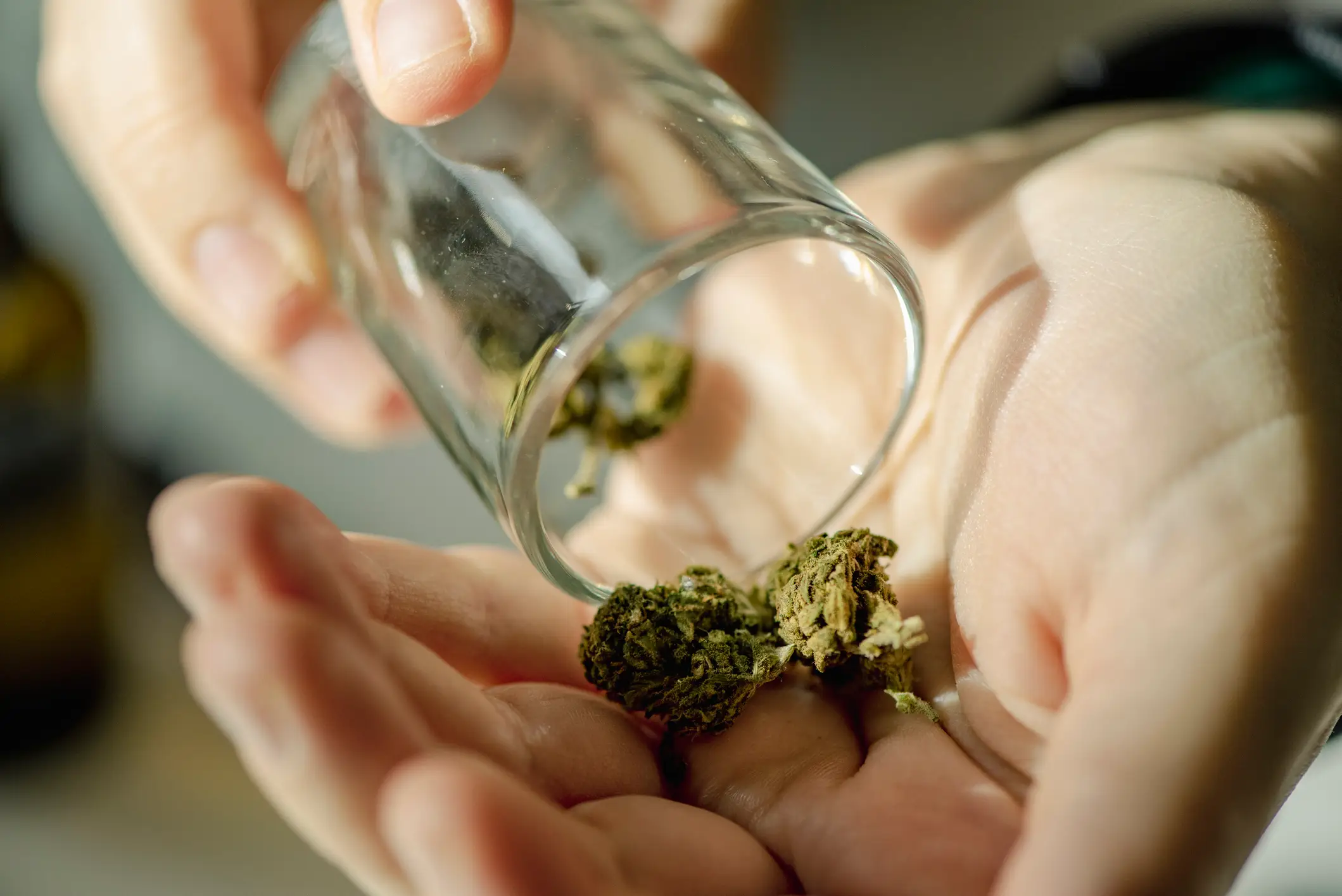
The study found that there are far less health effects caused by weed compared to alcohol (Getty Stock Image)
Is smoking weed worse than drinking alcohol?
It’s the question on everyone’s lips, as there wasae belief in the late 20th century that regular cannabis smoking could affect the respiratory systemsimilarlyr to tobacco smoke.
It has since been found in case-control studies that higher rates of chronic bronchitis have been found in regular weed smokers, including those who do not use tobacco.
While psychotic symptoms have been linked with cannabis use, this is one of the known adverse effects of the drug, especially if you smoke from a young age, compared to the overarching health effects of alcohol.
Advocates of cannabis use often highlight that the drug isn’t known to cause fatal overdoses, due to it not having depressant effects like alcohol and even opioids.
In fact, according to Asbridge, Hayden, & Cartwright (2012), cannabis intoxication only modestly increases road accident risk, compared to alcohol.
It should be noted that these findings are yet to be proved true by further evidence, with there simply not being enough data and legitimate studies to draw a straightforward conclusion.

RIVER OF GOODS Stained Glass Bird Accent Lamp - 8" W x 13.5" H - Tiffany Style Table Lamps for Home, Office Desk, Bedroom, Nightstand - Blue Jay Decor
(as of March 3, 2026 16:43 GMT +00:00 - More infoProduct prices and availability are accurate as of the date/time indicated and are subject to change. Any price and availability information displayed on [relevant Amazon Site(s), as applicable] at the time of purchase will apply to the purchase of this product.)
RIVER OF GOODS Stained Glass Magna Carta LED Ceiling Fan - 52" L x 52" W - Tiffany Style - Flush Mount Ceiling Fan with Remote - Teal
(as of March 3, 2026 16:43 GMT +00:00 - More infoProduct prices and availability are accurate as of the date/time indicated and are subject to change. Any price and availability information displayed on [relevant Amazon Site(s), as applicable] at the time of purchase will apply to the purchase of this product.)
White Leaf Provisions Organic Purees / Baby Food Pouches - Fruits, Veggies & Grains, Toddler snack, Regeneratively Farmed, No Added Sugar, Non-GMO, BPA-Free Pouches 3.17 oz (Pack of 24, Mango + Carrot + Banana + Pear)
$70.37 (as of March 3, 2026 16:43 GMT +00:00 - More infoProduct prices and availability are accurate as of the date/time indicated and are subject to change. Any price and availability information displayed on [relevant Amazon Site(s), as applicable] at the time of purchase will apply to the purchase of this product.)
Fire Blanket - 1500F CE Certified Emergency Fire Blanket for Home and Kitchen. 500GSM Fabric & 0.5mm Thick - 100% Fiberglass Fire Extinguisher for Car,Warehouse Office - 2pc (47x47 inches) by Supa Ant
$53.45 (as of March 3, 2026 16:43 GMT +00:00 - More infoProduct prices and availability are accurate as of the date/time indicated and are subject to change. Any price and availability information displayed on [relevant Amazon Site(s), as applicable] at the time of purchase will apply to the purchase of this product.)