The Shocking Truth Behind the Great Vibrator Myth That Nobody Told You

Ever wondered how a humble mechanical device went from curing “female hysteria” in Victorian times to becoming one of womankind’s cheekiest bedside companions? Strap in, because the story you’ve heard—a tale of doctors blissfully ignorant of female orgasms, furiously massaging away “hysteria” with handy vibrators—is a seductive myth that’s buzzed through popular culture like a well-loved gossip… but it’s completely, utterly false. Yes, the charming little gadget known by many funny nicknames—from “Electrical Banana” to “Battery Operated Boyfriend”—did indeed emerge in the Victorian era, but not in the scandalously salacious way that history textbooks and Hollywood fancy. In fact, this tale was spun by a single historian’s creative interpretations and went unchallenged for over 20 years! So, what really happened behind the closed doors of those 19th-century doctor’s offices? And why did it take so long for the truth to surface? Prepare for a deep dive into the scandalous, often ridiculous, and ultimately revealing saga of the great vibrator myth and its real origins that may just make you question everything you thought you knew about this buzzing icon of pleasure and progress.
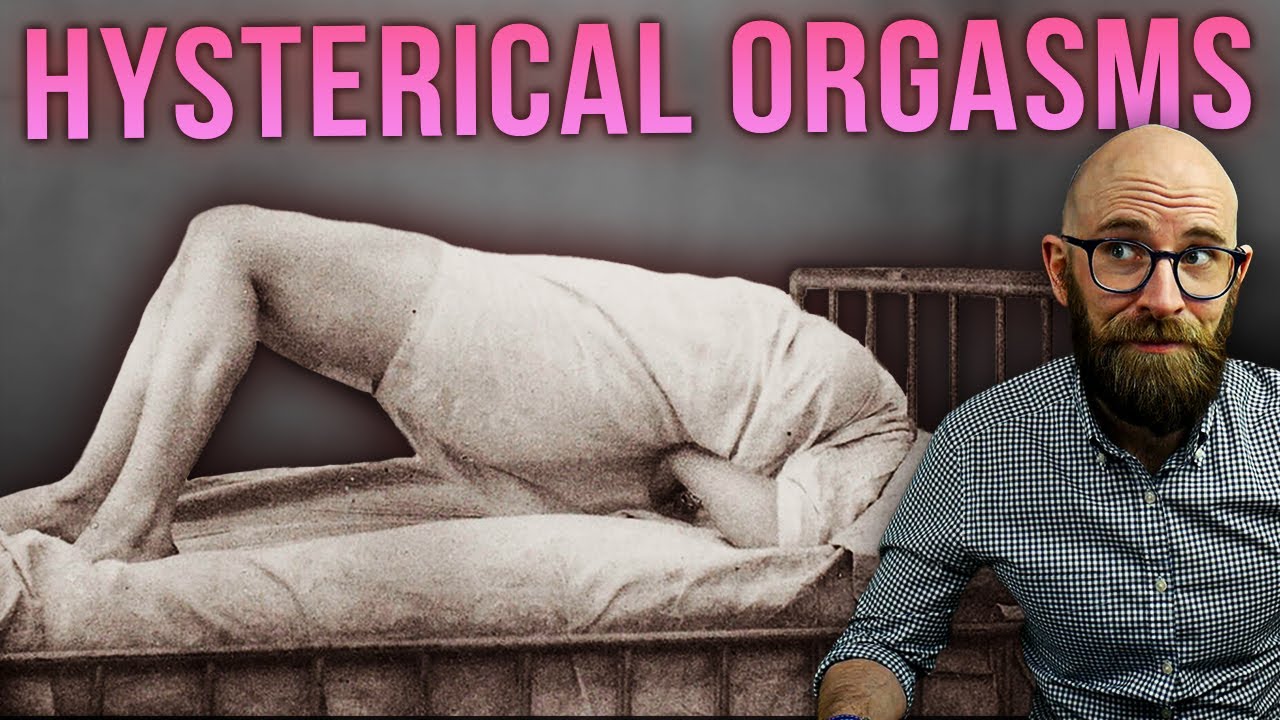 Selfie stick. Electrical banana. Pocket pleaser. Magic wand. Divorce maker. Buzz Nightgear. Battery Operated Boyfriend. These are but a few colourful euphemisms for womankind’s best friend, found in millions of nightstand drawers across the globe: the vibrator. If you are a connoisseur of strange product origins then you’ve likely heard the quirky and unlikely story of the vibrator’s creation, which goes something like this: during the Victorian era, women were regularly diagnosed with female hysteria, a catch-all condition covering everything from fainting, insomnia, irritability, nervousness, or excessive sexual desire – really, any inconvenient symptom a woman could exhibit. The most popular treatment for female hysteria was the pelvic or clitoral massage, performed by a doctor in a clinical setting. Being completely ignorant of the female orgasm, doctors dismissed the resulting shudders and moans of ecstasy as mere “paroxysms”, maintaining that as no vaginal penetration was involved, pelvic massage had nothing to do with sex.
As the popularity of this treatment exploded, doctors devised various mechanical vibrating machines to relieve their aching fingers and wrists, speed up the massage process, and allow them to service many more patients per day. And thus, an iconic sex toy was accidentally born.
It’s an entertaining story, one which has been told and retold in countless books, documentaries, and even scientific papers, and inspired several works of popular entertainment including Sarah Ruhl’s award-winning 2009 stage play In the Next Room and the 2011 film Hysteria starring Maggie Gyllenhaal and Jonathan Pryce.
It is also completely false without a shred of evidence backing any of it. Something only extremely recently revealed.
That’s right: despite being widely reported as historical truth, the popular account of the vibrator’s creation is, in fact, a fantasy, concocted by a single historian based on dubious interpretations of historical records. Yet this narrative has remained largely unchallenged for more than two decades since, exposing worrying truths about how falsehoods can spread through popular culture and how academic research is fact-checked and published.
This is the scandalous story of the great vibrator myth.
The popular tale of the vibrator’s unlikely origins first appeared in the 1999 book The Technology of Orgasm by American historian Rachel Maines. The book proved hugely popular upon its release and received multiple awards, including the American Historical Association’s Herbert Feis Prize for “distinguished contributions to public history,” as well as the the American Foundation for Gender and Genital Medicine and Science or AFGGMS Science and Biennial Book Awards. While controversial at first, Maines’s conclusions have since become near-universally accepted, being cited in dozens of academic papers and books, popular histories, and sex manuals; and directly inspiring dramatic works like the aforementioned In the Next Room and Hysteria.
Yet despite reviewers praising the book for opening up an entirely new area of historical inquiry, in the years following The Technology of Orgasm’s publication, few researchers made any attempt to replicate or expand upon Maine’s research. That is, until 2018, when Hallie Lieberman and Eric Schatzberg, historians from the Georgia Institute of Technology, decided to examine the sources cited in Maine’s book. As Lieberman later stated:
“From what I knew of the history of sexuality, it sounded unlikely that doctors would be [regularly performing pelvic massages]. When I checked the sources, that was when I first really thought, okay, there’s something up with this.”
What Lieberman and Schatzberg discovered was shocking. As they bluntly state in their 2018 paper A Failure of Academic Quality Control: The Technology of Orgasm, published in the Journal of Positive Sexuality:

Rhythm Superfoods Cripsy Beet Chips, Salted, Organic and Non-GMO, Vegan/Gluten-Free Superfood Snacks, 1.4 Oz (Pack of 4)
(as of March 3, 2026 16:43 GMT +00:00 - More infoProduct prices and availability are accurate as of the date/time indicated and are subject to change. Any price and availability information displayed on [relevant Amazon Site(s), as applicable] at the time of purchase will apply to the purchase of this product.)
RIVER OF GOODS Farmhouse LED Ceiling Fan - 52" L x 52" W - Metal Caged Fixture - Rich Barnwood/Light Driftwood Fan Blades
(as of March 3, 2026 16:43 GMT +00:00 - More infoProduct prices and availability are accurate as of the date/time indicated and are subject to change. Any price and availability information displayed on [relevant Amazon Site(s), as applicable] at the time of purchase will apply to the purchase of this product.)
RIVER OF GOODS Stained Glass Bird Accent Lamp - 8" W x 13.5" H - Tiffany Style Table Lamps for Home, Office Desk, Bedroom, Nightstand - Blue Jay Decor
(as of March 3, 2026 16:43 GMT +00:00 - More infoProduct prices and availability are accurate as of the date/time indicated and are subject to change. Any price and availability information displayed on [relevant Amazon Site(s), as applicable] at the time of purchase will apply to the purchase of this product.)
Joking Hazard Enlarged Box Empty Box for Card Storage
$12.00 (as of March 3, 2026 16:43 GMT +00:00 - More infoProduct prices and availability are accurate as of the date/time indicated and are subject to change. Any price and availability information displayed on [relevant Amazon Site(s), as applicable] at the time of purchase will apply to the purchase of this product.)
















Post Comment