The Shocking Truth Behind the Great Vibrator Myth That Nobody Told You
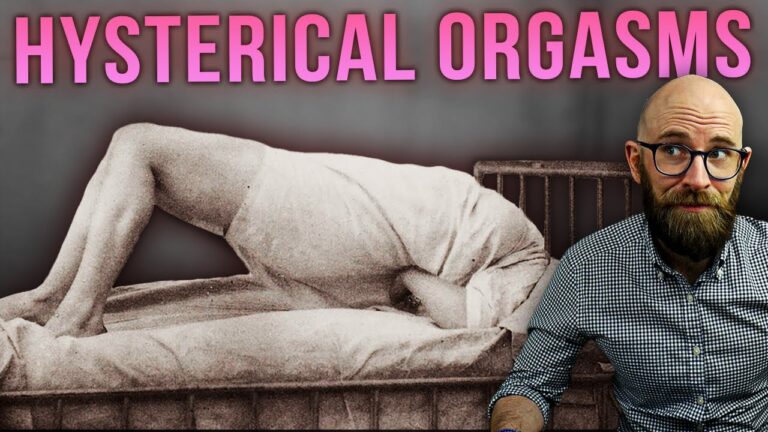
Others, like physician Frederick Hollick and psychiatrist L.E. Emerson, blamed hysteria on excessive sexual desire, promiscuity, masturbation, or sexual abuse in childhood.
Treatments for hysteria also become more varied and extreme. For instance, in the 1850s American physician Silas Weir Mitchell began prescribing the “rest cure”, which confined the patient to bed for weeks or even months on end. While this might not sound too bad, it is worth noting that patients were also forbidden from reading, writing, talking, or engaging their minds in any way, causing many to quickly and inexorably lose their sanity. Such was the case with American writer Charlotte Perkins Gilman who, after being prescribed the rest cure by Dr. Mitchell himself, recounted her experiences in the classic 1892 horror short story The Yellow Wallpaper.
But it could always be worse; in extreme cases, women diagnosed with hysteria could be forcibly committed to psychiatric institutions and even subjected to surgical interventions including hysterectomy and clitorectomy – and to learn more about the horrifying history of anti-masturbation measures and discover whether flicking the bean or flogging the dolphin actually does any harm, please check out our previous video Is ‘Choking the Chicken’ Actually Bad For You?
Thankfully, advancements in psychiatry along with the early feminist movement eventually caused female hysteria to fall out of fashion as a legitimate medical diagnosis. However, as late as 1968, the condition was still included in the second edition of the American Psychiatric Association’s Diagnostic and Statistical Manual of Mental Disorders – AKA the DSM-II. It would not be removed until the publication of the DSM-III in 1980.
It is here, however, where actual medical history and the narrative presented in The Technology of Orgasm part ways. In their 2018 paper, Hallie Lieberman and Eric Schatzberg break down Maines’s thesis into three main arguments before debunking each in turn. These are: a) pelvic massage was a long-established and widely-practiced treatment for female hysteria; b) Victorian doctors were unaware of the female orgasm or the role of the clitoris, and thus considered pelvic massage non-sexual since it involved no penetration; and c) the mechanical vibrator was developed specifically to make pelvic massage easier and more efficient.
As noted, in each case, Lieberman and Schatzberg found shockingly little hard evidence for Maines’s claims, writing that:
“If vibrating the clitoris were indeed a standard medical therapy in the late 19th and early 20th centuries, one would expect direct historical evidence of the practice, either from proponents or critics. Medical discourse at the time was very contentious. Physicians regularly lauded and attacked therapies that used new technologies, especially electrical devices, so historians would expect to find debates about clitoral vibration in medical journals. Vibrators were widely promoted for other medical therapies in this era. The American Medical Association was, in fact, quite critical of such vibrator treatments. Furthermore, any medical procedure that could have been perceived as sexual would surely have attracted the attention of censorious moralists. Yet Maines insists that these treatments were not seen as sexual, so according to her own logic, physicians would have had no reason to conceal the practice. Sometimes absence of evidence is really evidence of absence.”
And Lieberman and Schatzberg are far from alone in their criticism. Previously, classical historian Helen King of the Open University London questioned the claim that pelvic massage was a long-established treatment for hysteria, arguing that Maines had cherry-picked and misinterpreted many of her sources:
“Maines wants a line of history going all the way back to the time of Hippocrates, so she was determined to find doctors massaging their female patients to orgasm in the earliest written sources…but a Roman satire, describing ‘anointers’ at the baths who masturbate a woman to orgasm, is very different from saying doctors really did this. It’s a satire – it’s supposed to be outrageous… [Maines also does this by] reading a description about what happens when the womb is rubbed during intercourse and making that into a passage about masturbation by a doctor.”
Similarly, many sources which purportedly demonstrate the ubiquity of pelvic massage in the 18th and 19th centuries actually describe very different therapies:
“…medical sources that describe pelvic and gynecological massage in detail show that the practice was not sexual, did not involve the clitoris, and did not produce an orgasm. The term “pelvic massage” usually meant uterine massage, a treatment frequently used for conditions such as dysmenorrhea or uterine prolapse….Furthermore, none of her English-language sources even mentions production of “paroxysms” by massage or anything else that could remotely suggest an orgasm. This lack of evidence by itself undermines the core of her claim.”
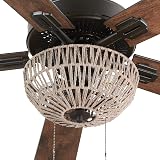
RIVER OF GOODS LED Boho Ceiling Fan with Hand Woven Brown/Natural Rope - Macrame Knot Work and Hemp Rope Style Eclectic Cottage Decor - 52" L x 52" W - Rich Barnwood/Light Driftwood Fan Blades
(as of March 3, 2026 16:43 GMT +00:00 - More infoProduct prices and availability are accurate as of the date/time indicated and are subject to change. Any price and availability information displayed on [relevant Amazon Site(s), as applicable] at the time of purchase will apply to the purchase of this product.)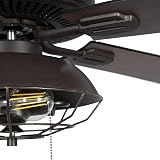
RIVER OF GOODS Farmhouse LED Ceiling Fan - 52" L x 52" W - Metal Caged Fixture - Rich Barnwood/Light Driftwood Fan Blades
(as of March 3, 2026 16:43 GMT +00:00 - More infoProduct prices and availability are accurate as of the date/time indicated and are subject to change. Any price and availability information displayed on [relevant Amazon Site(s), as applicable] at the time of purchase will apply to the purchase of this product.)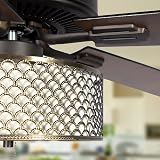
RIVER OF GOODS Mid-Century Modern Transitional LED Bronze Chrome Ceiling Fan - 52" L x 52" W - Rich Barnwood/Light Driftwood Fan Blades - Metallic Ceiling Fan with Light and Fabric Shade
(as of March 3, 2026 16:43 GMT +00:00 - More infoProduct prices and availability are accurate as of the date/time indicated and are subject to change. Any price and availability information displayed on [relevant Amazon Site(s), as applicable] at the time of purchase will apply to the purchase of this product.)
Supa Ant Silicone Fire Cloak for Fireproof Suit Emergency Blanket for Home and Kitchen - Emergency Poncho as Heat Shield Blanket -Fire Resistant Hoodie-Escape Suit with Cape and Hood (70x55 in.-Large)
$83.99 (as of March 3, 2026 16:43 GMT +00:00 - More infoProduct prices and availability are accurate as of the date/time indicated and are subject to change. Any price and availability information displayed on [relevant Amazon Site(s), as applicable] at the time of purchase will apply to the purchase of this product.)

















Post Comment