The Shocking Truth Behind the Great Vibrator Myth That Nobody Told You

If, as Maines claims, Victorian doctors saw vaginal penetration as a prerequisite for sexual activity, then such attachments would not have been so widely and openly used. That they were, however, strongly suggests that this claim is false – and to learn more about the late 19th/early 20th century fad of electrotherapy and the weird and wonderful devices used to administer this treatment, please check out the video on the subject over on Our Own Devices, the personal channel of this video’s author, Gilles Messier.
In the end, Lieberman and Schatzberg’s paper completely demolishes every major argument made in The Technology of Orgasm. Not only did clitoral massage for the treatment of hysteria not have an extensive history stretching back to antiquity, but it was rarely – if at all – practiced even in the Victorian era. And while vibrators were widely used in Victorian medicine, they were not invented to increase the efficiency of clitoral massage, being used instead to treat other gynaecological ailments. Thus, the amusing and scandalous story of the vibrator’s creation is just that: a story, pieced together from carefully cherry-picked and conveniently misinterpreted sources. It is, in other words, seemingly a work of academic fraud. More on what Maines herself has to say about this in a bit.
But, what, then, is the real story? How did the ubiquitous sex toy we know and – er – love today actually come to be? Most sources which follow Rachel Maines’s narrative credit the invention of the electric vibrator to British physician Joseph Mortimer Granville. In the 2011 film Hysteria, Granville, played by actor Hugh Dancy, is shown creating the device to more efficiently “service” his patients and later becoming hugely wealthy off his invention. But while Joseph Granville was a real person and did indeed invent an electric vibrator in the 1880s, he did not use his device for the treatment of hysteria, in fact explicitly warning against this application. Rather, he used it almost exclusively on men to treat a wide variety of ailments from chronic pain to deafness. The only sexually-related application mentioned in any of his writings is the stimulation of the perineum – the area between the genitals and anus – to treat male impotence.
Further, according to Maines’s narrative, the legitimate medical use of these devices provided vibrator manufacturers with a plausible cover under which to market their wares. As Lieberman and Schatzberg explain:
“[Maines] argues that the electromechanical vibrator was able to become a mainstream consumer appliance in the early 1900s because it was considered to be a medical device, not a sexual one. The vibrator’s sexual uses remained hidden for over two decades until the late 1920s, when stag films began showing women using vibrators for sexual pleasure. As a consequence, vibrators lost their “social camouflage… as a home and professional medical instrument,” doctors stopped using them in their practice, and mainstream companies stopped marketing them.”
The truth, however, is much more nuanced. When the first mechanical vibrators were introduced in the 1880s, they were touted as a miraculous technological panacea capable of treating hundreds of ailments including insomnia, paralysis, neuralgia, epilepsy, tuberculosis, sciatica, lumbago, gout, deafness, vomiting, constipation, impotence, haemorrhoids, and even wrinkles. They remained popular with all manner of medical practitioners until 1915, when the American Medical Association issued a public statement declaring vibrators marketed for medical use to be a “a delusion and a snare”. Faced with the collapse of the lucrative medical market, vibrator manufacturers pivoted to selling their wares directly to the public. Early 20th century newspapers and magazines were packed with ads for personal vibrators of all shapes and sizes. At the time, obscenity laws such as the 1873 Comstock Act forbade manufacturers from advertising sexually-related products, forcing them to focus instead on the health and lifestyle benefits of their wares. Early vibrator advertisements often featured glamorous-looking women massaging themselves in bed or the bath, with the ad copy for the Arnold Vibrator promising:
“Every woman can have a faultless complexion and youthful, finely proportioned figure. There is no further need of powder, paint, pads, or other deceptions.”
And while many of these products were sold with dildo-like attachments, these were strictly marketed for treating uterine complaints and other non-sexual uses….
However, as time went on, manufacturers grew more and more explicit in their marketing, filling their advertisements with images of shirtless men and women in low-cut tops with coy taglines like “Invented by a woman who knows a woman’s needs.” Of course, physicians and moral guardians were perfectly aware of what these products were being used for behind closed doors, with one 1912 men’s advice book warning that:
“Various electric vibrators have been abused by the unscrupulous … to give vibratory massage of the generative organs … a sensation similar to that of masturbation.”
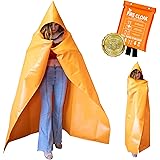
Supa Ant Silicone Fire Cloak for Fireproof Suit Emergency Blanket for Home and Kitchen - Emergency Poncho as Heat Shield Blanket -Fire Resistant Hoodie-Escape Suit with Cape and Hood (70x55 in.-Large)
$83.99 (as of March 3, 2026 16:43 GMT +00:00 - More infoProduct prices and availability are accurate as of the date/time indicated and are subject to change. Any price and availability information displayed on [relevant Amazon Site(s), as applicable] at the time of purchase will apply to the purchase of this product.)
Promixx FORM Sports Water Bottle - Premium BPA Free Water Bottle for Fitness Sports & Outdoors - Sustainable Drinks Bottle with Measurement Markers and Leakproof Lid - 760ml / 26oz (Midnight Blue)
$19.99 (as of March 3, 2026 16:43 GMT +00:00 - More infoProduct prices and availability are accurate as of the date/time indicated and are subject to change. Any price and availability information displayed on [relevant Amazon Site(s), as applicable] at the time of purchase will apply to the purchase of this product.)
Supa Ant 6x8ft. Welding Blanket Fireproof (Pack of 2) - Heavy Duty Weld Fire Blanket Tools - Welders Cover for Men Curtain with Gloves - Large Welding Gear for Welder Accessories
(as of March 3, 2026 16:43 GMT +00:00 - More infoProduct prices and availability are accurate as of the date/time indicated and are subject to change. Any price and availability information displayed on [relevant Amazon Site(s), as applicable] at the time of purchase will apply to the purchase of this product.)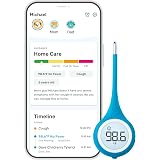
Kinsa Smart,Fever, Digital Medical Baby, Kid and Adult Termometro - Accurate, Fast, FDA Cleared Thermometer for Oral, Armpit or Rectal Temperature Reading - QuickCare
$24.98 (as of March 3, 2026 16:43 GMT +00:00 - More infoProduct prices and availability are accurate as of the date/time indicated and are subject to change. Any price and availability information displayed on [relevant Amazon Site(s), as applicable] at the time of purchase will apply to the purchase of this product.)


















Post Comment