The Shocking Truth Behind the Great Vibrator Myth That Nobody Told You

But thanks to the narrow tightrope of plausible deniability vibrator manufacturers managed to walk, there was nothing the prudes could do to stop this illicit trade. Indeed, when in the 1950s the U.S. Food and Drug Administration launched a major campaign against personal vibrators, their concerns had nothing to do with masturbation. Rather, they sought to crack down on the outlandish and unsubstantiated health benefits still being claimed by vibrator manufacturers.
But thanks to obscenity laws and conservative social attitudes, it was not until the sexual revolution of the 1960s and 70s that women began to more freely talk about masturbation and vibrators. In the late 1960s, New York sex educator and artist Betty Dodson began hosting women-only masturbation workshops to help women regain the sexual knowledge long denied them by society, writing in 1974 that:
“I have found that the vibrator gives me the strongest and most consistent form of stimulation and is especially good for women who have never experienced orgasm.”
One of the vibrators used in Dodson’s workshops, the Hitachi Magic Wand, went on to become one of the most popular and recognizable sex toys in the world, being ranked the “No.1 Greatest Gadget of All Time” by Mobile Magazine in 2005. Today, the discerning consumer can choose from thousands of exotic and sophisticated vibrators to suit any taste, from internally-inserted “love eggs” and pocket-sized “bullets” to larger, more elaborate models like the “rabbit” with attachments for both vaginal and clitoral stimulation. Many models feature wireless or USB charging, different vibration intensities and rhythms, and can even be be synched to a user’s favourite songs – including, of course, “Good Vibrations.” But in many parts of the world – including the United States – social progress has lagged far behind technological progress. For instance, several U.S. states including Texas, Louisiana, and Alabama both have “obscene devices laws” prohibiting devices “…designed or marketed as useful primarily for the stimulation of human genital organs” carrying penalties of up to $10,000 and one year in jail. Vibrators also remain illegal in many nations including the United Arab Emirates, Saudi Arabia, Thailand, Malaysia, India, and Vietnam. For this reason, manufacturers carry on the age-old tradition of marketing their products as “personal massagers.”
Getting back to the main subject of this video, given how radically the real history of the vibrator deviates from the narrative presented in The Technology of Orgasm, why did it take nearly two decades for anyone to scrutinize and debunk Rachel Maines’s claims? In the conclusion of their 2018 paper, Lieberman and Schatzberg attempt to give an explanation:
“Our answer to this question must be somewhat speculative. Fundamental to its reception is the book’s sex appeal. It tells a scandalous story of transgressed boundaries, of dimwitted doctors providing women with sexual satisfaction. Maines has historicized the doctor-patient fantasy, a staple of erotica.Yet, unlike the porn fantasy, Maines’ narrative can be discussed without social reproach because of its academic respectability.
Yet the book’s appeal isn’t just sexual. Maines’ story fits narratives of progress in sexual knowledge, allowing readers to see themselves as worldly sophisticates in contrast to the clueless, desexualized Victorians. Physicians look particularly ignorant in this account, having no clue what the clitoris was, let alone an orgasm. Maines also portrays women as victims of profit-hungry physicians. Such victim narratives were a staple of feminists critiques of medical care in the 1970s. Women have no real agency in Maines’ account, as the historical actors are all male physicians, and women’s voices are completely absent. However, readers can still view the female patients as heroes who subvert patriarchy by procuring orgasms under the guise of medical treatment. The story is thus paradoxical—women are victims, but the tools used to victimize them bring them orgasms, a delicious irony.”
The salacious allure of Maines’s narrative is seconded by Helen King, who writes:
“[That story] just appeals to people now. It’s like some porn movie scenario with the doctor that – nudge, nudge – knows what the problem really is.”
In other words, Maines’s narrative was just too good to not be true so people ate it up.
But the general public falling for an entertaining story is one thing; the fact that it took nearly twenty years for any scholars to fact-check Maines’s book speaks to deeper issues within the field of academic history. As Lieberman and Schatzberg argue:
“The success of Technology of Orgasm thus serves as a cautionary tale for how easily
falsehoods can become embedded in qualitative fields….The success of her book suggests that academics rarely check each others’ facts carefully, especially when repeating stories that they want to be true.
…[Indeed] We believe that Technology of Orgasm is not an isolated case. The same pressures to
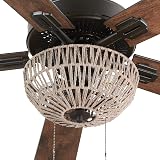
RIVER OF GOODS LED Boho Ceiling Fan with Hand Woven Brown/Natural Rope - Macrame Knot Work and Hemp Rope Style Eclectic Cottage Decor - 52" L x 52" W - Rich Barnwood/Light Driftwood Fan Blades
(as of March 3, 2026 16:43 GMT +00:00 - More infoProduct prices and availability are accurate as of the date/time indicated and are subject to change. Any price and availability information displayed on [relevant Amazon Site(s), as applicable] at the time of purchase will apply to the purchase of this product.)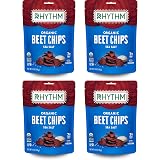
Rhythm Superfoods Cripsy Beet Chips, Salted, Organic and Non-GMO, Vegan/Gluten-Free Superfood Snacks, 1.4 Oz (Pack of 4)
(as of March 3, 2026 16:43 GMT +00:00 - More infoProduct prices and availability are accurate as of the date/time indicated and are subject to change. Any price and availability information displayed on [relevant Amazon Site(s), as applicable] at the time of purchase will apply to the purchase of this product.)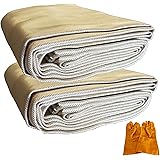
Supa Ant 6x8ft. Welding Blanket Fireproof (Pack of 2) - Heavy Duty Weld Fire Blanket Tools - Welders Cover for Men Curtain with Gloves - Large Welding Gear for Welder Accessories
(as of March 3, 2026 16:43 GMT +00:00 - More infoProduct prices and availability are accurate as of the date/time indicated and are subject to change. Any price and availability information displayed on [relevant Amazon Site(s), as applicable] at the time of purchase will apply to the purchase of this product.)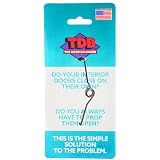
The Door Balancer Eliminates The Need for Door Props, Door Stops and Door Wedges
$7.99 (as of March 3, 2026 16:43 GMT +00:00 - More infoProduct prices and availability are accurate as of the date/time indicated and are subject to change. Any price and availability information displayed on [relevant Amazon Site(s), as applicable] at the time of purchase will apply to the purchase of this product.)
















Post Comment