The Shocking Truth Behind the Great Vibrator Myth That Nobody Told You
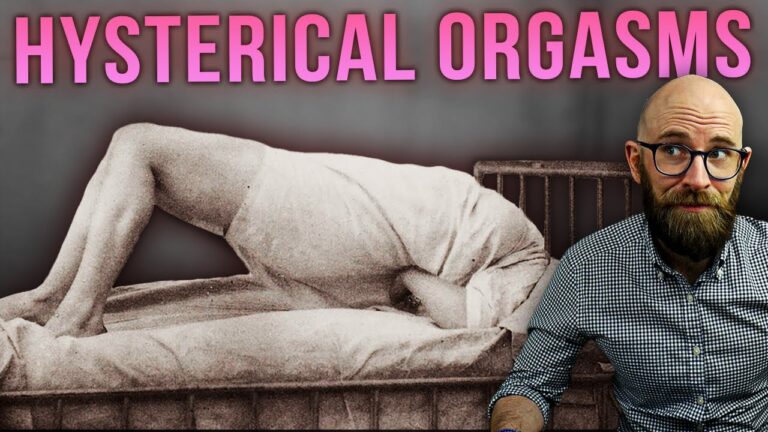
publish that produce flawed research in the natural sciences and quantitative social sciences also exist in the humanities and qualitative social sciences. In the humanities and qualitative social sciences, these pressures encourage narrow, banal, and irrelevant research, often disguised by horrid prose and vapid theorizing…
There are few safeguards against flawed empirical research in the humanities. Scholarly
publishing rarely involves any sort of fact checking. Peer reviewers and readers for academic
presses are not expected to confirm a manuscript’s empirical claims, beyond what they already
know. Book reviewers likewise rarely examine citations or sources. Far more fact-checking
occurs in a typical magazine article than in a scholarly publication, despite complaints from
journalists about a decline in the practice. Because fact-checking is not a routine
practice in scholarly publication, factual challenges to scholarship, particularly in the field of
history, are rare, and can be perceived as personal attacks rather than part of the scholarly
Process…
Unless a spirit of fact checking and fearless critique is built into the culture of scholarly publishing, false historical narratives like Maines’ will continue to be published and even praised.”
In many ways, the unchallenged publication of The Technology of Orgasm resembles an inadvertent version of the Sokal Affair, an infamous scholarly hoax which similarly revealed a disturbing lack of academic rigour in the humanities. In 1996, Alan Sokal, a professor of physics at New York University and University College London, submitted a deliberately nonsensical academic paper to the journal Social Text to find out whether:
“…a leading North American journal of cultural studies…[would] publish an article liberally salted with nonsense if (a) it sounded good and (b) it flattered the editors’ ideological preconceptions.”
As expected, the paper, titled Transgressing the Boundaries: Towards a Transformative Hermeneutics of Quantum Gravity, was not subjected to peer review by an expert and duly appeared in the journal’s spring/summer issue. Three weeks later, Sokal published an article in the magazine Lingua Franca revealing the paper to be a hoax, causing much embarrassment and controversy.
Speaking of embarrassment, in response to Lieberman and Schatzberg’s paper, Rachel Maines expressed surprise that it took twenty years for someone to challenge her claims, stating in an interview with The Atlantic that:
“What I said was that this was an interesting hypothesis, and as [Lieberman] points out — correctly, I think — people fell all over it. It was ripe to be turned into mythology somehow. I didn’t intend it that way, but boy, people sure took it, ran with it.”
But Lieberman, Schatzberg, and other critics have rebutted this excuse, citing the definitive language used in The Technology of Orgasm as evidence that Maines intended her conclusions to be more than just an “interesting hypothesis.”
But so what, you might ask? After all, popular history is full of distorted, mythologized, or downright false facts? Well, unfortunately, our interpretation of social and cultural history can have a profound impact on our everyday lives, even hundreds of years after the fact. For example, the Technology of Orgasm was directly cited in two recent legal cases challenging the constitutionality of state laws banning the sale of sex toys: State of Louisiana vs. Christine D. Brenan in 2000 and Williams v. Prior in 2002. In the former case, Maines’s purported historical evidence convinced the court that:
“…the state’s obscene-devices statute fails rational-basis review under the Fourteenth Amendment of the U.S. Constitution…[and that] the legislature cannot make a device automatically obscene merely through the use of labels.”
While in the latter, the judge ruled that:
“That evidence has convinced this court that there exists a substantial history, legal tradition, and contemporary practice of deliberate state non-interference in the private, consensual, sexual relationships of married persons and unmarried adults.”
However, if Maines’s historical narrative is shown to be false, it is possible that these rulings may be overturned in the future.
But more fundamentally, as Hallie Lieberman writes:
“[The] myth isn’t harmless. It’s a fantasy that contributes to the ways we still misunderstand female sexuality and that perpetuates harmful stereotypes that continue to resonate in our laws and attitudes.”
Expand for References
Lieberman, Hallie & Schatzberg, Eric, A Failure of Academic Quality Control: The Technology of Orgasm, Journal of Positive Sexuality, August 2018, http://journalofpositivesexuality.org/wp-content/uploads/2018/08/Failure-of-Academic-Quality-Control-Technology-of-Orgasm-Lieberman-Schatzberg.pdf

RIVER OF GOODS Alabaster LED Mesh Caged Ceiling Fan - 52" L X 52" W - White/Oak Wood-Grain Blades
(as of March 3, 2026 16:43 GMT +00:00 - More infoProduct prices and availability are accurate as of the date/time indicated and are subject to change. Any price and availability information displayed on [relevant Amazon Site(s), as applicable] at the time of purchase will apply to the purchase of this product.)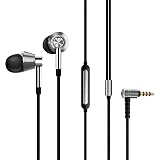
1MORE Triple Driver in-Ear Earphones Hi-Res Headphones with High Resolution, Bass Driven Sound, MEMS Mic, in-Line Remote, High Fidelity for Smartphones/PC/Tablet - Silver
(as of March 3, 2026 16:43 GMT +00:00 - More infoProduct prices and availability are accurate as of the date/time indicated and are subject to change. Any price and availability information displayed on [relevant Amazon Site(s), as applicable] at the time of purchase will apply to the purchase of this product.)
RIVER OF GOODS Coastal 52 Inch Wooden Bead LED Ceiling Fan, Cream
(as of March 3, 2026 16:43 GMT +00:00 - More infoProduct prices and availability are accurate as of the date/time indicated and are subject to change. Any price and availability information displayed on [relevant Amazon Site(s), as applicable] at the time of purchase will apply to the purchase of this product.)
Fire Blanket - 1500F CE Certified Emergency Fire Blanket for Home and Kitchen. 500GSM Fabric & 0.5mm Thick - 100% Fiberglass Fire Extinguisher for Car,Warehouse Office - 2pc (47x47 inches) by Supa Ant
$53.45 (as of March 3, 2026 16:43 GMT +00:00 - More infoProduct prices and availability are accurate as of the date/time indicated and are subject to change. Any price and availability information displayed on [relevant Amazon Site(s), as applicable] at the time of purchase will apply to the purchase of this product.)


















Post Comment