Unveiled in Ancient Laodicea: The Enigmatic Marble Head of Hermes That Could Rewrite History
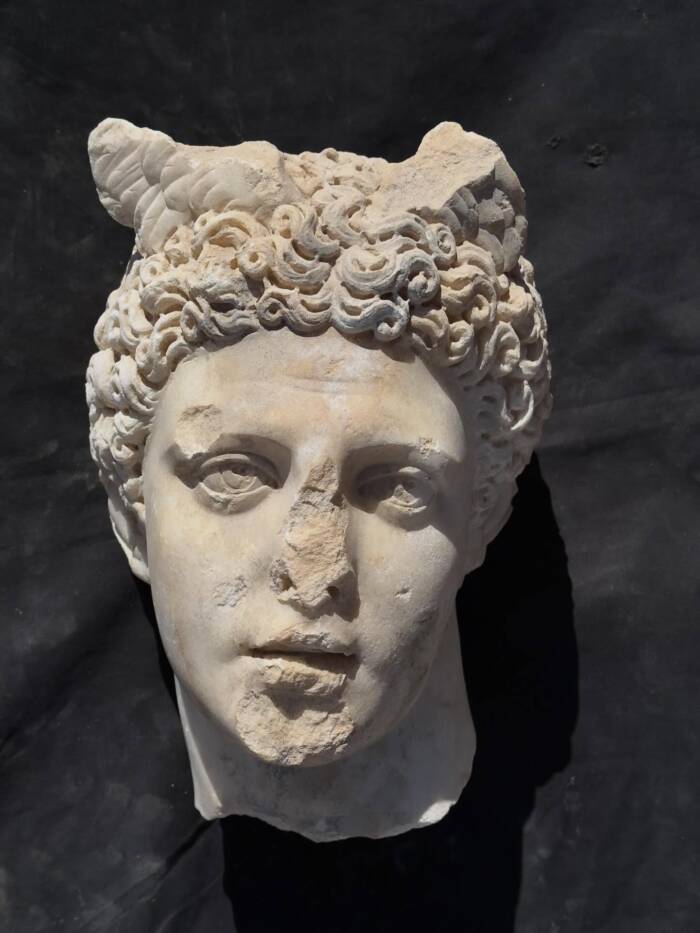
So picture this: digging through the dust and dirt of an ancient Greek city in what’s now Turkey, and bam — you stumble upon the marble head of Hermes, that slick messenger god who also moonlighted as the patron saint of travelers, merchants, and even a few shady characters. This isn’t some tossed-aside trinket — we’re talking about a nearly 1,900-year-old masterpiece likely gracing the entrance of Laodicea’s bouleuterion, the city’s assembly hall where all the political bigwigs hashed out their deals. Makes you wonder — did Hermes keep an eye on those council debates, making sure messages got delivered without getting lost in the shuffle? Laodicea, back in its prime, was no small fry; its wealth and culture rivaled the best of Rome’s powerhouses. Finding this statue is like cracking open a time capsule that screams, “Hey, this city was kind of a big deal!” If ancient gossip intrigues you, and you’re curious how a god’s marble mug ended up overseeing civic drama, then you’re in for a treat.
The statue of Hermes, found in present-day Turkey, likely once adorned the ancient city’s bouleuterion, or assembly house.
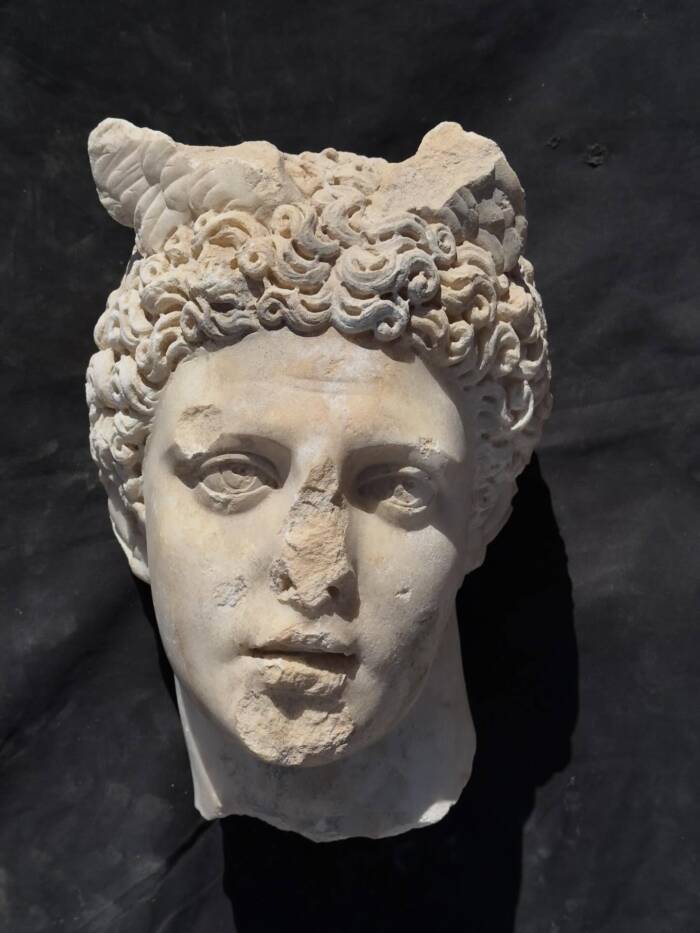
General Directorate of Cultural Heritage and MuseumsThe Hermes head is believed to be roughly 1,900 years old.
During excavations in the ancient Greek city of Laodicea, located in present-day Turkey, archaeologists found themselves face-to-face with a familiar figure: the head of Hermes, a god worshipped by both the Greeks and Romans.
The Hermes statue head, expertly carved and believed to be roughly 1,900 years old, likely once adorned an important civic building in Laodicea. The discovery of the artifact underlines the regional power of Laodicea, which is believed to have been one of the most important ancient cities in Turkey’s Lycus Valley.
The 1,900-Year-Old Hermes Head Found In Laodicea
According to a social media post from Turkey’s General Directorate of Cultural Heritage and Museums, the Hermes statue head was found during excavations overseen by Turkey’s Ministry of Culture and Tourism as part of the country’s “Heritage for the Future” initiative. Archaeologists located the artifact in the entrance corridor of the Laodicea’s bouleuterion, a public building where a civilian council met to discuss the issues of the day.
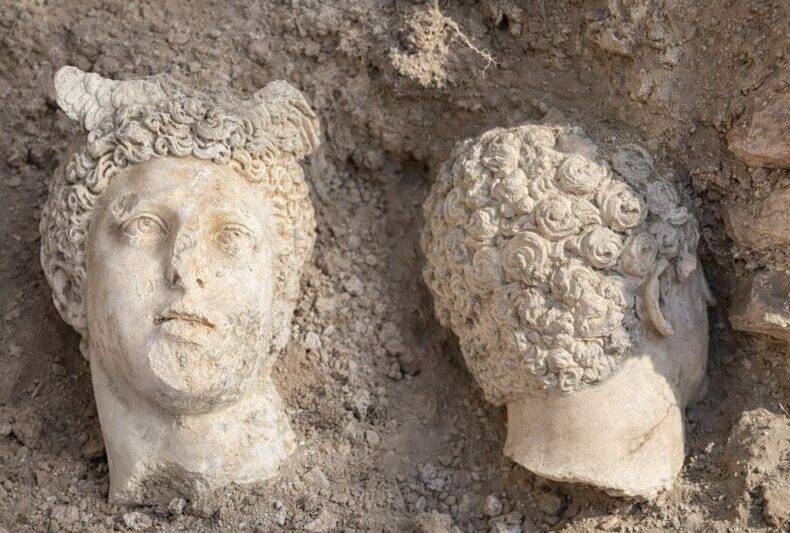
General Directorate of Cultural Heritage and MuseumsThe Hermes head was found near the city’s bouleuterion, suggesting that it once adorned this important civic building.
Based on the style of the Hermes head, a “Hermes Andros” depiction, experts believe that it dates to the second century C.E. It was expertly carved out of white marble from the ancient city of Dokimeion (present-day İscehisar), and archaeologists marveled at the fine details of its eyes, curls, and facial features. But the statue is more than an astounding piece of art.
Its placement, outside an important civic center in Laodicea, is also a nod to the city’s prominence in the ancient world.
The Importance Of Laodicea In Antiquity
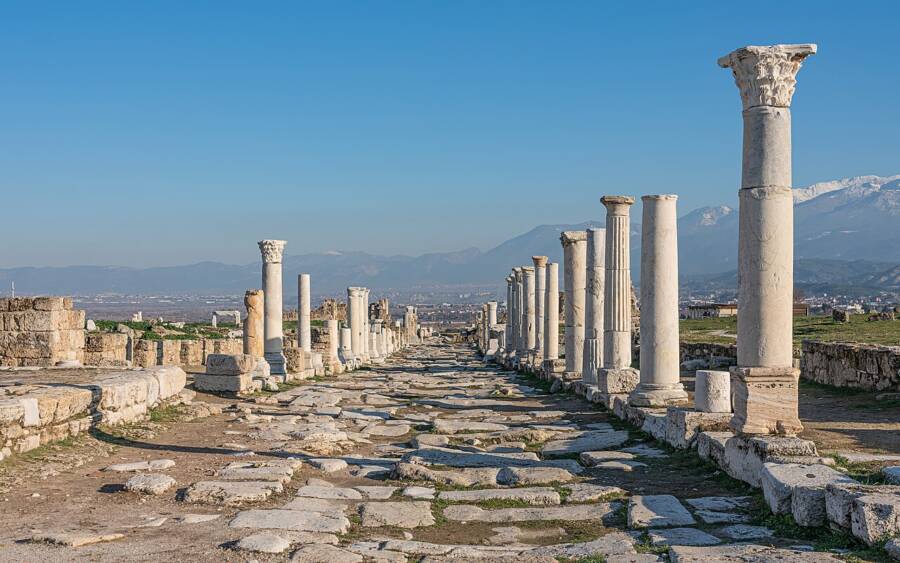
A. Savin/Wikimedia CommonsRuins in the ancient city of Laodicea, once a bustling metropolis in present-day Turkey.
Founded in the third century B.C.E. as a Hellenistic city, Laodicea reached its heyday during the Roman period. During that time, its population soared to an estimated 80,000, and its citizens enjoyed the amenities that came with living in a powerful Roman city. Wealthy from trade, banking, and textiles, Laodicea had baths, stadiums, theaters, and administrative complexes, like the bouleuterion. And its citizens, flush with wealth, were enamored with Greek art. As such, monuments with Greek influence were built in the city.
The Hermes statue seems to be one example of this admiration. Hermes, the herald god of Greeks and Romans who represented messengers, travelers, thieves, and merchants, was also linked to ideas of communication and diplomacy. Thus, the placement of his statue near the entrance of the bouleuterion, a place of civic discussion and decision-making, was apt.
It’s also indicative of Laodicea’s wealth, embrace of contemporary artistic trends, and cultural importance in the Lycus Valley.
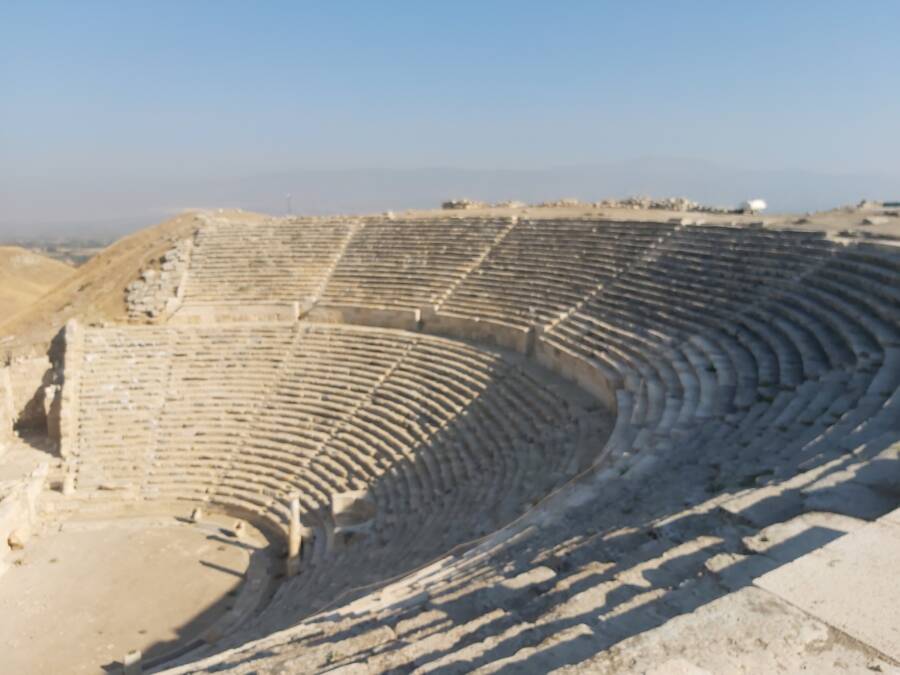
Basak/Wikimedia CommonsAn impressive ancient theater in Laodicea, another indication of the city’s wealth and power in antiquity.
Indeed, the city was so wealthy that it minted its own coins, which depicted Zeus, Asclepius, Apollo, and, later, Roman emperors. After a devastating earthquake in 60 C.E., which virtually destroyed the city, its citizens even rejected financial aid from the Roman emperor Nero, seemingly preferring to pay for the reconstruction out of their own pockets.
Laodicea was also important during the rise of Christianity, and St. John cited the city as the location of one of the “Seven Churches of Asia.” However, the city’s good fortunes did not last forever.
During the late Byzantine period, it was frequently sacked by Turks and Mongols, and the city was abandoned in the 13th century. Since then, only the bone-white ruins that dot the landscape hint at its former greatness.

Rhythm Superfoods Beet Chips Organic and Non GMO Vegan Gluten Free Snacks, Naked, 1.4 Ounce (Pack of 4)
(as of March 3, 2026 16:43 GMT +00:00 - More infoProduct prices and availability are accurate as of the date/time indicated and are subject to change. Any price and availability information displayed on [relevant Amazon Site(s), as applicable] at the time of purchase will apply to the purchase of this product.)
The Door Balancer Eliminates The Need for Door Props, Door Stops and Door Wedges
$7.99 (as of March 3, 2026 16:43 GMT +00:00 - More infoProduct prices and availability are accurate as of the date/time indicated and are subject to change. Any price and availability information displayed on [relevant Amazon Site(s), as applicable] at the time of purchase will apply to the purchase of this product.)
1MORE Triple Driver In-Ear Headphones - Silver - Wired - Adult - In Ear - 18 grams - 90 days limited warranty
(as of March 3, 2026 16:43 GMT +00:00 - More infoProduct prices and availability are accurate as of the date/time indicated and are subject to change. Any price and availability information displayed on [relevant Amazon Site(s), as applicable] at the time of purchase will apply to the purchase of this product.)
RIVER OF GOODS Farmhouse LED Ceiling Fan - 52" L x 52" W - Metal Caged Fixture - Rich Barnwood/Light Driftwood Fan Blades
(as of March 3, 2026 16:43 GMT +00:00 - More infoProduct prices and availability are accurate as of the date/time indicated and are subject to change. Any price and availability information displayed on [relevant Amazon Site(s), as applicable] at the time of purchase will apply to the purchase of this product.)