Unveiling the Truth: How Ancient Structures Defy Time and Spark Endless Debate

This saved time, but it also put workers at risk. For example, the Empire State Building was constructed in just 13 months. During that time, five workers died.
Other impressive projects, such as the Golden Gate Bridge and Brooklyn Bridge, had 11 and 20 deaths respectively. Deaths during construction were so common by the 1930s that according to NPR, it was accepted wisdom that one person would die for every $1 million spent.
Today, improved safety regulations mean that construction sees many fewer deaths than it did even just a few decades ago. These restrictions and regulations extend building times, but they also save lives.
Why Do Renovations Take So Long Today?
On the topic of compliance, many renovations take a long time because older buildings were, despite their detail, much simpler internally.
For example, many older buildings did not require much interior work. By the late 1800s and early 1900s, many buildings would have basic plumbing and electricity — but, apart from windows and walls, that’s about all you’re getting.
When these buildings are renovated, it’s often a complicated task of trying to fit modern systems in structures that really weren’t designed to have them. This could include electricity, HVAC, fire suppression, elevators, data cabling, ADA accessibility, energy code compliance, sprinkler systems, and a whole lot more.
Adding these to any building — let alone a historic building, where there may be both physical and legal hurdles in the way — takes a lot of time.
We Can Still Build Quickly
A final reason why some buildings went up so quickly is that, simply put, everything was close by.
Take, for example, Milwaukee City Hall. It’s an impressive building — it weighs about 41,000 tons, largely due to its structure containing around eight million bricks. But, at that time, Milwaukee was a town with an industrial economy that produced bricks.
The city also had rail and river access, meaning that any materials that couldn’t be obtained locally could simply be ordered and received in a short time from a different part of the country. Contrast that to today, when around a third of all construction materials are imported — occasionally from the other side of the world. Many projects, such as the Carnegie Libraries (of which the aforementioned Streator Public Library is a member), were also designed with construction efficiency in mind.
In places where both of these factors still play a major role, fast construction speeds are common.
For example, by standardizing designs, building at scale, and relying heavily on local construction and manufacturing capacity, China has built almost 12,000 miles of railways in the past five years alone. To offer an even more impressive example, the country recently boasted that it managed to build a 10-story apartment complex complete with plumbing, wiring, and insulation in just 29 hours.
In short, it’s no great mystery why older buildings went up so fast — but achieving that speed today comes with a whole lot of extra steps.
All That’s Interesting reached out to @themylunchbreak via email.
If you’re interested in more from the annals of lost history, explore the legend of the Tartarian Empire. To see just how unsafe construction used to be, learn about the story behind the iconic photo of construction workers working on New York’s Rockefeller Center.
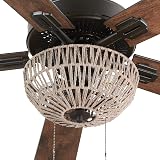
RIVER OF GOODS LED Boho Ceiling Fan with Hand Woven Brown/Natural Rope - Macrame Knot Work and Hemp Rope Style Eclectic Cottage Decor - 52" L x 52" W - Rich Barnwood/Light Driftwood Fan Blades
(as of October 24, 2026 01:02 GMT +00:00 - More infoProduct prices and availability are accurate as of the date/time indicated and are subject to change. Any price and availability information displayed on [relevant Amazon Site(s), as applicable] at the time of purchase will apply to the purchase of this product.)
The Door Balancer Eliminates The Need for Door Props, Door Stops and Door Wedges
(as of October 24, 2026 01:02 GMT +00:00 - More infoProduct prices and availability are accurate as of the date/time indicated and are subject to change. Any price and availability information displayed on [relevant Amazon Site(s), as applicable] at the time of purchase will apply to the purchase of this product.)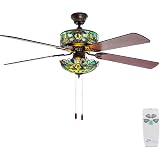
RIVER OF GOODS Stained Glass Magna Carta LED Ceiling Fan - 52" L x 52" W - Tiffany Style - Flush Mount Ceiling Fan with Remote - Teal
(as of October 24, 2026 01:02 GMT +00:00 - More infoProduct prices and availability are accurate as of the date/time indicated and are subject to change. Any price and availability information displayed on [relevant Amazon Site(s), as applicable] at the time of purchase will apply to the purchase of this product.)
Kinsa Smart,Fever, Digital Medical Baby, Kid and Adult Termometro - Accurate, Fast, FDA Cleared Thermometer for Oral, Armpit or Rectal Temperature Reading - QuickCare
$18.94 (as of October 24, 2026 01:02 GMT +00:00 - More infoProduct prices and availability are accurate as of the date/time indicated and are subject to change. Any price and availability information displayed on [relevant Amazon Site(s), as applicable] at the time of purchase will apply to the purchase of this product.)