47-Million-Year-Old Owl Fossil Discovered in Germany Reveals Mysterious Last Meal Preserved Inside
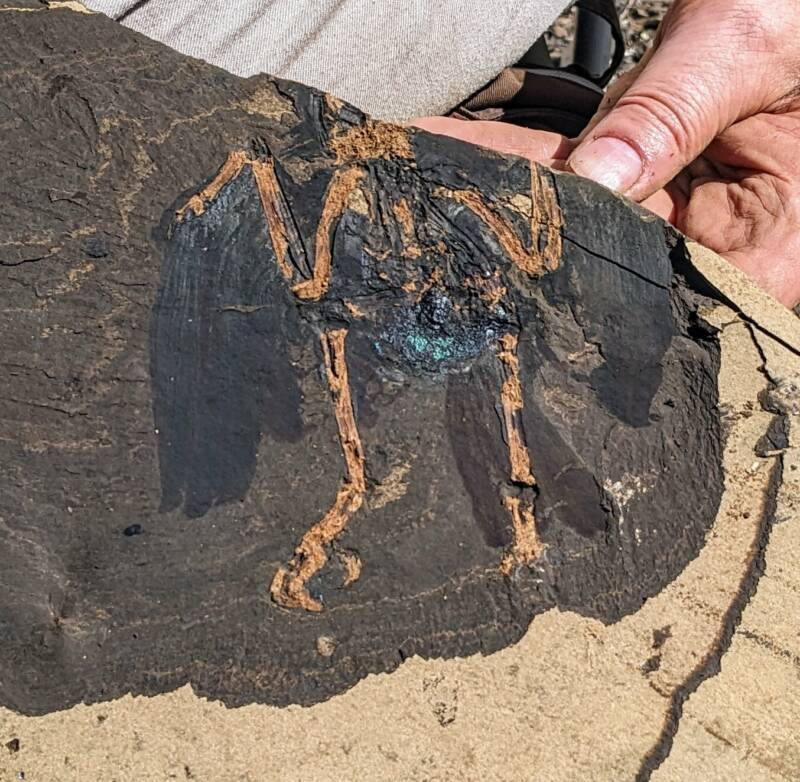
So, imagine this: paleontologists digging around in Germany’s Messel Pit stumble upon a fossilized owl that’s been chilling—literally—for 47 million years. Now, here’s the kicker—the tiny bird was caught mid-snack, with a cockroach still lounging in its stomach. Yep, this prehistoric owl apparently preferred daytime hunting, meaning it wasn’t the nocturnal night stalker we picture today. That discovery flips the script on when and why owls began hooting in the dark rather than basking in the sun. Could it be that our hooty friends weren’t always flaunting their night-vision goggles? This buried-in-time revelation might just rewrite the owlish “night or day” debate once and for all. Curious to dive deeper into this ancient avian whodunit?
Paleontologists in Messel, Germany recently unearthed an exceptionally well-preserved prehistoric owl fossil that could shed new light on when exactly these birds became nocturnal.

Senckenberg NaturmuseumResearchers believe that this owl hunted during the day, which provides new data for the ongoing question of when these birds first became nocturnal.
Researchers in Germany have discovered the exceptionally well-preserved fossil of a young owl that dates back a whopping 47 million years.
This fossil was found so remarkably intact that researchers were able to identify a cockroach — the creature’s last meal — still sitting in its stomach. This find could now provide fresh insight into the long-baffling question of when owls first evolved to become mostly nocturnal.
The Discovery Of A 47-Million-Year-Old Owl Fossil In Germany’s Messel Pit
In 2025, researchers unearthed the owl fossil in the Messel Pit, an ancient lake that has provided many other discoveries dating back to the Eocene epoch, which spanned roughly 56 million to 34 million years ago.
While this fossil’s age of 47 million years is certainly staggering, it’s not the oldest specimen to ever surface. As of now, the world’s oldest-known owl fossil, found in Colorado more than 50 years ago, is of the Ogygoptynx wetmorei species and it dates back about 60 million years.

Senckenberg NaturmuseumThe owl belongs to the newly-identified species Masillastrix blattophaga.
The species to which the newly-unearthed owl belongs had never been identified previously and has now been dubbed Masillastrix blattophaga, according to a recent study on the discovery published in the journal Current Biology.
Measuring fewer than five inches from head to feet, the owl’s remains are almost perfectly intact, except for its skull. In fact, the fossil is so well-preserved that researchers were even able to glimpse a cockroach, presumably the owl’s final meal, still sitting in the its stomach.
Researchers were able to identify the cockroach in the owl’s stomach by comparing it to a near-identical fossilized one that they’d found just a few feet away in the pit. The cockroach, which was blue-green and iridescent, provided the first big clue that this owl had been diurnal, or active primarily during the day.

Mayr et al. 2026.This well-preserved fossil showed a cockroach — the owl’s last meal — still sitting in its stomach.
Iridescence in bugs is associated with a diurnal lifestyle, which would mean that the owl was likely hunting during the day and not at night. Now, this clue could help researchers pinpoint when it finally was that owls began to be more active at night.
“It is still unknown when, in the evolutionary history of owls, the transition from a diurnal to a nocturnal lifestyle took place,” Dr. Gerald Mayr of the Senckenberg Research Institute and Natural History Museum in Frankfurt said in a statement. “This is partly due to the fact that, although quite a number of owl fossils have been found, most are represented by only a few isolated bones.”
What This Fossil Says About When Owls Became Nocturnal Hunters
Because this prehistoric owl was likely hunting during the daytime, researchers have of course theorized that the switch to a mostly nocturnal lifestyle must have happened more recently than 47 million years ago.

Senckenberg NaturmuseumThe cockroach was iridescent, which indicates that it was mostly active during the day.
“There exists a consensus that owls must have evolved from a diurnal ancestor,” Mayr told Live Science.
That belief is rooted in the fact that some earlier owl fossils share similarities in their head-rotation bone structure to diurnal raptors and feature protruding bones that could have functioned as eye protection from the Sun.
Although it’s possible that the newly-uncovered owl ate the cockroach at a transitionary time of day like dawn or dusk, researchers discovered additional clues suggesting that the owl was in fact diurnal.

Senckenberg NaturmuseumThe upper wing bones of the owl are too stocky to have allowed it to fly silently — further proof that this creature was a daytime hunter and not a nocturnal one.
The shape of the owl’s upper wing bones is stockier than that of its modern nocturnal cousins, which indicates that this species wasn’t built for the silent flight required for nighttime hunting and instead searched for prey during the day.

KiddyCare Diaper Caddy Organizer Cart for Nursery Baby Basket Gift for Boy/Girl | Diaper Caddy for Changing Table Basket Organizer with Dividers | Caddy for Baby Stuff Breast Pump Caddy - Regular
$9.99 (as of November 10, 2026 01:09 GMT +00:00 - More infoProduct prices and availability are accurate as of the date/time indicated and are subject to change. Any price and availability information displayed on [relevant Amazon Site(s), as applicable] at the time of purchase will apply to the purchase of this product.)
PROMIXX FORM Sports Water Bottle - Premium BPA Free Water Bottle for Fitness Sports & Outdoors - Sustainable Drinks Bottle with Measurement Markers and Leakproof Lid - 760ml / 26oz (Midnight Blue)
$18.56 (as of November 10, 2026 01:09 GMT +00:00 - More infoProduct prices and availability are accurate as of the date/time indicated and are subject to change. Any price and availability information displayed on [relevant Amazon Site(s), as applicable] at the time of purchase will apply to the purchase of this product.)
1MORE Triple Driver In-Ear Headphones - Silver - Wired - Adult - In Ear - 18 grams - 90 days limited warranty
(as of November 10, 2026 01:09 GMT +00:00 - More infoProduct prices and availability are accurate as of the date/time indicated and are subject to change. Any price and availability information displayed on [relevant Amazon Site(s), as applicable] at the time of purchase will apply to the purchase of this product.)
SUPA ANT Canning Supplies Starter Kit (Food Grade) - Canning Kits Set for Beginners - 3 Pcs. Including Wide Mouth Jar Funnel, Magnetic Lid Lifter, Stainless Steel Jar Lifter (Assembled in USA) Blue
$9.99 (as of November 10, 2026 01:09 GMT +00:00 - More infoProduct prices and availability are accurate as of the date/time indicated and are subject to change. Any price and availability information displayed on [relevant Amazon Site(s), as applicable] at the time of purchase will apply to the purchase of this product.)



















Post Comment