England Stars Face Shocking Sweat Loss Battle Against Norway – How High Humidity Could Cost Them Over Four Litres on the Field!
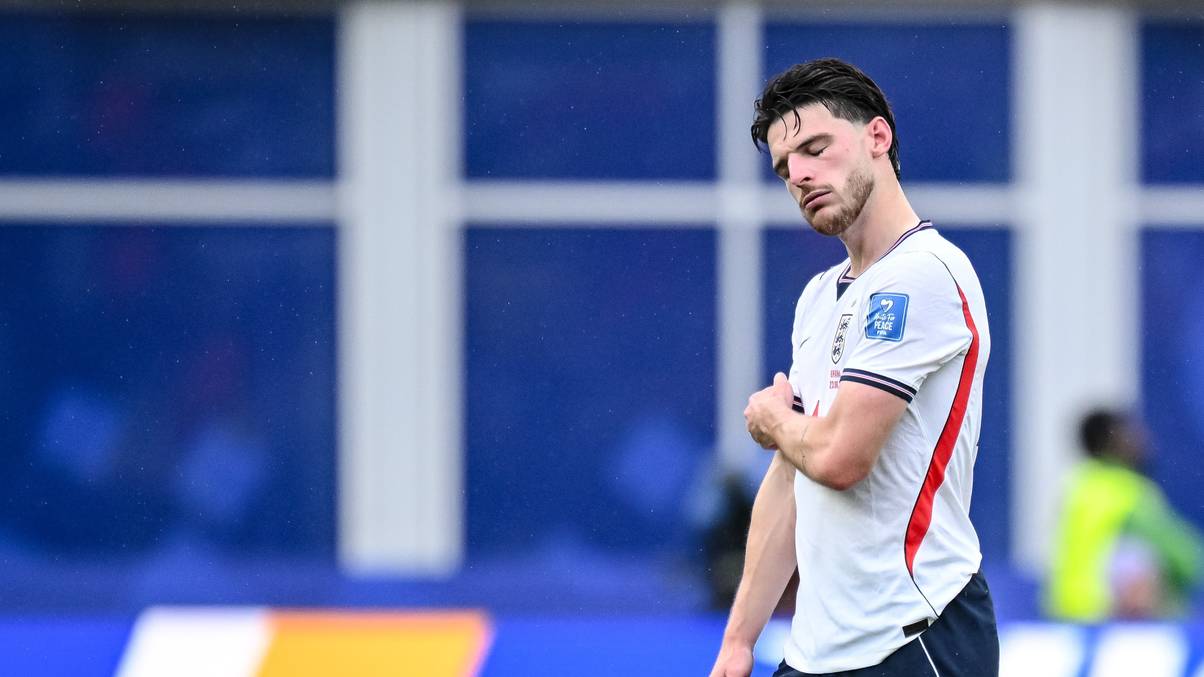
Ever wonder what it’s like for England’s footballers to go from the thin, oxygen-starved air of Mexico City straight into the humid, roasting oven that is Miami? Spoiler alert: it’s brutal. After battling through a nail-biting 3-2 win over Mexico—down to ten men no less, with legs practically turning into jelly from the altitude and sheer exhaustion—the Three Lions now face the stifling heat and near-tropical humidity of Florida. Imagine trying to sprint and score goals when your sweat refuses to cool you down and every breath feels like soup. It’s a weather rollercoaster that’s less “bring it on” and more “please don’t melt us.” Luckily, hydration breaks are coming to the rescue, but can they really save the day in this sauna showdown? Grab your water bottle and hang tight—it’s going to be a sweaty ride.
From the thundering clouds and thin air of Mexico City down to the blistering temperatures of Miami, England have been put through a weather ringer at the World Cup.
England played out one of the all-time World Cup classics when they overcame Mexico 3-2, holding on for what felt like an eternity with ten men to secure a draining victory.
The players looked understandably dead on their feet at full time after such a display of physical exertion, made even tougher by the conditions, with 20 per cent less oxygen available in the air at 7,350 feet above sea level.
Thomas Tuchel will be glad to take his Three Lions back to much lower ground when they take on Norway on Saturday, 11 July, but after fighting storms and altitude, England have another environmental battle on their hands in Florida.
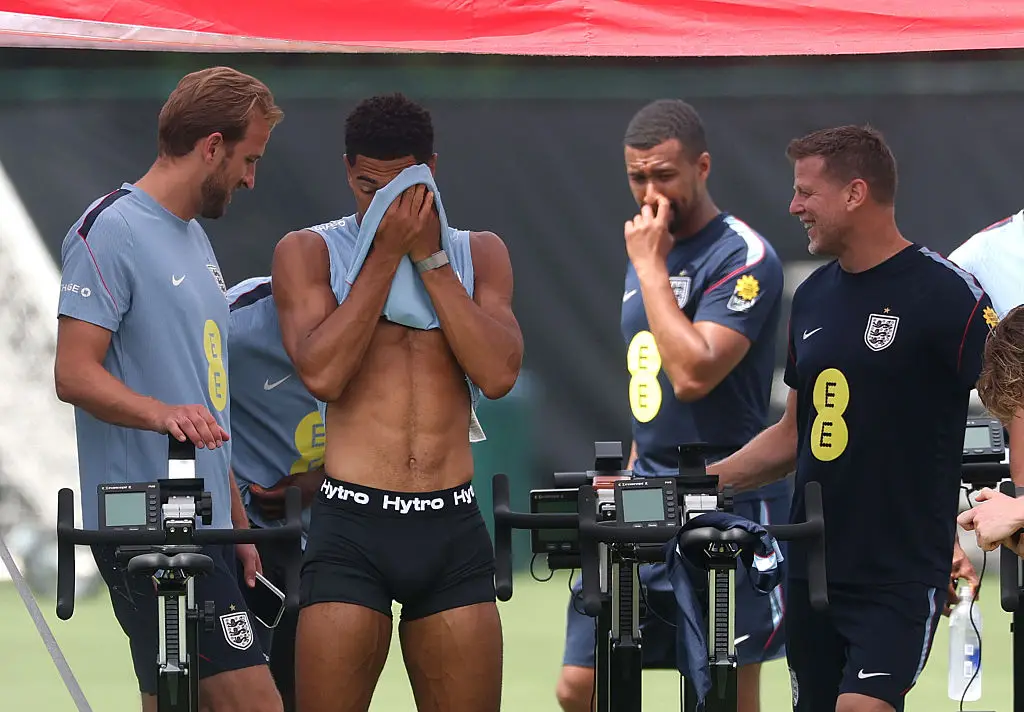
England will feel the heat in Miami (Photo by Richard Pelham/Getty Images)
England will face ‘extreme heat and humidity’ in Miami
It’s been a World Cup of looking at the weather as much as the injury news and the forecast for Miami does not look ideal for two teams hailing from cold and wet European nations.
England vs Norway is scheduled – providing another weather delay doesn’t hit, which is looking possible – to kick-off at 5pm local time.
It’s set to be 32C then, but even more concerning than the heat is the forecasted high of 84 per cent humidity.
For comparison, the UK’s highest humidity on a sweltering Thursday, July 9, as the heatwave returned, was 47 per cent.
Dr. Josh Foster, a scientist who specialises in how humans respond to extreme heat, doesn’t think anyone other than the ‘incredible athletes’ should be performing strenuous activity in such dangerous conditions.
Humidity makes things even harder as it impacts the way the human body regulates its temperature, as it negates the impact sweat has on cooling us down.
Sweat needs to evaporate from the skin to provide a cooling effect, but evaporating is much harder when there’s already plenty of water vapour in the air, which is what leads to high humidity.
That means you need to sweat even more to start getting any benefit, which isn’t good for the rest of the body.
“Your muscle temperature will be higher, meaning they will consume energy stores faster,” Dr Foster tells LADbible.
“High humidity also accelerates dehydration, which ultimately means your heart has to work much harder to keep blood pressure stable. Competing at a higher heart rate makes the exercise feel harder, causing an earlier onset of fatigue and ultimately an impaired performance.
“Furthermore, we lose electrolytes in sweat, such as sodium, potassium, and chloride.
“These electrolytes are critical for nerve function, so if we lose them, we also lose muscular performance and accelerate the sensations of fatigue in the brain.”
You certainly wouldn’t want to have a kick about feeling like that, let alone play a pivotal World Cup game.

There will be no ‘cooling tents’ on hand during the game (Eddie Keogh – The FA/The FA via Getty Images)
How will the humidity impact England vs Norway
England fought like lions in Mexico City’s high altitudes but the ‘stifling and exhausting’ conditions of Miami may be even tougher.
Dr Foster, who is a lecturer in Environmental Physiology at King’s College London, has put it plainly just how horrible it will be for the players in the Hard Rock Stadium, which offers no protection from the elements with a roof or air conditioning.
“At the kind of workloads expected in elite outfield football players, it is impossible to consume enough fluid to fully prevent the impact of high heat and humidity,” he says says.
“This will start to manifest in a reduced performance as the match progresses.
“At the start of the match, their deep body temperature will be ~37.5 to 38C. Toward the end of the match, this will likely approach 39.5-40C in those who work the hardest.
“Getting to such a high temperature rapidly increases the perception of fatigue, as your body is desperately trying to stop you from exercising and therefore producing heat.
“Heart rate will increase by about 20-40 beats per minute, and water loss through sweating will be very high, approaching two litres per hour.”
At two litres per hour, and the possibility of 120 minutes, that equates to four litres – or eight-and-a-half pints.
As a result, if the game goes to extra time, a player who is on the pitch for the full 120 minutes, and even a possible penalty shoot-out, could potentially lose more than four litres of sweat.
That would be a tenth of the entire amount of water in their body, which is typically around 40 litres for an adult male.
Thankfully, the players do have a way to combat the conditions.

There will be nowhere to hide from the conditions in Miami (Hugo Rivera/Jam Media/Getty Images)
The hydration breaks have been much maligned throughout the tournament due to them being mandated even when the heat has not been extreme, with the three-minute pauses in each half being used to show advertising during television coverage in the USA.
However, there can be no argument that they won’t only be handy but absolutely ‘critical’ in Miami.
Dr Foster adds: “Fortunately, the hydration breaks will help significantly.
“We can replenish body water and electrolytes, and allow the body temperature to come down slightly.”
Half-time will also be of paramount importance, as Tuchel’s staff can use it to quickly cool the players down, using cool water at around 20C to bring their core temperature down quickly, without being so cold that it will impact the muscles and their performance.
He continues: “We need to use this time to aggressively cool the player so we can get their body temperature to return to normal levels.
“The players could also ingest ice slurry drinks instead of cold water alone, as this will cool the body 5-10 times faster.”
We’re all going to be feeling the heat during what could be another nerve-shredding match, but definitely not as much as the players.

The Door Balancer Eliminates The Need for Door Props, Door Stops and Door Wedges
(as of August 26, 2026 00:29 GMT +00:00 - More infoProduct prices and availability are accurate as of the date/time indicated and are subject to change. Any price and availability information displayed on [relevant Amazon Site(s), as applicable] at the time of purchase will apply to the purchase of this product.)
RIVER OF GOODS Coastal 52 Inch Wooden Bead LED Ceiling Fan, Brown
(as of August 26, 2026 00:29 GMT +00:00 - More infoProduct prices and availability are accurate as of the date/time indicated and are subject to change. Any price and availability information displayed on [relevant Amazon Site(s), as applicable] at the time of purchase will apply to the purchase of this product.)
RIVER OF GOODS LED Boho Ceiling Fan with Hand Woven Brown/Natural Rope - Macrame Knot Work and Hemp Rope Style Eclectic Cottage Decor - 52" L x 52" W - Rich Barnwood/Light Driftwood Fan Blades
(as of August 26, 2026 00:29 GMT +00:00 - More infoProduct prices and availability are accurate as of the date/time indicated and are subject to change. Any price and availability information displayed on [relevant Amazon Site(s), as applicable] at the time of purchase will apply to the purchase of this product.)
RIVER OF GOODS Coastal 52 Inch Wooden Bead LED Ceiling Fan, Cream
(as of August 26, 2026 00:29 GMT +00:00 - More infoProduct prices and availability are accurate as of the date/time indicated and are subject to change. Any price and availability information displayed on [relevant Amazon Site(s), as applicable] at the time of purchase will apply to the purchase of this product.)