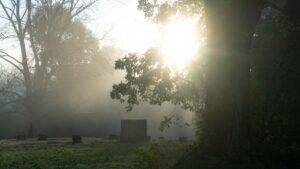
Secret Passageways Beneath English School Unveil Untold Secrets of King Henry VIII’s Opulent Estate

Imagine going to school every day and discovering only decades later that beneath your feet lies a secret passage straight from King Henry VIII’s playbook—literally! Yeah, that’s right. At New Hall School in Chelmsford, students stumbled onto what’s believed to be 500-year-old tunnels, part of the once lavish Beaulieu estate, Henry’s “beautiful place.” Now, while most kids today get history dumped on them through dusty textbooks, these lucky ones get to practically walk through it. You gotta wonder, were these tunnels just secret storage spots, or perhaps Henry’s own medieval version of a man cave? Either way, uncovering pottery, bones, and glass from the Tudor era not only sparks a puzzle about their purpose—it breathes a thrilling hint of mystery and royal drama right beneath a schoolyard. Intrigued? Dive deeper into this unexpected journey into England’s regal past and see what secrets these tunnels might still be hiding.
Believed to date back 500 years to the reign of King Henry VIII, the tunnels are thought to have been part of his lavish country estate known as Beaulieu.

Henry Godfrey-Evans/BBCWorkers at New Hall School found an entrance to tunnels linked to one of King Henry VIII’s estates.
For most students, history is learned via textbooks and lectures, or perhaps a field trip to a museum. But the British high schoolers at the New Hall School in Chelmsford are now enjoying an up-close experience with the piece of history on which their school was literally built: King Henry VIII’s lost Palace of Beaulieu.
While investigating and repairing a ditch for holding livestock, workers found the entrance to a hidden underground tunnel right beneath the school grounds — and it held a collection of artifacts that could date all the way back to the Tudor period.
The 500-Year-Old Tunnels And Treasures Hidden Underneath New Hall School
After initial excavation of the tunnels, workers found pottery, animal bones, glass bottles and fragments, and pieces of lead.
Sarah Garside, head of history at the New Hall School, said that the condition of the pottery indicated it was made during the Tudor period, which began in 1485 when Henry VII took the throne, and ended with the death of Elizabeth I in 1603.

New Hall SchoolSome of the pottery and other artifacts that were found in the tunnels.
So far, only a small segment of the tunnel system has been inspected, so it remains unclear what the tunnels were used for during Henry VIII’s time.
“We weren’t sure if [the pottery] had just been disposed of down there as waste, just thrown in and then covered up. So that leads to questions of ‘were they used for storage of some kind’? Had they actually been placed there for them to be preserved in such excellent condition? We don’t know,” Garside told the BBC. “It’s a really exciting thing to explore more.”
The find is likewise exciting for the students, who get to experience the history that was sitting right beneath their feet.
“It really does never cease to amaze you the amount of history and the sort of richness of that history that we have here,” a 17-year-old student named Florian told the BBC.
“The tunnels, especially, they add a sense of secrecy,” said another 17-year-old student named Anna.
What This Discovery Reveals About Henry VIII’s Life And His Lavish Country Estate
The discovery of the tunnels is further illuminating the New Hall School’s connection to Beaulieu Palace, one of the most significant royal residences during the Tudor era.
The residence, originally named New Hall, was owned in the late 15th century by Thomas Boleyn, the father of Anne Boleyn, who would later become the wife of Henry VIII — until he infamously had her beheaded for treason in 1536.

Wikimedia CommonsA portrait of Henry VIII, king of England from 1509 to 1547.
Henry VIII acquired the residence in 1517 (though some sources say 1516), and made extensive improvements to the property while renaming it Beaulieu, or “beautiful place” in French.
Historical documents have shown that the palace had a “great garden,” as well as chapels, galleries, and a nursery for the king’s children.
The lavish palace quickly became one of the king’s preferred country estates, one where he hosted banquets, political meetings, and hunting parties for the rich and powerful.
After Henry VIII died in 1547, however, the property saw less and less use, and much of the palace was destroyed or modified in the following decades. New Hall was occupied by Mary Tudor, and was then granted to the Earl of Sussex by Elizabeth I. Oliver Cromwell later bought the estate — for just five shillings. Little of the structure remains today.
The New Hall School has stood on this site since 1799. The school honors its location’s rich Tudor history by displaying Henry VIII’s royal coat of arms inside its chapel.
The school has now hired history experts and archaeologists to continue the excavation and exploration of the tunnels over the coming months, hopefully uncovering more about these underground pathways and the wealth of artifacts they concealed.
RIVER OF GOODS Stained Glass Magna Carta LED Ceiling Fan - 52" L x 52" W - Tiffany Style - Flush Mount Ceiling Fan with Remote - Teal
(as of October 26, 2026 01:02 GMT +00:00 - More infoProduct prices and availability are accurate as of the date/time indicated and are subject to change. Any price and availability information displayed on [relevant Amazon Site(s), as applicable] at the time of purchase will apply to the purchase of this product.)
RIVER OF GOODS Stained Glass Bird Accent Lamp - 8" W x 13.5" H - Tiffany Style Table Lamps for Home, Office Desk, Bedroom, Nightstand - Blue Jay Decor
(as of October 26, 2026 01:02 GMT +00:00 - More infoProduct prices and availability are accurate as of the date/time indicated and are subject to change. Any price and availability information displayed on [relevant Amazon Site(s), as applicable] at the time of purchase will apply to the purchase of this product.)
The Door Balancer Eliminates The Need for Door Props, Door Stops and Door Wedges
(as of October 26, 2026 01:02 GMT +00:00 - More infoProduct prices and availability are accurate as of the date/time indicated and are subject to change. Any price and availability information displayed on [relevant Amazon Site(s), as applicable] at the time of purchase will apply to the purchase of this product.)
Rhythm Superfoods Kale Chips, Zesty Nacho, Organic and Non-GMO, 2.0 Oz (Pack of 4), Vegan/Gluten-Free Superfood Snacks
(as of October 26, 2026 01:02 GMT +00:00 - More infoProduct prices and availability are accurate as of the date/time indicated and are subject to change. Any price and availability information displayed on [relevant Amazon Site(s), as applicable] at the time of purchase will apply to the purchase of this product.)