Unmasking a Forgotten Hero: The Revolutionary War Teen Orphan Finally Identified Through Forensic Science

Imagine enlisting in the army at 14 — when most kids are just figuring out algebra — and then vanishing into history for nearly 250 years. That’s exactly what happened to a teenage soldier who fought and died at the brutal Battle of Camden in 1780. For decades, he was just “Camden 9B,” an anonymous icon of sacrifice… until cutting-edge DNA detective work unearthed his name: John Pumphrey, a young Marylander with a story stranger than fiction. How does a boy from a well-to-do family end up on the front lines so young? And what does his journey tell us about forgotten heroes lurking in unmarked graves? Buckle up for a tale where science meets history — and a lost youth finally gets his spotlight. LEARN MORE
Researchers discovered that the previously-unknown teenager was John Pumphrey, a boy from Maryland who enlisted in the Continental Army when he was about 14 years old — but sadly died three years later in the Battle of Camden.
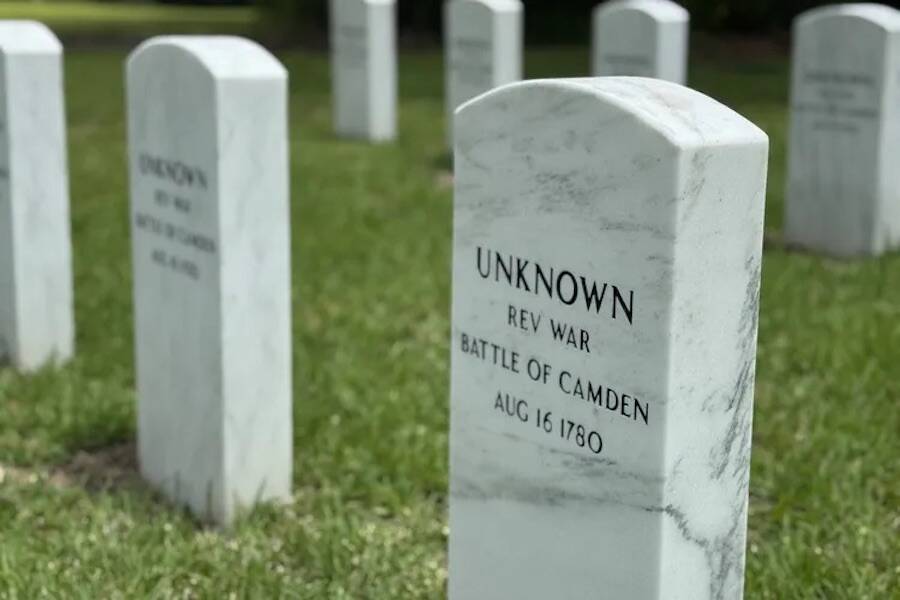
FHD ForensicsAfter extracting and sequencing his DNA, researchers were able to identify an unknown teenager killed at the Battle of Camden as John Pumphrey of Maryland.
In 2022, archaeologists found the remains of a teenage soldier who’d been buried alongside 14 of his compatriots after dying at the Battle of Camden, a bloody Revolutionary War engagement fought in South Carolina on August 16, 1780.
Buried in an unmarked grave, the teenager had been known to researchers as “Camden 9B” — until now. After extracting and sequencing the boy’s DNA, scientists figured out that these centuries-old remains belonged to Private John Pumphrey of Maryland.
The Identification Of John Pumphrey 246 Years After He Was Killed In The Battle Of Camden
Even though almost 250 years had passed since Pumphrey’s death, researchers were able to extract DNA from his petrous bone, which sits at the base of the skull, behind the ear.
Then, scientists at FHD Forensics needed to compare his DNA sample to the genomes of other potential relatives in order to create a family tree that could lead the team to their answer.
It was an “extremely intricate puzzle,” Valerie Kemp, senior investigative genealogist at FHD Forensics, said to Maryland Matters.
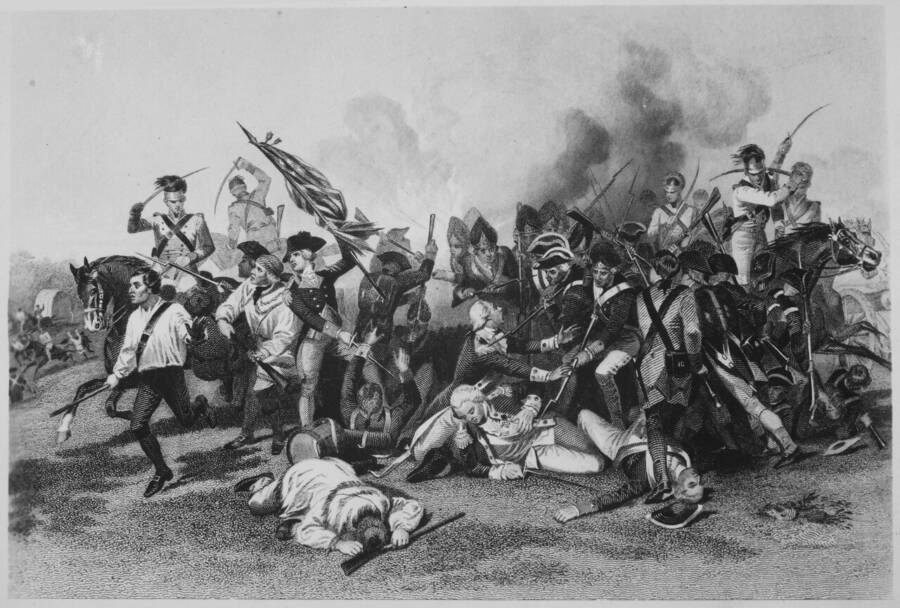
Wikimedia CommonsJohn Pumphrey died in the Battle of Camden on August 16, 1780.
The DNA all pointed to John Pumphrey, who enlisted in the Seventh Maryland Regiment of the Continental Army in 1777. At the time, Pumphrey was only about 14 years old.
Pumphrey served in several historic battles, including Brandywine, Germantown, and Monmouth, while also camping with George Washington during the brutal winter of 1778 at Valley Forge. According to historical records, he then re-enlisted in 1779 and received a $100 bonus.
But in the wake of the Battle of Camden on August 16, 1780, he was listed as “missing.” Researchers determined that he was killed by a soft-tissue injury, possibly from a bayonet, but remain unsure of how exactly Pumphrey died.
Researchers have, however, been able to use historical records to piece together much of the story of John Pumphrey’s early life. Pumphrey was a direct descendant of Walter Pumphrey, a Quaker who immigrated to New Jersey from England in 1678. The family moved to the Baltimore area in 1713, originally to open up a carpentry shop.
The Pumphrey family became prominent in the Baltimore area, with extensive real estate holdings and business interests. His grandfather, Ebenezer Pumphrey, was a notable player in the state’s lumber and building industries.
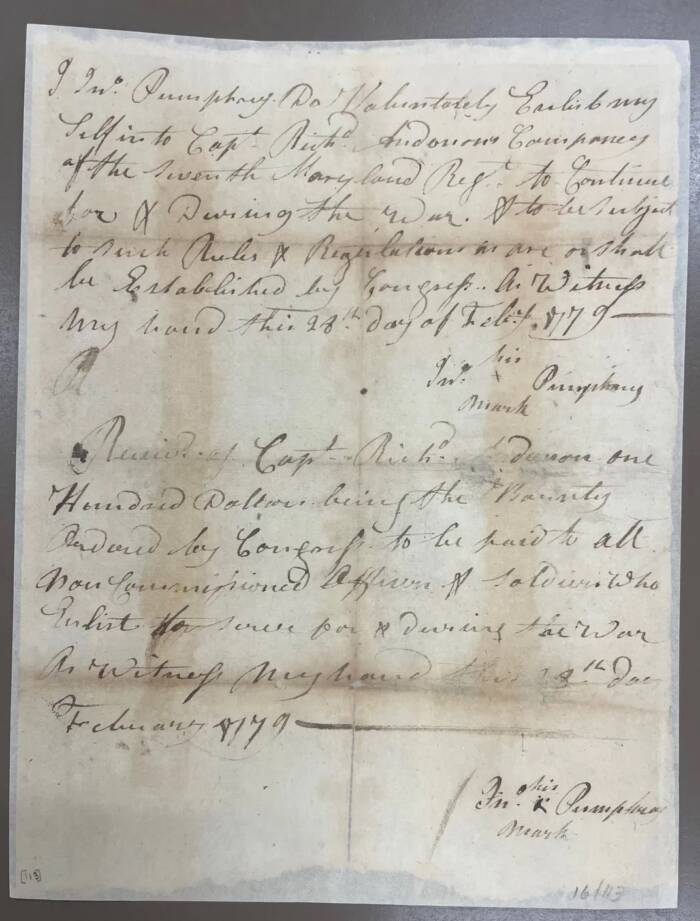
FHD ForensicsJohn Pumphrey re-enlisted in the Continental Army in 1779 and received a $100 bonus.
The fact that John Pumphrey came from a family of high status left researchers baffled at first.
“We thought, what is a boy from these families doing going to war at 14? It just didn’t make any sense,” FHD President Allison Peacock told Maryland Matters.
After more digging, the team discovered that Pumphrey’s father died in 1771, when the boy was only about 10 years old. In a strange occurrence, the land owned by Pumphrey’s father somehow got passed to his cousin instead of his several sons.
Likely with no other prospects of land ownership, Pumphrey turned to another future for himself in the Continental Army. But three years later, he became one of the nearly 1,000 American casualties at the Battle of Camden, one of Britain’s biggest victories of the entire war.
How Both Forensic Researchers And Pumphrey’s Descendants Have Responded To This Astounding News
The identification of John Pumphrey means a great deal for both forensic scientists and those with familial ties to people who were lost to history hundreds of years ago.
The research team at FHD believes that the groundbreaking identification of John Pumphrey was the first of its kind, an important step forward into uncharted territory.
“Nobody’s ever identified a 246-year-old John Doe before,” Peacock told Maryland Matters. Indeed, the researchers are calling this a successful resolution to the oldest-known John Doe case in American history.

FHD Forensics John Pumphrey received a reburial in 2023 with full military honors.
Having been lying in an unmarked grave for nearly 250 years, Pumphrey finally received a reburial with military honors in 2023. Researchers also found approximately 20,000 DNA matches for Pumphrey’s living relatives. In June 2026, some of these relatives came together in a ceremony in Baltimore to celebrate his life.

RIVER OF GOODS Coastal 52 Inch Wooden Bead LED Ceiling Fan, Brown
(as of October 24, 2026 01:02 GMT +00:00 - More infoProduct prices and availability are accurate as of the date/time indicated and are subject to change. Any price and availability information displayed on [relevant Amazon Site(s), as applicable] at the time of purchase will apply to the purchase of this product.)
RIVER OF GOODS Stained Glass Magna Carta LED Ceiling Fan - 52" L x 52" W - Tiffany Style - Flush Mount Ceiling Fan with Remote - Teal
(as of October 24, 2026 01:02 GMT +00:00 - More infoProduct prices and availability are accurate as of the date/time indicated and are subject to change. Any price and availability information displayed on [relevant Amazon Site(s), as applicable] at the time of purchase will apply to the purchase of this product.)
1MORE Triple Driver in-Ear Earphones Hi-Res Headphones with High Resolution, Bass Driven Sound, MEMS Mic, in-Line Remote, High Fidelity for Smartphones/PC/Tablet - Silver
$69.99 (as of October 24, 2026 01:02 GMT +00:00 - More infoProduct prices and availability are accurate as of the date/time indicated and are subject to change. Any price and availability information displayed on [relevant Amazon Site(s), as applicable] at the time of purchase will apply to the purchase of this product.)
1MORE Triple Driver In-Ear Headphones - Silver - Wired - Adult - In Ear - 18 grams - 90 days limited warranty
(as of October 24, 2026 01:02 GMT +00:00 - More infoProduct prices and availability are accurate as of the date/time indicated and are subject to change. Any price and availability information displayed on [relevant Amazon Site(s), as applicable] at the time of purchase will apply to the purchase of this product.)